Short answer
One thorough soft wash a year handles most vinyl siding maintenance in this climate, and the shaded north and east walls are where mildew shows up first. Wash from the bottom up with a soft brush and a mild cleaner, rinse from the top down, and keep a pressure washer at low pressure and a level angle if you use one at all. Keep heat sources away from it, check the butt joints and J-channel after storms, and understand that once the color has chalked, cleaning is no longer the answer.
One thorough soft wash a year handles most of it. That is the honest headline. Vinyl siding is genuinely low-maintenance, and the small amount it does need is mostly about keeping mildew off the shaded walls and keeping heat away from the sunny ones.
What follows is the right way to do that, plus the point at which washing stops being the answer and you are maintaining something that has reached the end of its service life.
What does our climate actually do to vinyl?
Three things, and they hit different walls.
Mildew on the shaded sides. Humidity plus shade equals biological growth, which is why the north and east elevations, and anything under a tree line, go green or gray first. This is surface growth on the siding rather than damage to it, and it washes off.
UV on the sunny sides. South and west walls take the fade. Vinyl color is throughout the material rather than a coating on top, so fading is gradual and even, but the surface eventually chalks — you wipe it and a powdery residue comes off on your hand. Chalking is not dirt and it does not wash away.
Thermal movement everywhere. Vinyl expands and contracts with temperature more than most cladding, which is why it is installed hanging on its nail hem rather than pinned tight. Panels that were nailed too tight when the house was built will buckle in a Southeast August, and no amount of maintenance fixes that.
How do you wash it correctly?
Work bottom to top, rinse top to bottom
Apply cleaner starting at the bottom of the wall and work upward, then rinse starting at the top and work down. Doing it in that order keeps clean water from running over dirty siding and leaving streaks that dry in.
Use a soft brush and a mild cleaner
A long-handled soft-bristle brush and a bucket of water with a mild cleaner rated for exterior siding does the job on almost every house. Work in sections small enough that the cleaner does not dry on the surface before you rinse it.
Be careful with a pressure washer
You can use one, and most of the damage we see from pressure washing comes down to two mistakes:
- Too much pressure. Vinyl does not need it, and high pressure can crack older, more brittle panels at the nail hem.
- The wrong angle. Spraying upward at a lap joint drives water up behind the panel and into the wall assembly. Hold the wand level or angled slightly downward, use a wide fan tip, and stay back.
If in doubt, use a garden hose. A hose and a brush get the same result with none of the risk.
Avoid these
| Do not use | Why |
|---|---|
| Abrasive pads or powders | Permanently scuff the surface |
| Undiluted bleach | Damages plantings and can affect the surface |
| Nail polish remover, furniture polish, oven cleaner | Solvent-type products can soften or stain vinyl permanently |
| Metal scrapers | Gouge the panel |
| High pressure at an upward angle | Drives water behind the cladding |
Wet the plantings below the wall before and after if you use anything beyond soap and water.
What else should you keep away from it?
Heat. Vinyl softens and distorts with concentrated heat. The usual suspects are a grill or fire pit too close to the wall, a mulch bed that has smoldered, and reflected sunlight from a low-E glass door or storm door bouncing concentrated light onto a panel. Keep grills a few feet off the wall and watch any spot where glass reflects onto siding.
Trimmer line and mower discharge. The bottom course takes the abuse. A few inches of clearance and a mulch or gravel edge saves the panel.
Sprinklers. Repeated wetting of the same section, especially with hard water, leaves mineral staining that is difficult to remove.
Vegetation against the wall. Shrubs planted tight to the house hold moisture against the cladding and make the mildew problem permanent. Prune back for airflow.
What should you inspect, and when?
Twice a year, and after any significant storm. It takes fifteen minutes.
- Butt joints and corners. Panels that have unlocked or joints that have opened up are entry points for wind-driven rain.
- J-channel around windows and doors. Missing or pulled-away sections leave the most vulnerable spots on the wall exposed.
- The bottom course. Where impact and trimmer damage lives.
- Impact marks after hail. Cracks and punctures often show best in raking light early or late in the day.
- Soft spots. Press firmly on the wall in several places, especially low and under windows. It should feel solid.
- Gutters and downspouts. The most common cause of water getting behind cladding and trim is a gutter that overflows.
That last one is the highest-value maintenance item on the whole list, and it is not even about the siding.
When is cleaning no longer the answer?
There is a point where maintenance becomes maintenance of a problem. The signals:
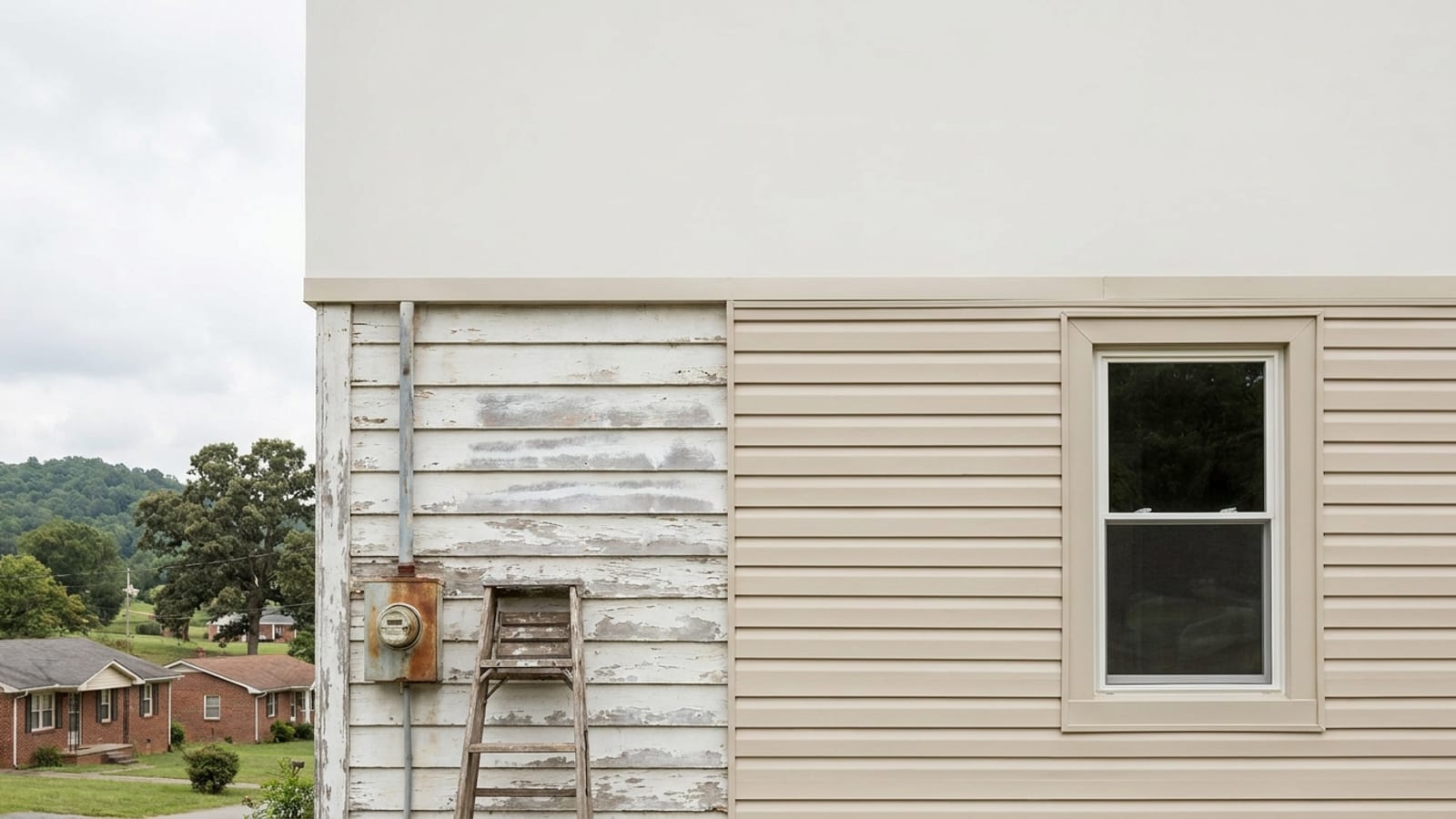
- The color does not come back after washing. Chalking means UV has consumed the surface.
- Panels are brittle and crack when handled. Old vinyl gets stiff, and once it cracks at the nail hem it cannot be re-secured.
- You find soft spots in the wall. That is water in the sheathing and it is the most serious sign there is.
- You are re-securing the same panels every year. The fastening or the substrate has failed.
- Waves and buckling down the length of a wall. Look from the corner rather than straight on.
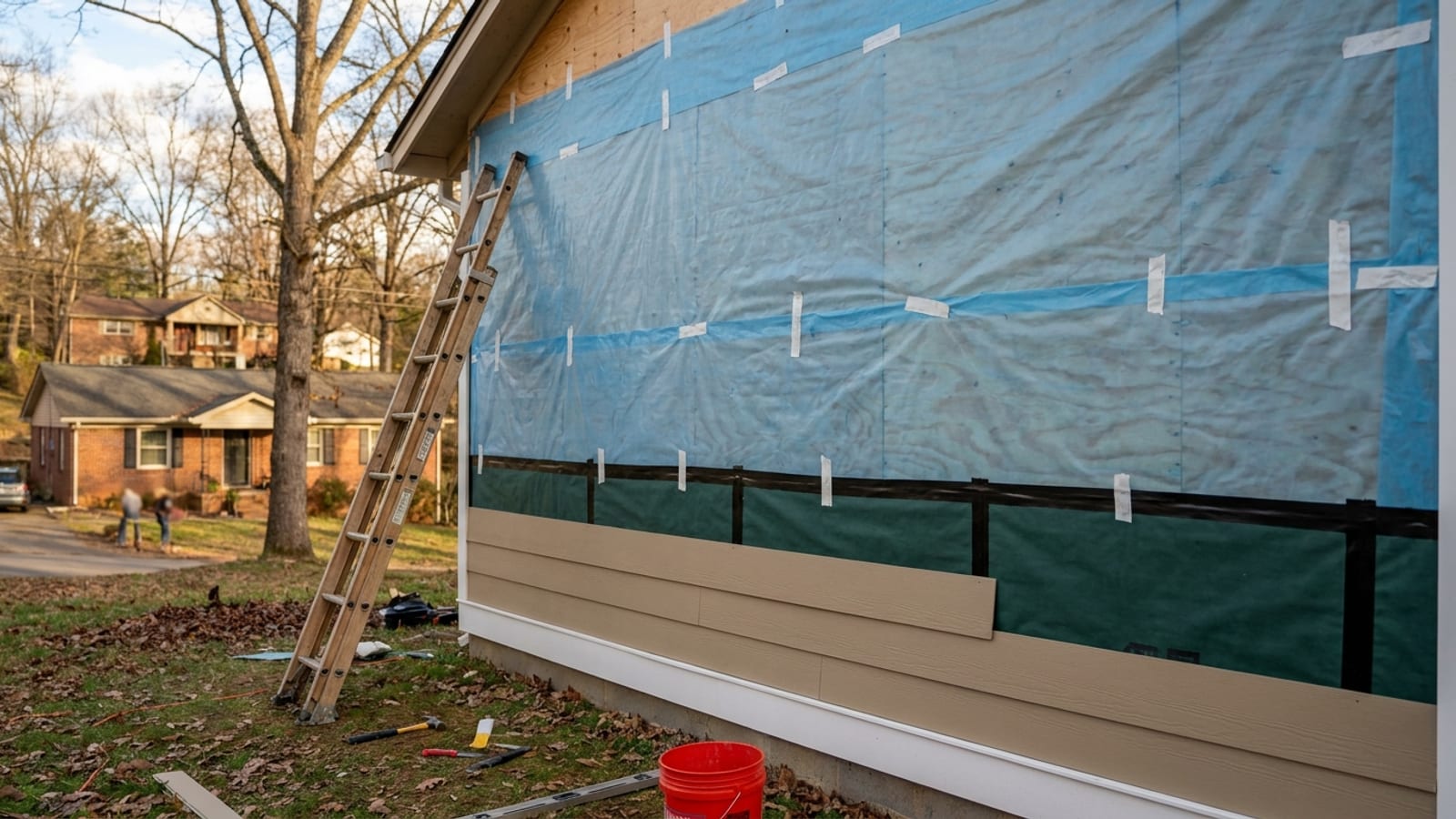
Quality vinyl typically lasts 20 to 40 years in this climate when it was installed correctly. When it reaches the end, a proper siding replacement takes the old cladding off, inspects and repairs the sheathing, puts house wrap on, and rebuilds the trim, soffit and fascia as part of the same system. Full replacement with us runs $12,000 to $25,000 for a typical home including all of that, and most projects take four to seven days.
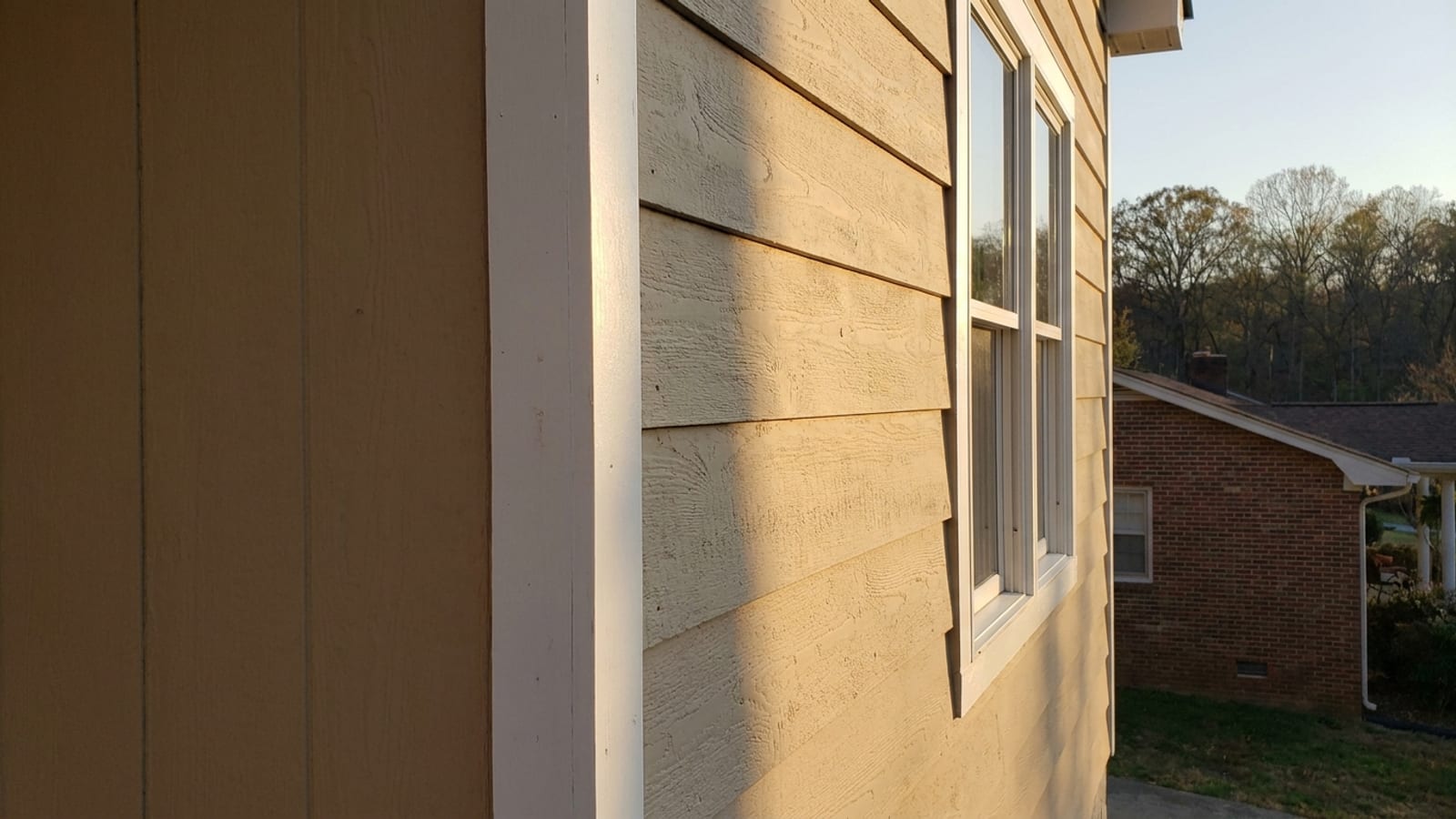
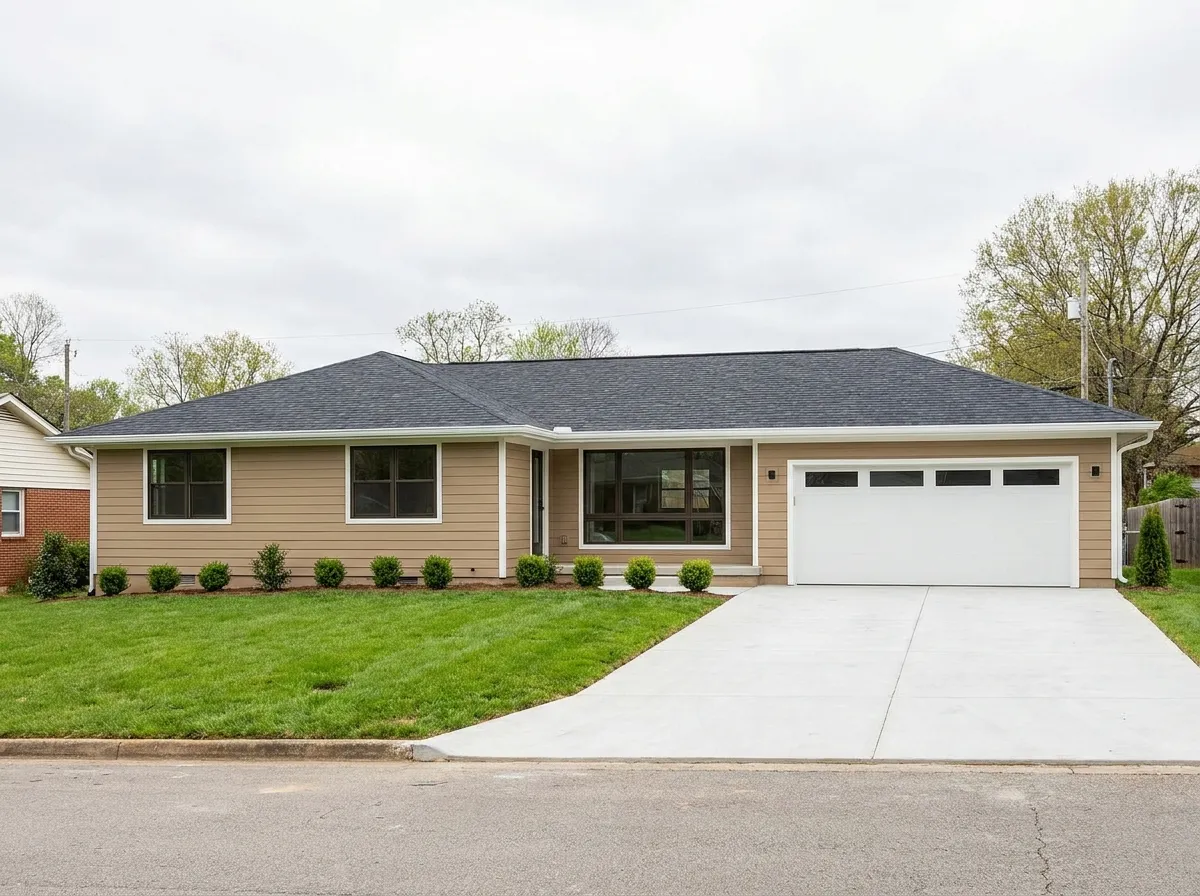
If you are replacing anyway, that is the moment to decide between vinyl and fiber cement rather than defaulting. Under five years in the house, quality vinyl. Ten years or a forever home, James Hardie fiber cement usually wins on total cost of ownership — roughly 30 to 50 years of service life and a ColorPlus finish that holds against Southeast sun. Fiber cement on the street-facing elevations with vinyl elsewhere is a common compromise.
Projects this size are commonly spread out with GreenSky financing, which includes no-interest options if paid in full within 6, 15 or 18 months and fixed-rate terms, with zero down for most approved homeowners, subject to credit approval. Siding is covered in writing under The Patriot's Promise — 30-year material and labor coverage.
What is the next step?
If you have washed it and it still looks tired, or you found a soft spot, have someone walk the walls. At a free in-home estimate the estimator checks every elevation, the trim, soffit and fascia, and tells you plainly whether you are looking at maintenance or replacement. There is no trip charge inside our service area.
Request a free estimate or call (423) 830-7138.