Short answer
Trim and corners are not a small add-on at the end of a siding quote — on most houses they account for a meaningful share of the total, because every corner post, window surround, frieze board, soffit panel and fascia board is separate material that gets cut, fitted and fastened by hand. A plain rectangular ranch with few openings carries very little of it, while a two-story with gables, dormers, a bay projection and a dozen windows carries a great deal. The number moves with how many linear feet of trim your elevations actually have, not with the square footage of wall.
Trim and corners are not a rounding error on a siding quote. On most houses they are one of the biggest single drivers of where the number lands inside the typical $12,000 to $25,000 installed range, because trim is measured in linear feet of hand-cut, hand-fitted material rather than in square feet of wall you can run quickly with a chalk line and a nail gun.
Two houses with identical square footage can come back thousands of dollars apart for exactly this reason. One is a plain ranch with four corners and eight windows. The other has gables, a dormer, a bay projection, shutters, a wrapped porch column and fourteen windows. The wall area is the same. The amount of cutting, fitting, flashing and sealing is not close.
Why does trim show up as its own line on a siding quote?
Because it is its own scope of work. When we price a full siding replacement, the siding panels are one takeoff and the trim package is another — corner posts, window and door surrounds, frieze and band boards, rake boards, soffit and fascia, plus the flashing and accessories that tie them together.
The panel field goes fast. A crew can cover a lot of plain wall in a day once the house wrap and starter are on. Trim is the opposite. Every corner post has to be plumb, every window surround has to be mitered or butted cleanly and flashed at the head, every rake board has to follow the roof pitch, and every joint has to be detailed so water leaves the wall instead of sitting in it. That is skilled time, and it is where the quality of a siding job is visible from the sidewalk ten years later.
A quote that does not break out trim is not necessarily hiding anything, but it is harder to compare. Ask for it as a line.
What counts as trim on a siding job?
Corner posts
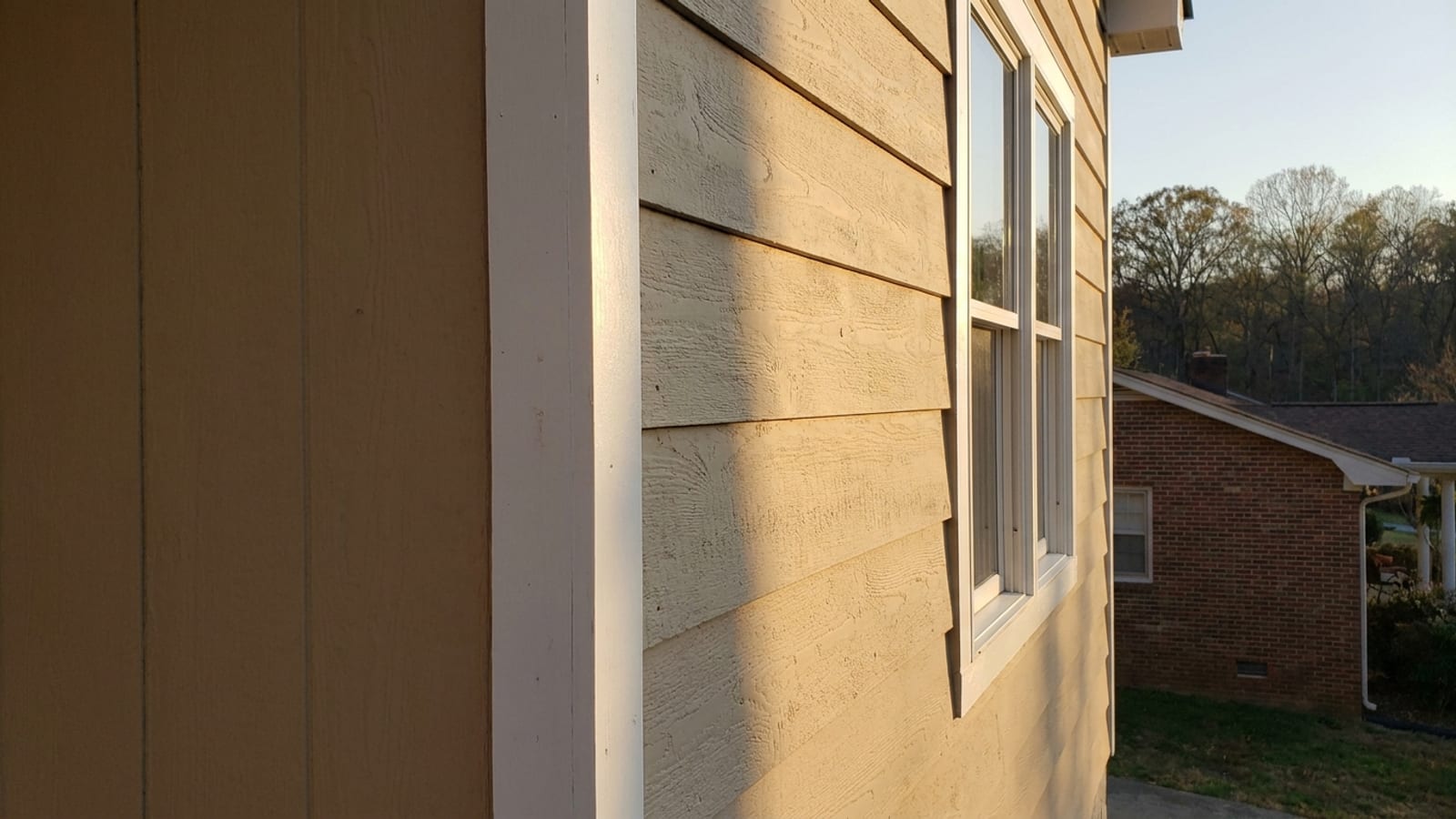
Outside corners get a post the siding butts into. Inside corners get a similar treatment where two walls meet at a reflex angle — common on L-shaped plans, porch returns and bump-outs. Corner posts come in different widths and profiles, and a wider post reads as a more finished house but costs more per foot and takes more fasteners.
Count your corners before you read a quote. A simple rectangle has four. A house with a projecting garage, a bay, a porch and a chimney chase can easily have sixteen.
Window and door trim
Every opening gets wrapped. The width of the trim, whether the head gets a cap or a drip, and whether the sill is a separate piece all change the material and the labor. This is also the detail homeowners notice most, because it frames the glass and sets the character of the elevation.
Frieze, band and rake boards
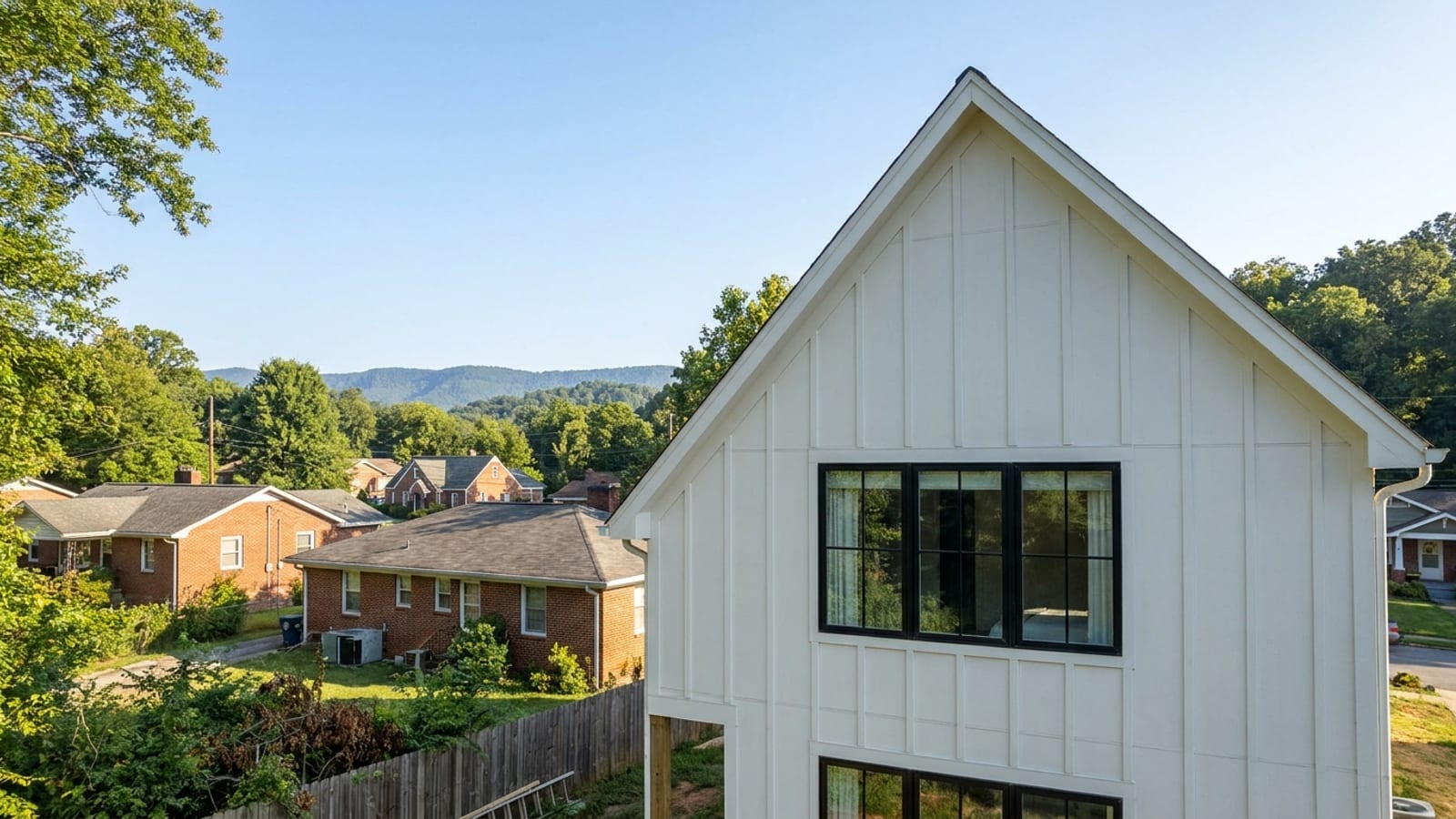
The frieze runs where the wall meets the soffit. Band boards separate stories or separate two different cladding materials, such as lap siding below and shake above. Rake boards follow the angle of a gable. These are long runs at height, and on a two-story with multiple gables they add up quickly.
Soffit and fascia
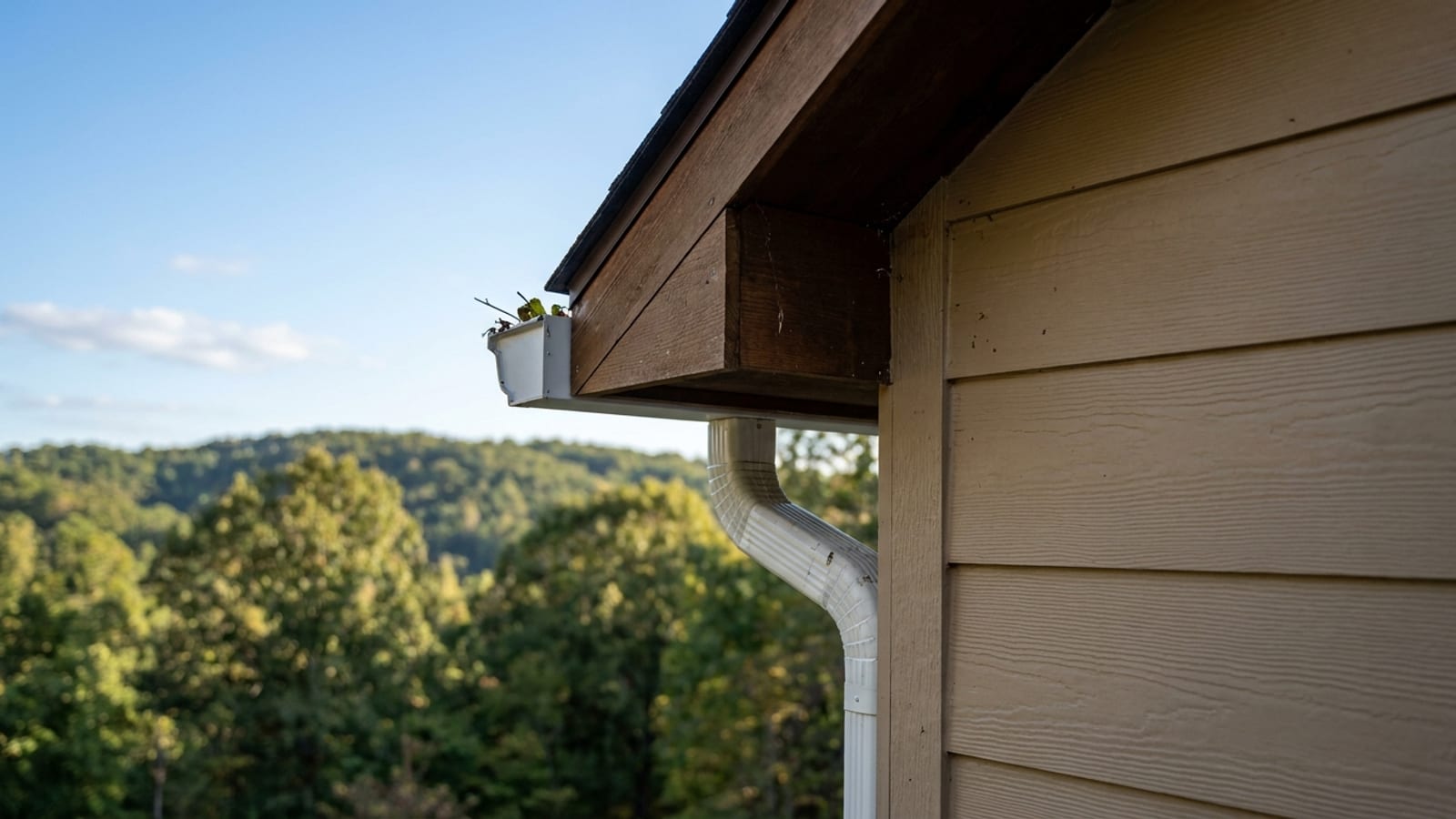
The soffit is the underside of the overhang and the fascia is the board at the roof edge that the gutter hangs on. A proper full-envelope replacement includes both, because they are part of the same water-management system as the walls. Vented soffit also matters for attic airflow, which is not a cosmetic issue in a Southeast summer.
Flashing, starter strip and house wrap
Not glamorous and not optional. Head flashing over windows and doors, kickout flashing where a roof meets a wall, starter strip at the bottom course, and a continuous weather-resistive barrier behind everything. These are small dollar items individually that do most of the work of keeping the wall dry.
How much do trim and corners move the number?
The honest answer is that it depends on linear feet, not on a percentage you can look up. What follows is how we think about which houses carry a heavy trim load.
| Trim element | What it does | What drives the cost up |
|---|---|---|
| Outside corner posts | Terminates siding at each corner | Corner count, post width, two stories |
| Inside corners | Handles reflex angles and returns | L-shaped plans, bump-outs, porch returns |
| Window and door surrounds | Frames each opening and sheds water | Opening count, wide trim, head caps, arched tops |
| Frieze and band boards | Caps the wall, separates material fields | Long runs, multiple stories, mixed cladding |
| Rake boards | Follows gable slopes | Number of gables, steep pitch, dormers |
| Soffit and fascia | Closes the overhang, carries the gutter | Deep overhangs, boxed returns, rot repair |
| Flashing and accessories | Keeps water out of the assembly | Roof-to-wall intersections, chimney chases |
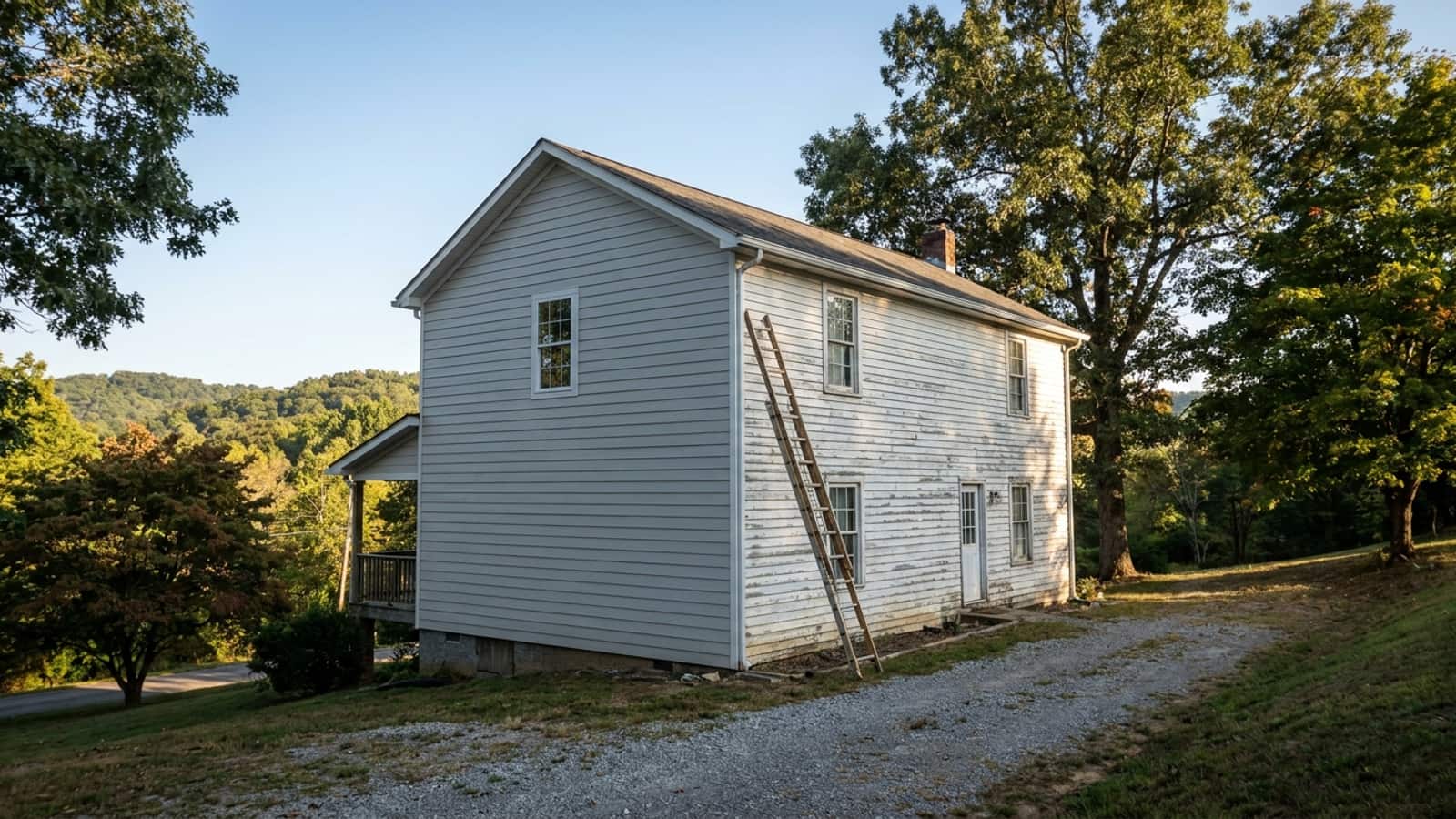
A single-story rectangle with four corners and shallow overhangs carries the least trim per square foot of wall in the entire housing stock around here. A 1990s two-story with a front gable, a side gable, a bay window and a wrapped porch is at the other end. Neither is wrong — but the second one should expect trim to be a serious share of the quote, and a bid that treats it as an afterthought is probably going to find the difference somewhere else.
Does the trim have to match the siding material?
Not always, but the pairing matters. Fiber cement siding is usually paired with fiber cement trim so the two move, hold paint and weather the same way; James Hardie makes matching trim boards for exactly that reason, and as a James Hardie Alliance Select contractor we install the package to the manufacturer's instructions rather than mixing in whatever is on the truck. Vinyl systems from Royal and Mastic use their own matched corner posts, J-channel and accessory profiles. Everlast composite has its own trim approach as well.
Where mixing comes up legitimately is on detail pieces — a cellular PVC component in a spot that takes splash or ground contact, for instance. That is a specification decision, not a substitution made on the fly, and it should be on the quote in writing.
Color is the other half of this. Trim is almost always a different color from the field siding, and it does more visual work than the siding color itself. Prefinished trim holds its color far longer than field-painted wood, which matters a lot on south- and west-facing elevations in Tennessee, Georgia and Alabama.
How should you compare the trim line on two siding quotes?
Line the two bids up item by item before you compare the totals. Six questions do most of the work.
- Is soffit and fascia included, or is it listed as an option? A quote that excludes it is a smaller scope, not a better price.
- What trim width and profile is specified at corners and openings? Narrow stock is cheaper and reads differently on the house.
- Is trim material named by product, or just called trim?
- Does the quote include house wrap and flashing at openings and roof-to-wall intersections?
- What happens if rot is found in the fascia or at a window head once the old siding is off — is there a stated process and rate?
- What is the warranty term on labor, not just on material?
That last one separates a lot of bids. Our siding work carries a 30-year material and labor warranty under the Patriot's Promise, and the labor term is the part worth reading on any quote you receive, because trim and flashing details are workmanship, not product.
Can you reduce the trim cost without hurting the job?
To a point. Choosing a standard trim width instead of an oversized one, keeping the color count simple, and not adding decorative elements the house never had are all legitimate ways to hold the number down. What does not work is skipping components. Leaving old corner posts in place, reusing fascia that the gutter has been overflowing onto for a decade, or siding up to existing window trim without flashing the head saves money on the day and spends it later with interest.
If the total is the obstacle rather than the scope, financing is the better lever. We offer financing through the GreenSky® program, including no-interest-if-paid-in-full plans and fixed-rate terms — the details are on our financing page, and most approved homeowners start with zero down.
What is the next step?
Walk your own house first and count the corners, the openings, the gables and the porch returns. That count is the real driver of your trim number, and knowing it makes every quote you read easier to understand.
Then have it measured. Schedule a free in-home estimate at /get-estimate/ and you get one itemized number with the siding, trim, corners, soffit, fascia and house wrap spelled out as separate lines. It is a sales appointment, and it is also the only way anyone can tell you what your elevations actually require instead of guessing from square footage.