Short answer
Paint the siding when the boards are sound, dry and firmly fastened and the only problem is color — paint is a finish, and a finish only buys time on material that still works. Replace the siding when boards are soft, swollen, cracked or pulling loose, when moisture is showing up inside the wall, or when you have already repainted twice in ten years. The test is not how the wall looks from the street, it is what a screwdriver finds when you press it into the lowest course on the shaded side of the house.
Paint your siding when the boards are sound, dry and still fastened tight, and the only thing wrong is the color. Replace it when the material itself has failed — soft spots, swelling, cracking, panels pulling away from the wall, or paint that will not hold no matter how carefully it goes on. Paint is a finish. A finish can only extend the life of a material that still works, and no coating has ever repaired a board that has been absorbing water for ten years.
That sounds simple from the street, which is exactly the problem. A wall that reads "just needs paint" from the driveway often tells a completely different story when you walk it with your hands. Here is how to run the decision properly before you spend money either way.
What is paint actually doing for siding?
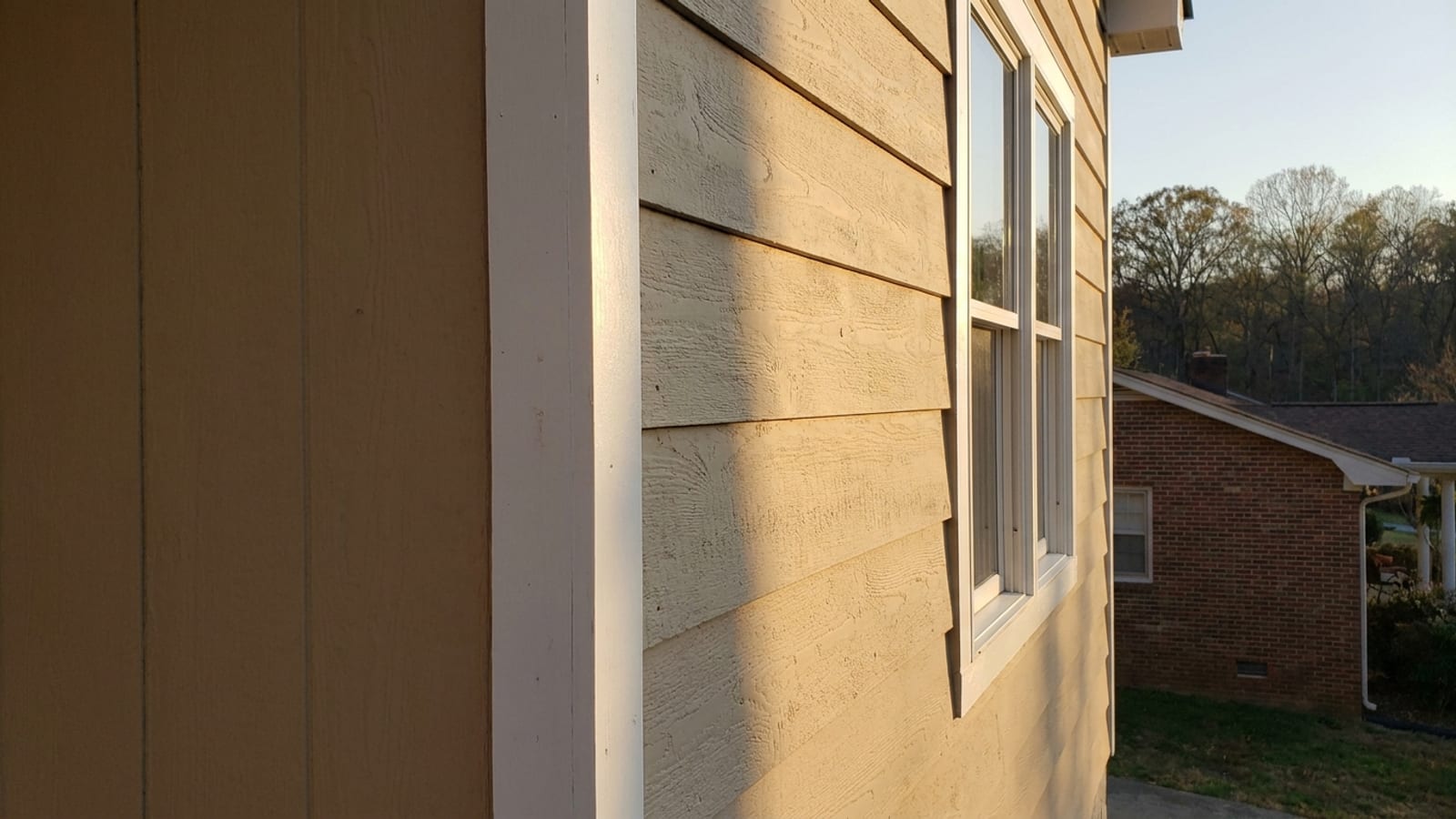
On wood and wood-composite siding, paint is the weather barrier. It is the layer holding water out of a material that will swell, delaminate and rot once water gets in. On fiber cement, paint is color and UV protection over a substrate that does not rot in the first place. On vinyl, paint is purely cosmetic and is working against a material that was never designed to hold a field-applied coating.
That difference matters for the decision. Repainting wood is maintenance you owe the house on a schedule. Repainting fiber cement is a refresh you choose. Painting vinyl is a workaround. If you are already weighing full siding replacement against a repaint, the material you currently have should weigh heavily in the answer.
How do you tell paint from replacement?
Pick an overcast day, start on the north and east elevations where moisture lingers longest, and work the whole perimeter. Three checks tell you most of what you need.
The press test
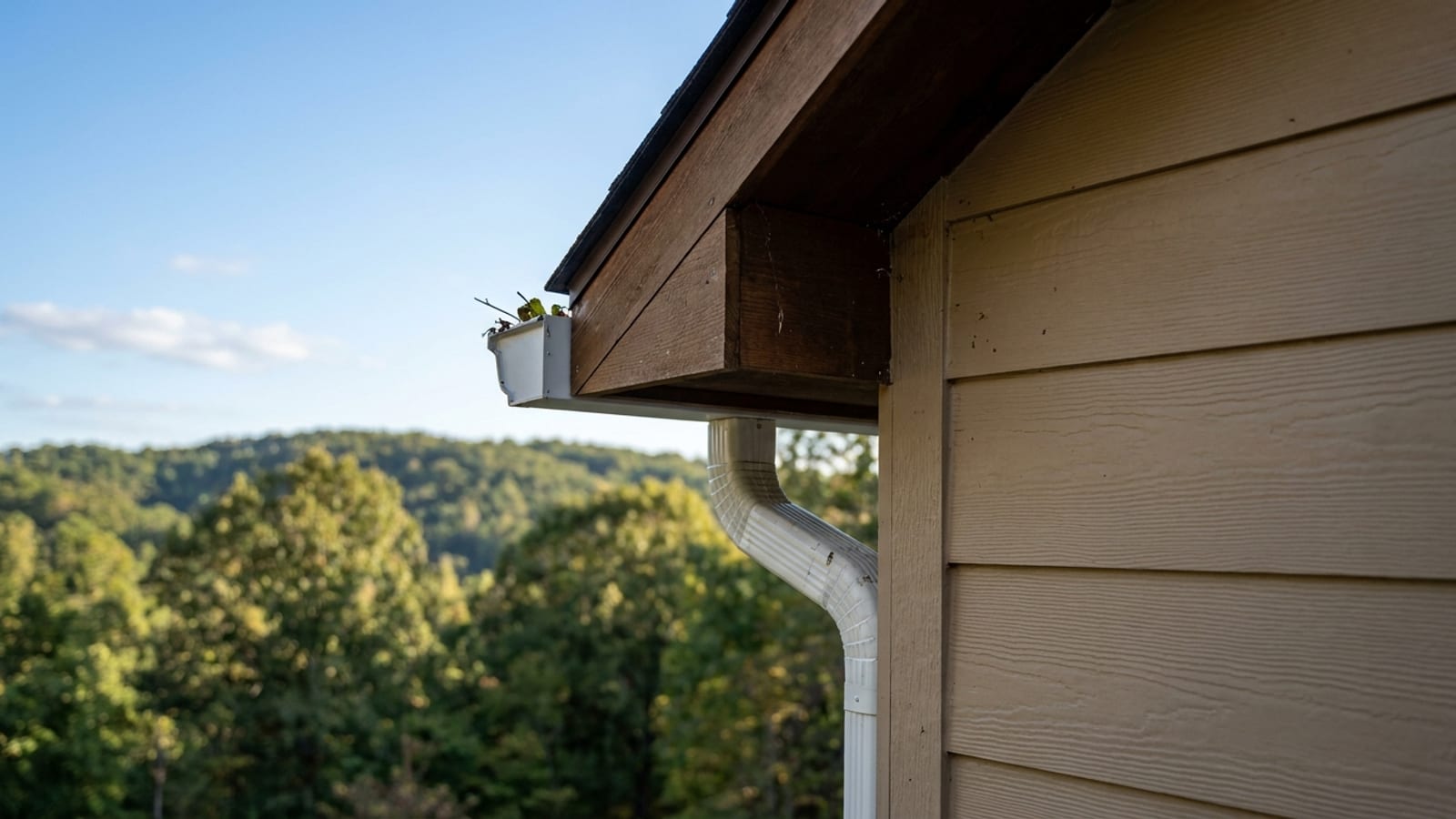
Press firmly along the bottom course, around every window and door, at the corners, and under any gutter that has ever overflowed. Sound siding resists. If the board gives, feels spongy, or a screwdriver tip sinks in with light pressure, that board is done and the ones beside it usually are too. Soft wood does not come back. Paint over it and you seal moisture into the board and the sheathing behind it.
The chalk and adhesion test
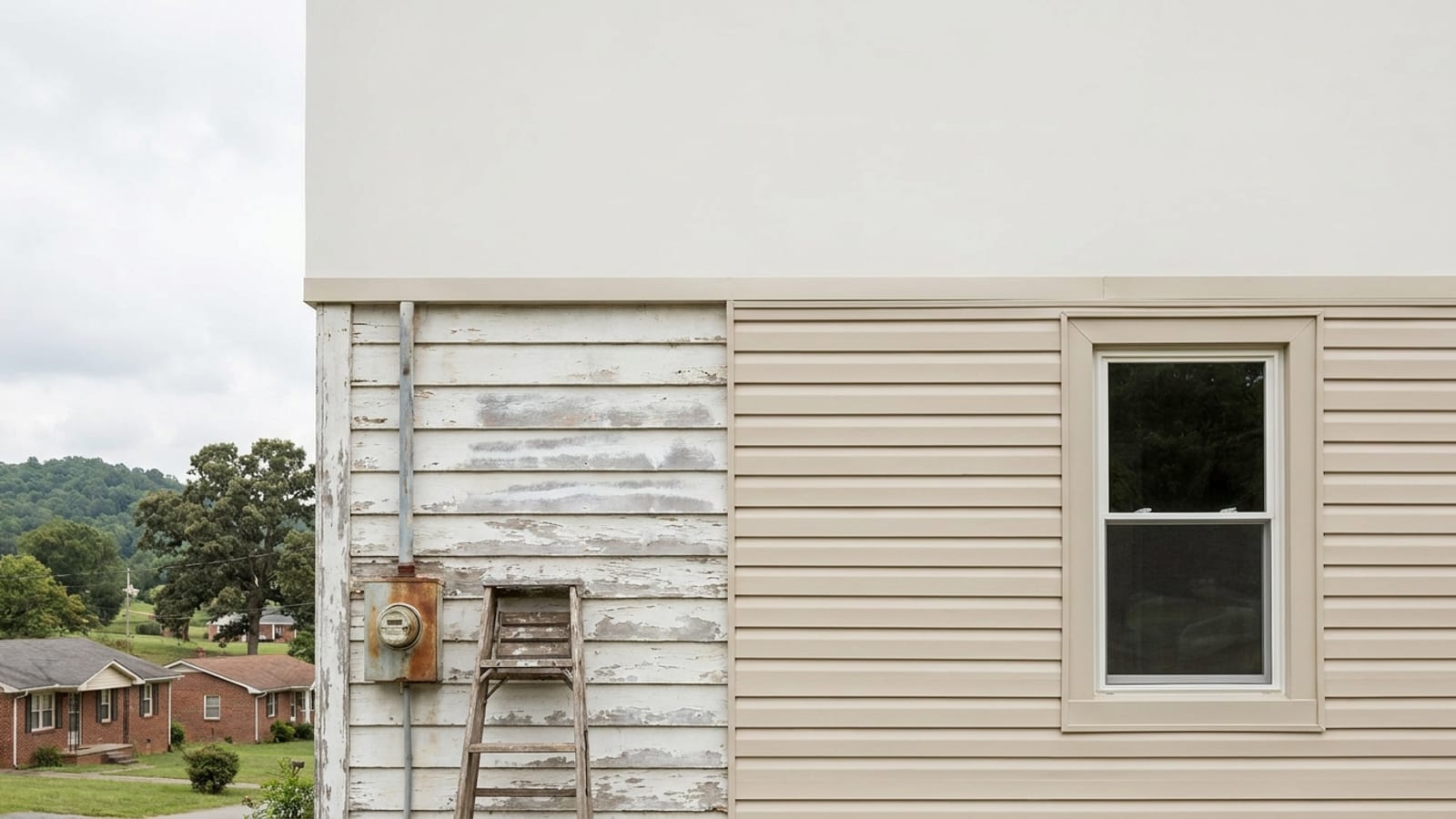
Rub a dark wall with your palm. If you come away with a dusty film, the finish has chalked and the pigment is breaking down. Chalking alone is not a replacement verdict — it can be washed and recoated if the substrate is sound. What is a verdict is paint failing in sheets, peeling back to bare wood in wide areas, or bubbling. Paint that will not stay on is almost always telling you about water coming from behind, not about the last painter.
The repaint clock
Count back. If the house took paint well, held it eight or ten years, and is now simply faded, repaint. If you painted five years ago and it already looks tired, and the time before that was five years too, the siding is no longer a paintable surface. The interval shrinking is the single most reliable signal we see on older homes in this region.
One more check that is not about the siding at all: look for moisture, staining or mold on the inside face of exterior walls, and look at the sheathing from the crawlspace or basement where you can. Interior signs mean the wall assembly is wet, and that is never a paint problem.
What does each option cost?
Painting is always cheaper on the day. That is the honest part of the pitch, and it is why the comparison has to include how long each option lasts.
| Repaint sound siding | Full siding replacement | |
|---|---|---|
| What you get | New finish over existing boards | New cladding, trim, soffit, fascia, house wrap |
| Typical investment | A fraction of replacement cost | $12,000 – $25,000 typical in our market |
| Time on site | Several days, weather dependent | 4 – 7 days |
| Expected service life | Roughly 5 – 10 years in this climate | Vinyl 20 – 40 years, fiber cement 30 – 50 years |
| Fixes rot or wet sheathing | No | Yes, it is inspected and repaired before new material goes on |
| Changes energy performance | No | Yes, a proper house wrap system seals the envelope |
| Warranty | Painter's workmanship terms only | 30-year material and labor through The Patriot's Promise |
Run the math over a real ownership horizon rather than over one invoice. Three repaints across fifteen years on siding that is slowly failing underneath is not a cheaper path than one replacement — it is the same money spent in installments with none of the material benefit at the end, and the rot kept growing the whole time.
When is painting clearly the right call?
There are plenty of houses where replacement would be a waste of money. Paint when:
- The boards pass the press test everywhere, including the low courses and the shaded walls.
- The paint is faded, dirty or simply the wrong color, and it is still adhering.
- You have wood or fiber cement siding that has been maintained on schedule.
- You are two or three years from selling and the cladding is genuinely sound.
- Your repaint intervals have been long and steady, not shrinking.
In those cases a thorough wash, scrape, prime and two coats is the correct spend, and anyone telling you the whole house needs to come off is not reading the wall.
When does painting stop being an option?
Replace when you find any of these, and especially when you find several at once:
- Soft or spongy boards, swollen butt ends, or delaminating hardboard.
- Cracked, buckled or warped panels.
- Paint failing in wide sheets, or failing again within a couple of years of a good job.
- Moisture, musty smell or mold on interior faces of exterior walls.
- Areas you have patched more than once.
- Fasteners backing out, or panels that move when you push on them.
One of those on one elevation is a repair conversation. Three across the house means the cladding system has reached the end of its service life, and every dollar of paint after that is buying time on material that has already spent it.
Why does painting over bad siding cause trouble later?
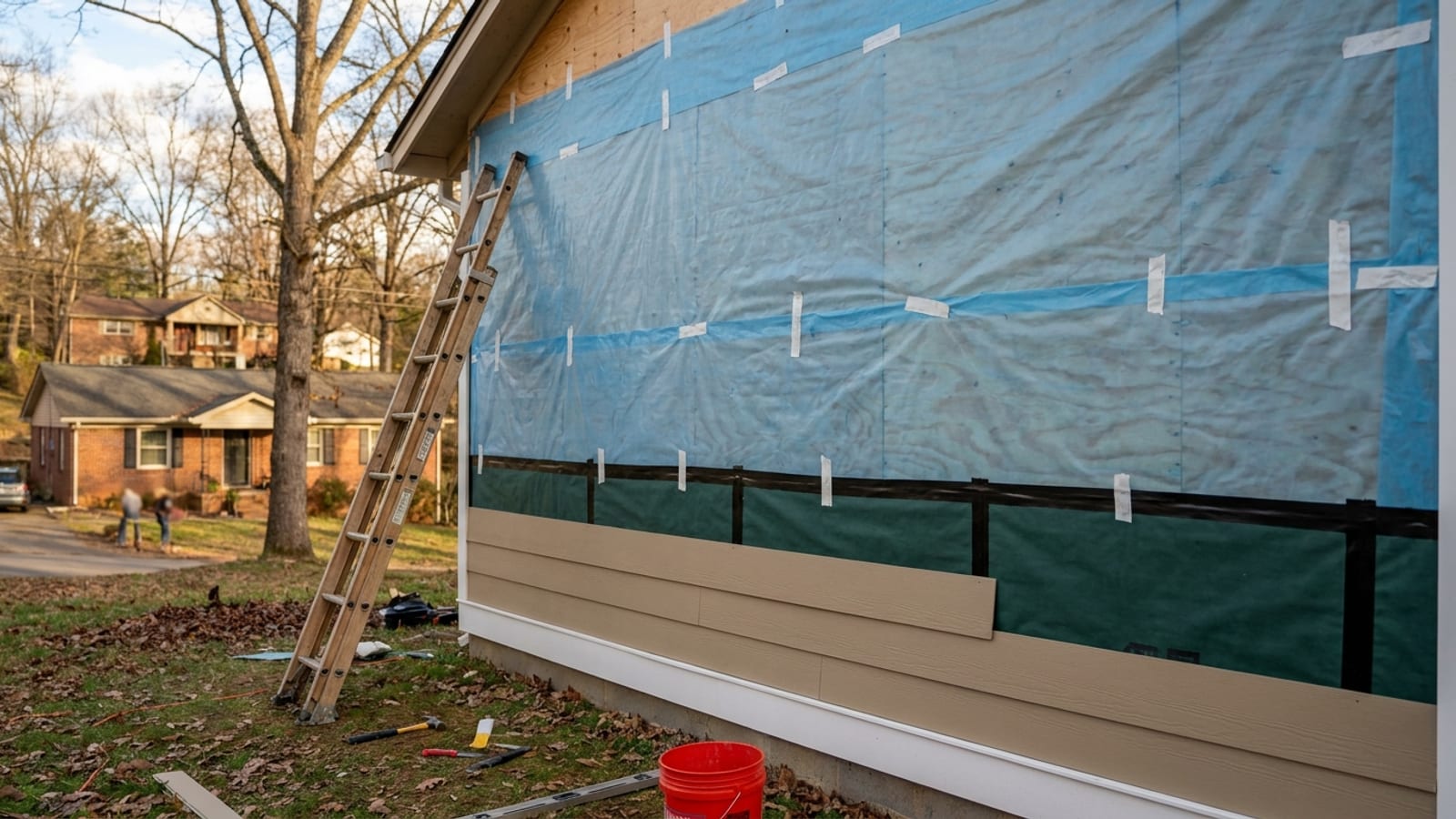
Because paint is a film, and a film over a wet board traps moisture rather than shedding it. The coating blisters, the board keeps softening, and nobody looks at the sheathing behind it. That is the same reason we do full replacement only and never side over an existing failing layer — the value of taking the wall down to sheathing is that somebody actually sees what is behind it, repairs what needs repairing, and puts a proper house wrap and flashing system back on before new cladding goes up.
It is also why a replacement quote should never be a single lump number. You want the trim, soffit, fascia and wrap itemized, the material and the labor terms stated separately, and the warranty written down. The coverage we put in writing names a term for material and labor both, which is the line worth comparing when two quotes look close.
What if the siding is sound but you want a different look?
Paint handles that on wood and fiber cement. On vinyl it is riskier — darker colors absorb more heat than the panel was engineered for, and many manufacturer warranties address field-applied coatings directly. If you have vinyl you dislike and it is otherwise in good shape, the practical options are living with it, or replacing it and choosing the color at the factory, where the finish is baked on and covered.
If the number is what is holding you back rather than the decision, spreading it is straightforward. Project financing through the GreenSky program includes no-interest-if-paid-in-full plans at 6, 15 or 18 months and fixed-rate terms, with zero down for most approved homeowners, subject to credit approval.
What is the next step?
Walk your house first. Press the low courses on the shaded elevations, look under the gutters, check the corners and the trim around every opening. If everything is firm and the paint is just tired, hire a painter and enjoy a few more years out of what you have. If boards are giving under your hand, or you have repainted twice in ten years, get a real scope and a real number before you buy another five gallons.
Schedule a free in-home estimate. An estimator walks every elevation, checks the condition of the boards and trim, and gives you one itemized price with the material, the trim work and the warranty spelled out. It is a sales appointment, and it is also the only way to get an accurate number instead of a guess from the curb.