Short answer
Replace them when the fascia is soft where a screwdriver can sink into it, when paint will not hold no matter how often you repaint, when soffit panels sag or have separated, or when birds, squirrels or wasps have found a way in. In almost every case the cause is water — an overflowing gutter, a debris-packed valley or a roof edge detail that lets water run behind the board. Fix that first, because new material installed in front of the same water path fails the same way.
Replace them when the fascia has gone soft, when paint will not hold no matter how many times you repaint, when soffit panels sag or have pulled apart, or when something has moved in. And before you replace anything, find the water — because in almost every case that is what did it, and new material in front of the same water path fails the same way.
Soffit and fascia are the parts of a house nobody thinks about until a gutter starts pulling away or a squirrel gets into the attic. They are also where a lot of exterior problems announce themselves first.
What are they, and what do they do?
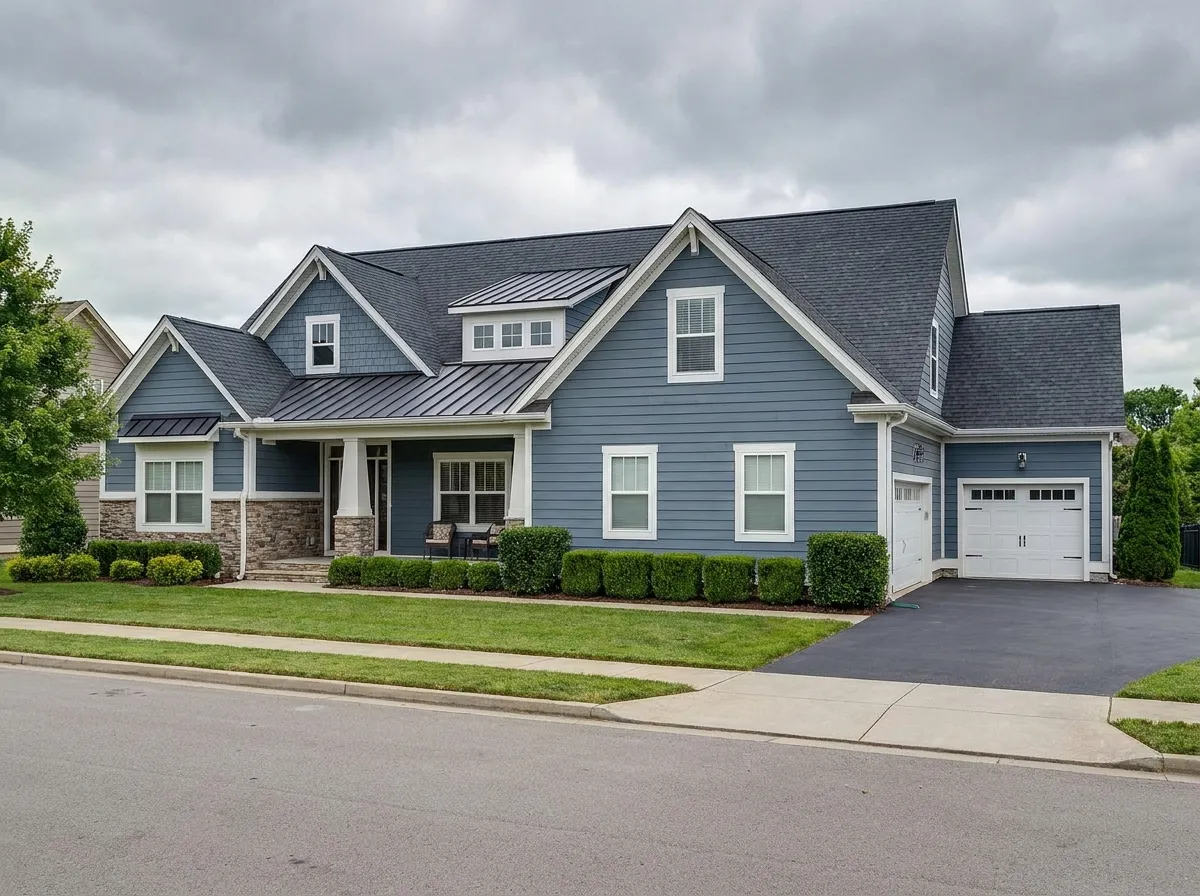
Fascia is the vertical board that closes off the ends of the rafters along the roof edge. It is a finish board and a structural attachment point, because on most houses the gutters hang on it. It takes direct weather, direct gutter overflow and the load of a full gutter in a downpour.
Soffit is the horizontal panel underneath the eave, spanning from the fascia back to the wall. It closes in the space so weather and animals stay out, and on most houses it is also the intake for attic ventilation, either through perforated panels or through vents cut into solid ones.
That ventilation role is the part homeowners underestimate. Soffit vents are the intake and ridge or roof vents are the exhaust. Block the intake and the exhaust has nothing to pull from. In a climate where summer attic temperatures are the problem, that matters — a poorly vented attic shows up as a hot upstairs, higher cooling bills and moisture on the underside of the roof deck.
What are the signs they need replacing?
Take a walk around the house with binoculars or a phone camera zoomed in, and look up.
- Peeling or blistering paint on the fascia. Paint fails from behind when the wood is wet. Repainting a board that is wet from the back buys a season.
- Soft or spongy wood. If you can safely reach it, press a screwdriver into the fascia low along its length and at the corners. Firm and gray is weathered. Giving or crumbling is rot.
- Sagging or separated soffit panels. Panels dropping out of their channel usually mean the framing behind them has been wet, or that fasteners have let go.
- Dark streaks or stains under the eave. Water running where it should not.
- A gutter pulling away, sagging or holding standing water. The gutter is telling you about the board it is fastened to.
- Animals and insects. Birds nesting in the eave, squirrel entry holes, wasp nests inside a soffit cavity. They get in where the material has failed.
- Daylight visible from inside the attic along the eave line.
What causes it, almost every time?
Water, arriving one of four ways:
- Gutters that overflow or back up. Debris packs the trough, water runs over the back edge, and it runs straight down the fascia and into the soffit. This is the single most common cause.
- A missing or poorly lapped drip edge. Without a drip edge directing water off the roof and into the gutter, water wicks back onto the fascia at the roof line.
- Debris-packed valleys and roof edges. Wet leaves held against a roof edge keep the wood underneath damp for weeks.
- Poor attic ventilation. Moisture from inside the house condensing in a hot, humid attic can rot sheathing and eave framing from the inside out.
This is why the sequence matters. Replace the fascia without correcting the gutter and you have bought a new board and kept the hose pointed at it.
Repair or replace?
| What you find | Repair | Replace | Why |
|---|---|---|---|
| Paint peeling, wood firm underneath | Yes | No | A finish problem; prep and repaint |
| One short run of soft fascia | Often | Sometimes | Targeted replacement of that run, after fixing the water |
| Soft fascia in several places | No | Yes | The pattern says the whole detail is failing |
| Soffit panels sagging in one bay | Often | Sometimes | Check the framing above before closing it back up |
| Rot at the corners and along multiple eaves | No | Yes | Long-term water exposure across the detail |
| Animal entry with chewed material | No | Yes | Failed material plus whatever is nesting behind it |
| Solid soffit with no venting and a hot attic | No | Yes | Vented panel is the fix, and it is worth doing |
| Aluminum wrap over unknown wood | Investigate | Likely | Wrapping hides condition; open one section and look |
That last row is worth a warning. Aluminum fascia wrap is a legitimate finish over sound wood and a very effective way to hide rot. If your house has wrapped fascia and you are seeing stains, sagging gutters or paint issues nearby, have someone open a section and look at what is under it.
Should this be part of a siding project?
Usually, and this is the honest answer rather than an upsell. Trim, soffit and fascia are part of the envelope, and they are part of the scope when we do siding — the old cladding comes off, the sheathing gets inspected and repaired where it is soft, house wrap goes on, and the trim details are rebuilt as part of the same system.
There are two practical reasons to do them together. First, the eave detail is where cladding, roof and gutter all meet, and getting that junction right is much easier when all of it is open at once. Second, new trim against old, faded cladding rarely matches — the trim looks new because it is, and the walls look worse by comparison.
We do full-replacement siding rather than partial work, because a warranty on a system only means something when the whole system went on at once. If what you have is genuinely a single rotted fascia run, we will tell you that at the estimate rather than quote you a house.
What does it cost?
Full siding replacement with us runs $12,000 to $25,000 for a typical home, including trim, soffit, fascia and house wrap. Where a particular house lands depends on square footage, the number of stories and corners, the material, and what is found once the old material comes off. Most projects run four to seven days.
The eave is the part of a house where scope is hardest to see in advance, because a soft fascia often means soft framing behind it, and nobody knows how far it goes until the board is off. Ask any company how repair scope gets priced before work starts.
Projects this size are commonly spread out with GreenSky financing, which includes no-interest options if paid in full within 6, 15 or 18 months and fixed-rate terms, with zero down for most approved homeowners, subject to credit approval.
Siding work, trim included, is covered in writing under The Patriot's Promise — 30-year material and labor coverage, with $2M insurance on every job.
What is the next step?
Have someone get up to the eave and look, rather than diagnosing it from the ground. At a free in-home estimate the estimator checks the fascia, the soffit and the gutter line along with the walls, and gives you one itemized price with the scope spelled out. There is no trip charge inside our service area.
Request a free estimate or call (423) 830-7138.