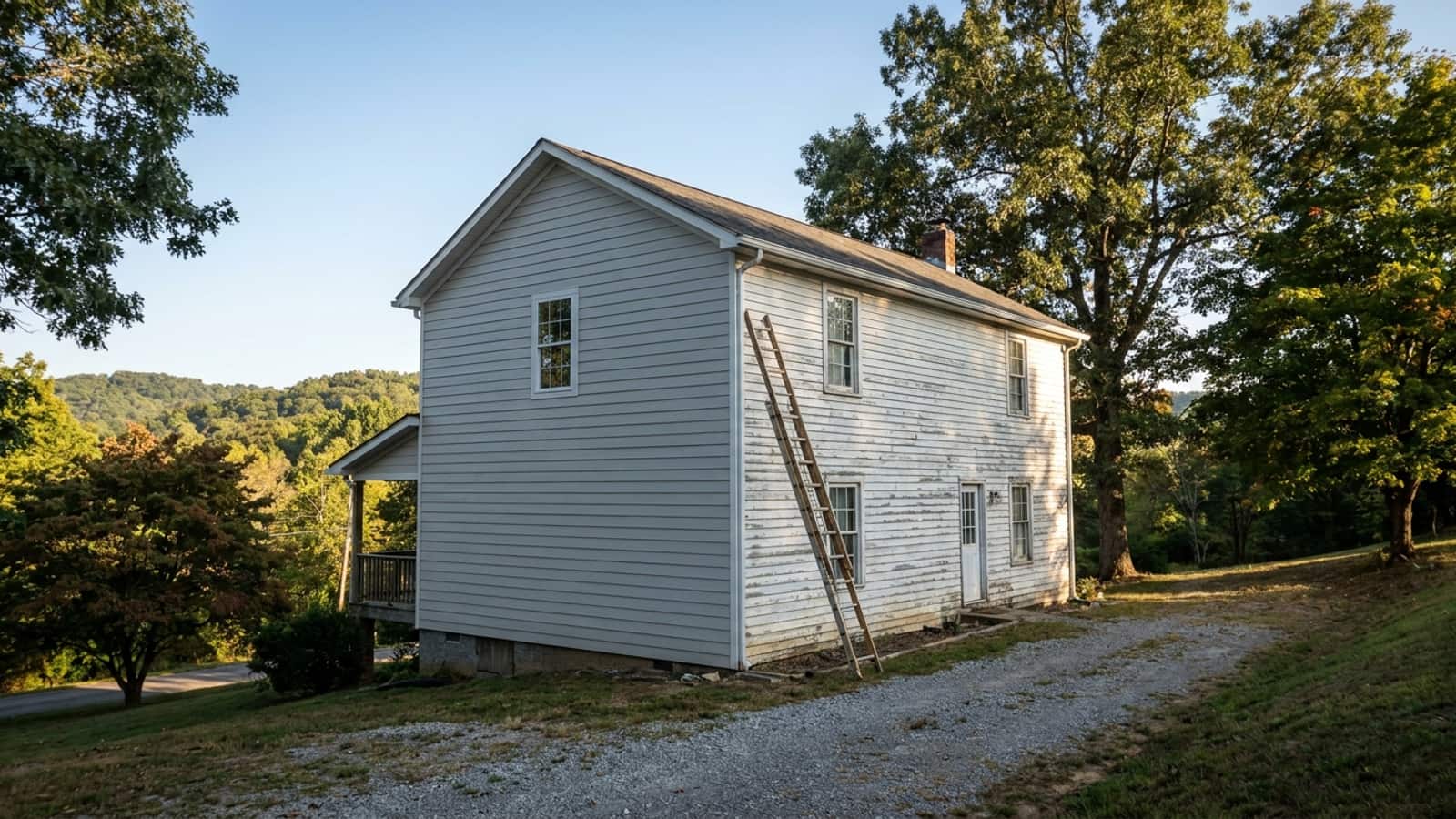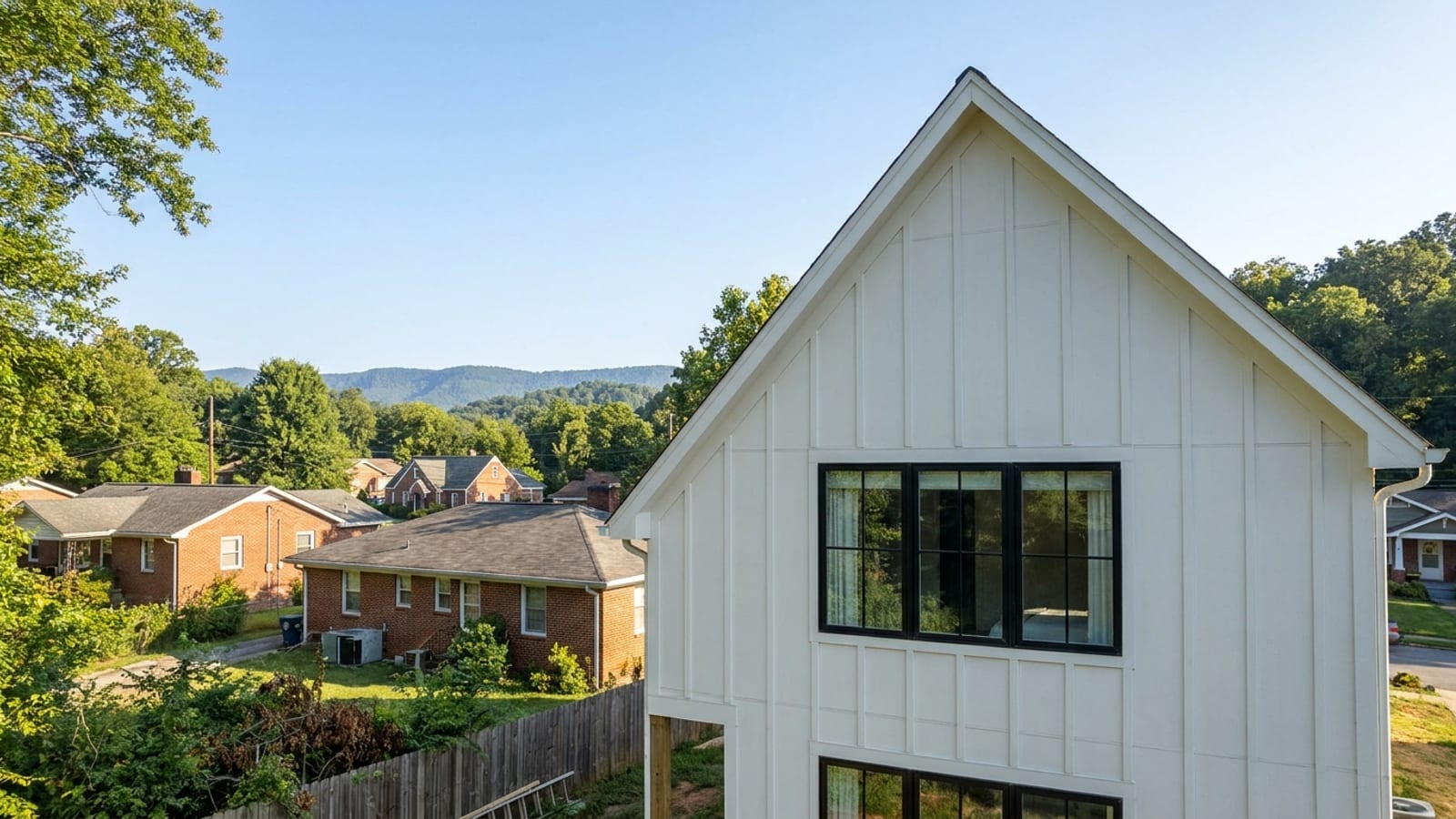
Short answer
Gutters come off first and go back on last. Siding is installed up under the eave and behind the trim, so taking the gutters down gives the crew clean access to the fascia and a correct flashing detail at the roof edge, and the gutter is rehung on the finished wall afterward. If the gutters are older than the siding coming off, it is usually cheaper to replace them during the same project than to rehang tired metal on a new wall.
Gutters come off before the siding does, and gutters go back up after the last piece of siding and trim is in place. That order is not a preference. It is the only sequence that lets a crew work the eave properly, flash the roof edge, and hang a gutter on a finished fascia instead of reaching around a length of aluminum bolted across the work zone.
Most homeowners ask this question for a practical reason: they are looking at a siding quote, the gutters are twenty years old, and nobody has told them who shows up when. Here is how the sequence actually works, when the old gutters are worth rehanging, and what to settle before either crew is on the ground.
Why do the gutters have to come down at all?
There are three reasons, and they all trace back to the same place — the eave is where the wall, the trim and the roof edge meet, and the gutter sits right on top of that junction.
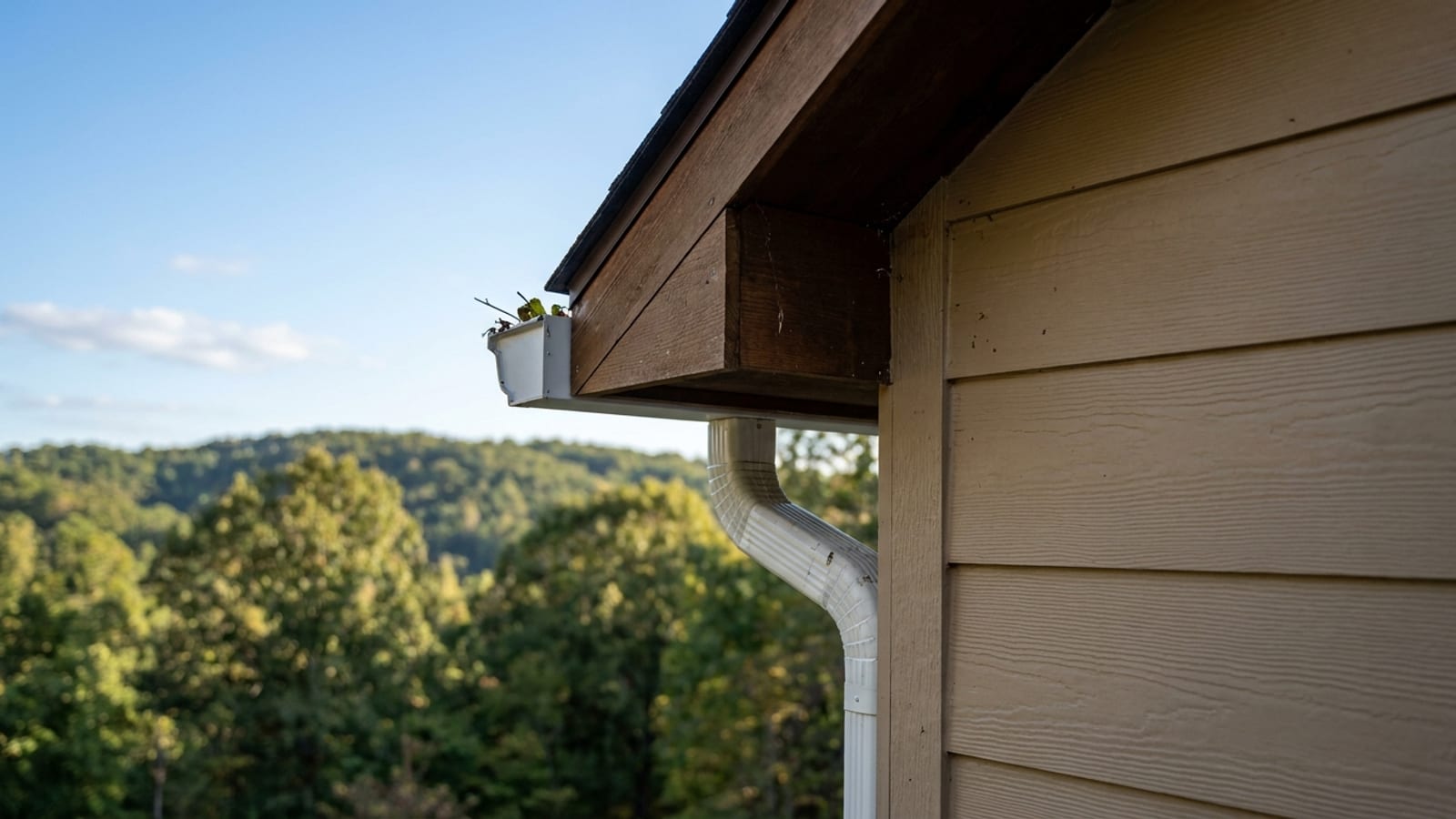
The fascia is under the gutter. On most homes the gutter is hung directly to the fascia board with hidden hangers or spikes. You cannot inspect that board, replace it, or wrap it in new trim with a gutter screwed to its face. A full siding replacement includes trim, soffit and fascia as part of the envelope, so the gutter is in the way of work that has to happen.
The siding terminates at the eave. Panels, frieze board and the top course of lap siding all run up under the soffit. Trying to cut and fit that top course with a gutter six inches off the wall produces sloppy work at the exact line the eye follows across the front of a house.
Access. Ladders lean on fascia. Scaffold stands off the wall. Neither is compatible with a full gutter run, and a gutter that gets bent during a siding job is a gutter that has to be replaced anyway.
What is the actual order of operations?
On a typical project the sequence runs like this:
- Gutters and downspouts come off the elevation being worked, and are either set aside for reuse or hauled off.
- Old siding comes off down to the sheathing.
- Sheathing gets inspected and repaired — this is the step that exists only because the wall was actually opened.
- House wrap goes on, lapped correctly and integrated with flashing at windows, doors and the roof edge.
- Soffit and fascia are replaced or re-wrapped.
- Siding and trim go on, working bottom to top.
- Gutters and downspouts are hung on the finished fascia, and downspouts are strapped through the new siding.
That last step is the one people forget to plan. Downspout straps penetrate the wall. Doing that as a deliberate detail on a finished elevation is very different from doing it as an afterthought months later.
Should the old gutters go back up, or should you replace them?
This is the real decision, and it is worth making before the siding starts rather than on the day the crew is holding the old trough in their hands.
| Reuse the existing gutters | Install new gutters | |
|---|---|---|
| Makes sense when | The gutters are under about ten years old, seamless, straight, and the hangers are sound | The gutters are spiked, sagging, patched, leaking at seams, or the same age as the siding coming off |
| Cost impact | Lower up front — removal and rehang only | Higher up front, no second mobilization later |
| Color match | You are matching new trim to old gutter color | Gutter, fascia wrap and trim can be specified together |
| Risk | Twenty-year-old aluminum does not always survive removal without kinks | None beyond ordering the right size and pitch |
| Timing | Rehung at the end of the siding job | Ordered during the siding job, hung at the end |
The practical test: if the gutters were installed at the same time as the siding you are tearing off, they are the same age as the siding you decided was finished. Rehanging them means climbing the same walls again in a few years, drilling into new trim then instead of now.
If the metal is genuinely sound, reuse is a legitimate way to hold the budget down, and holding the budget down is a reasonable goal. Full siding replacement in this market typically runs $12,000 to $25,000 installed including trim, soffit, fascia and house wrap, and a project of that size is worth planning around rather than improvising. If spreading the number is part of the plan, financing through the GreenSky program includes no-interest-if-paid-in-full plans as well as fixed-rate terms.
What should get fixed while the gutters are off?
The gutters being down is the only time in twenty years that the roof edge is fully visible and reachable. A few things belong on the list:
Fascia condition
Press a screwdriver into the fascia in a few places, especially at outside corners and below roof valleys. If it sinks, the board is done. Water almost always got there from an overflowing gutter or a valley dumping past the end of the trough, and new material installed in front of the same water path fails the same way.
Drip edge and kickout flashing
A drip edge at the roof eave directs water into the gutter instead of behind the fascia. A kickout flashing at the point where a roof slope dies into a sidewall is a small piece of bent metal that keeps a concentrated stream of water out of the wall. Both are cheap while the eave is open and expensive to add later.
Pitch and downspout placement
Gutters need fall toward the outlets. If one corner has always overflowed, the problem may be pitch or an undersized outlet rather than debris. Sorting that out now beats living with it behind new siding.
Soffit venting
If the soffit is being replaced, continuous vented panel is usually the right call for attic airflow in this climate. That decision is made during the siding scope, not after.
What if the roof is being replaced too?
Then the roof goes first, siding second, gutters last. Roofing crews work off the eave, drop debris down the walls, and set drip edge that the gutter later hangs below. Putting new siding on before a roof tear-off means new trim takes the abuse of that tear-off.
If the roof is not being touched, the siding crew still works at the eave, so the existing roof edge and drip edge should be looked at while the gutters are down.
How do you keep this from becoming two jobs that point at each other?
This is where most gutter-and-siding confusion actually lives. Two trades meeting at one detail is a place where scope can fall between them, so it belongs in writing before anyone starts.
At the estimate, get answers to four things:
- Who takes the gutters down, and are they hauled off or stored on site?
- Is fascia being replaced, wrapped, or left as is?
- Who rehangs or installs the gutters, and on what day relative to the siding finish?
- What color is the fascia wrap, and does the gutter color need to match it?
All four should appear on one itemized number rather than being assumed. That is the point of the estimate visit — the estimator measures the elevations, looks at the eave, and puts the scope on paper. It is a sales appointment, and it is also the only way anyone can quote the real work instead of a square-foot guess.
The finished product is covered in writing as one system. Siding through Patriots' Pride carries a 30-year material and labor warranty under The Patriot's Promise, and the installation is done to James Hardie Alliance Select spec when the project is fiber cement.
What is the next step?
If your gutters are coming up in the same conversation as your siding, book a free in-home estimate at /get-estimate/. An estimator will walk the elevations, check the fascia and the roof edge, and give you one itemized number with the gutter sequence spelled out — so you know exactly which day the metal comes down and which day it goes back up.