Short answer
A storm door has a glass panel plus a screen, so it adds weather protection in winter and ventilation in summer; a screen door has screen only and exists purely for airflow and keeping insects out. In this climate most homeowners who want one end up with a storm door, because the same unit does both jobs and shields the entry door's finish from sun and driving rain. A plain screen door makes sense on a porch, a side door, or a back door where nobody expects the unit to do anything but screen.
A storm door and a screen door are not two names for the same thing. A storm door carries a glass panel and a screen — either swapped seasonally or built into one sash so the glass slides and the screen is behind it — which means it can protect your entry door from weather in January and vent the hallway in April. A screen door carries screen only. It is lighter, cheaper, and it does exactly one job.
That difference decides almost everything else: the price, the hardware, what it does for the door behind it, and whether it is worth putting on the front of your house at all. Most homeowners in Tennessee, North Georgia and Northeast Alabama who go through the decision honestly land on a storm door for the main entry, because the unit does both things, and on a screen door only where ventilation is the whole point.
What is the actual difference between a storm door and a screen door?
How a storm door is built
A storm door is a full secondary door with a frame stout enough to hold glass. Most current units are aluminum or vinyl-clad with a tempered glass panel, a screen panel, a closer, a latch set and a sweep at the bottom. The two common arrangements are interchangeable panels — you store the glass in the garage for the summer — and self-storing, where the glass and screen both live in the sash and you slide one behind the other. Self-storing is the one most people want, because nothing gets carried to the attic and forgotten.
Because it seals around the perimeter and sheds water, a storm door does real work. It keeps driving rain off the entry door's face, blocks direct sun from the finish, and adds one more air barrier in front of the threshold. That is why it shows up in our entry and storm door conversations far more often than a plain screen unit does.
How a screen door is built
A screen door is a light frame — often wood or thin aluminum — with mesh stretched across it. There is no glass panel, no seasonal swap, no weather barrier. It stops insects and lets you leave the main door open on a mild evening. On a screened porch or a back door onto a deck, that is all anyone needs and the lighter unit is easier to live with.
The practical downside is that a screen door does nothing eleven months of the year except hang there. Once cold weather arrives you close the entry door behind it and the screen is just a layer between you and the street.
Which one does your entry need?
| Storm door | Screen door | |
|---|---|---|
| Glass panel | Yes, tempered | No |
| Screen | Yes, panel or self-storing | Yes, that is all |
| Protects entry door finish | Yes, from sun and driving rain | Barely |
| Adds an air barrier | Yes | No |
| Year-round usefulness | Both seasons | Warm months only |
| Typical weight and hardware | Heavier frame, closer, deadlatch | Light frame, simple latch |
| Maintenance | Clean the glass, check the sweep and closer | Re-screen when torn |
| Best location | Front entry with exposure, older or wood doors | Porches, side and back doors |
| Security value | Some, with a keyed or deadlatch handle | Essentially none |
Read that table with your own stoop in mind. If the front door takes direct afternoon sun with no cover over it, the storm door column is doing things you will notice. If the door is under a deep porch and you only ever open it for the breeze, you are paying for glass you will never install.
When is a storm door clearly the right call?
There are three situations where we recommend one without hesitation.
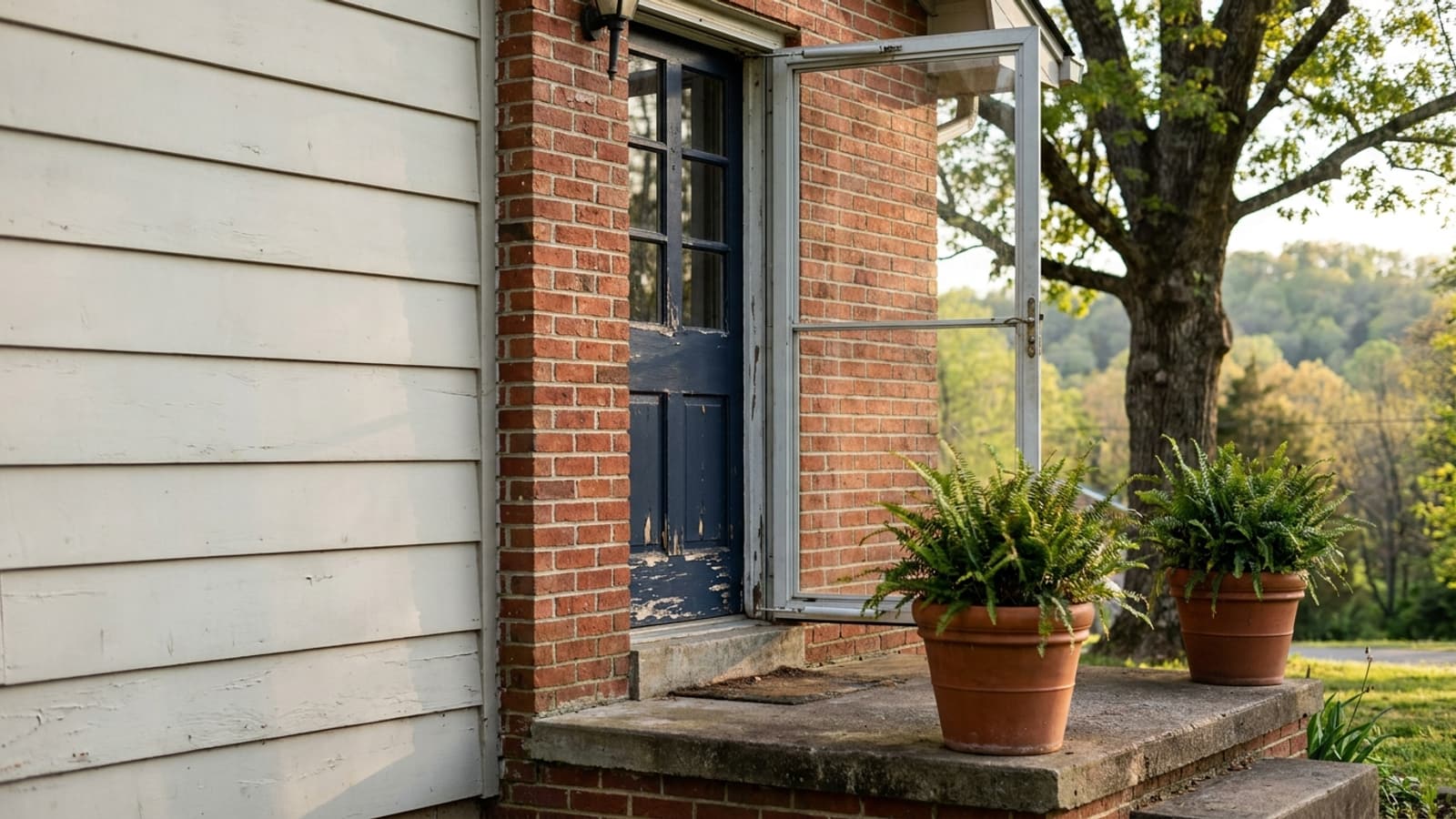
The entry door is older, wood, or already showing sun damage. Wood and older painted doors fail at the finish first. A storm door takes the UV and the rain and buys the door behind it years. This is the single best reason to add one.
The entry has no cover. A door set flush in a wall with nothing more than a small overhead catches everything. Water runs down the face, sits at the threshold, and works at the weatherstripping. A storm door in front of it changes the amount of weather the primary door has to handle.
You want screened ventilation at the front of the house. Plenty of homeowners in this region want the front door open in the spring and fall and do not want a flimsy screen unit on the front elevation. A self-storing storm door gives you that without a seasonal project.
When is a screen door enough — or a storm door a bad idea?
A screen door is enough on a screened porch, on a laundry or kitchen side door, and on a back door onto a deck where the only ask is airflow. It is lighter to swing with your hands full and there is nothing to store.
There is also a case where adding a storm door is the wrong move. A new insulated fiberglass entry door under a deep covered porch does not need one. It already handles the weather it sees, the porch is doing the shading, and the storm door adds cost, a second unit to maintain, and a sealed air space in front of a door face that is better off breathing. Dark door colors in full sun deserve extra thought here — check the entry door manufacturer's guidance on secondary doors before you order, because heat buildup between the two is a real consideration on some panels.
If the underlying complaint is drafts rather than weather, the storm door is treating a symptom. A door that leaks air at the jamb, or one that has to be pulled hard to latch, has a seal or a frame problem, and a second door in front of it does not fix the first one.
What do storm doors cost, and how are they quoted?
Exterior door projects with us run $3,973 to $7,500 installed, and that range covers entry, patio, French and storm doors. A storm door on its own sits at the low end of the door work we do, and it is most often specified at the same time as the entry door, because ordering both together is how the swing, hinge side, hardware finish and sweep clearance get coordinated instead of guessed at.
What moves the number on a storm door specifically:
- Glass area — full-view lets in the most light and shows the entry door behind it; midview and high-view keep a solid kick panel at the bottom, which survives kids, dogs and mops better.
- Frame color and finish — factory finishes that match your trim cost more than stock white.
- Hardware — a basic latch versus a keyed handle set with a deadlatch.
- Opening condition — brickmold and trim that need repair before anything mounts to them.
If you would rather spread the cost, we offer financing through the GreenSky® program, including no-interest-if-paid-in-full plans and fixed-rate terms. And if you are active military, a veteran, police, fire, EMS or a dispatcher, the Hometown Hero program takes 50% off exterior doors — bring proof of service or a department ID to the estimate.
How do you get the sizing and swing right?
A storm door mounts to the exterior trim around the door panel, not to the whole rough opening. That means sidelights and transoms are unaffected — the storm door covers the door leaf only. What has to be measured is the brickmold width, the trim depth, the threshold height and how much room the sweep has to clear.
The swing decision matters more than people expect. Hinging the storm door on the same side as the entry door is the default, but a narrow stoop, a railing, a light fixture or a screened porch structure can argue for the other side. Decide it before the order goes in, because hinge side is built into the unit.
One more detail: check what the closer will hit. A wall-mounted closer and a storm door on a short stoop can put the handle in the path of anyone stepping up. That is a two-minute conversation at the estimate and an annoyance for years if it is skipped.
What about the door behind it?
A storm door is worth adding to a door worth protecting. If the entry door itself is soft at the bottom rail, out of square, dented through the finish, or leaking air with the deadbolt thrown, the honest answer is that the primary door is the project and the storm door is the accessory. We would rather tell you that than sell a storm door in front of a door that needs replacing.
Everything we install is covered in writing under The Patriot's Promise, with material and labor terms spelled out on the estimate for the specific unit you choose.
Your next step
Walk out to your front door and look at three things: how much cover it has, what shape the finish is in, and whether you actually want the door open in the spring. That tells you which column of the table above you belong in.
When you want a real number instead of a guess, book a free in-home estimate. An estimator measures the opening and the trim, checks the threshold and the swing, shows you full-view and midview options side by side, and gives you one itemized price. It is a sales appointment — it is also the only way anyone can price your stoop accurately.