Short answer
Start with the siding, not the paint deck. Identify whether your siding reads warm (beige, tan, cream, warm gray) or cool (blue-gray, true gray, white, sage), then pick a door color in a family that either sits in that same temperature or contrasts with it on purpose. The door should be the darkest or most saturated element on the front of the house, and the trim color is what makes the pairing look deliberate rather than accidental.
Start with the siding, not the paint deck. Your siding is the largest color surface on the house and it already has an undertone, so the front door color either agrees with that undertone or fights it. Once you know whether your siding reads warm or cool, the list of door colors that will look right shrinks from hundreds to about six, and the decision gets easy.
This is one of the few exterior choices where a modest budget still buys a large visual change. A new entry door is also one of the better recouped exterior projects in Remodeling magazine's Cost vs. Value report, so the color decision rides along with an upgrade you were likely considering anyway. If you are pricing the project, entry and patio door replacement in our market runs about $3,973 to $7,500 installed, including the door, the frame, the hardware, the labor and the finish work.
How do you read the undertone of your siding?
Hold a sheet of plain white printer paper flat against the siding in daylight, on a shaded wall rather than a sunlit one. Against pure white, the siding's bias shows immediately.
- If the siding looks yellow, pink, orange or brown next to the paper, it is warm.
- If it looks blue, violet or green next to the paper, it is cool.
- If it is hard to call, you have a neutral or greige, which is the most flexible starting point and the trickiest to shop for, because it shifts with the light.
Do the same test on the north side of the house and again in late afternoon. Southeast light is strong and yellow in the afternoon, and a siding color that reads neutral at noon can read distinctly warm at five o'clock. Whatever the siding does consistently across both checks is the undertone you design around.
Why the undertone matters more than the color name
Two siding colors with the same name on two different manufacturers' charts can land in different temperature families. A door color chosen off a chip in a showroom under fluorescent light, against siding you are picturing from memory, is a guess. Chosen against the actual wall in daylight, it is a decision.
What front door colors work with each siding color?
The pairings below are starting points, not rules. Every one of them is improved or ruined by the trim color, which is covered further down.
| Siding color | Reliable door colors | Why it works | Avoid |
|---|---|---|---|
| Light gray / blue-gray | Navy, black, charcoal, deep teal, crisp white | Same cool family, high value contrast | Orange-leaning reds, tan |
| White or off-white | Black, navy, forest green, barn red, slate blue | White reads neutral, so saturation does the work | Pale pastels that disappear |
| Beige / tan / cream | Deep brown, olive, brick red, warm wood tone, black | Warm on warm reads intentional | Cool blues and violet grays |
| Greige | Black, charcoal, muted sage, navy, bronze | Neutral siding accepts both temperatures | Anything equally muted and mid-tone |
| Sage or olive green | Black, cream, deep plum, warm wood tone | Green needs either neutral or complement | Another green a shade off |
| Dark gray or charcoal | White, natural wood, mustard, brass-accented black | Light door becomes the focal point | Navy, which blurs into the siding |
| Red brick with siding above | Black, deep green, navy, cream | Brick is already warm and busy | Red, which competes with the brick |
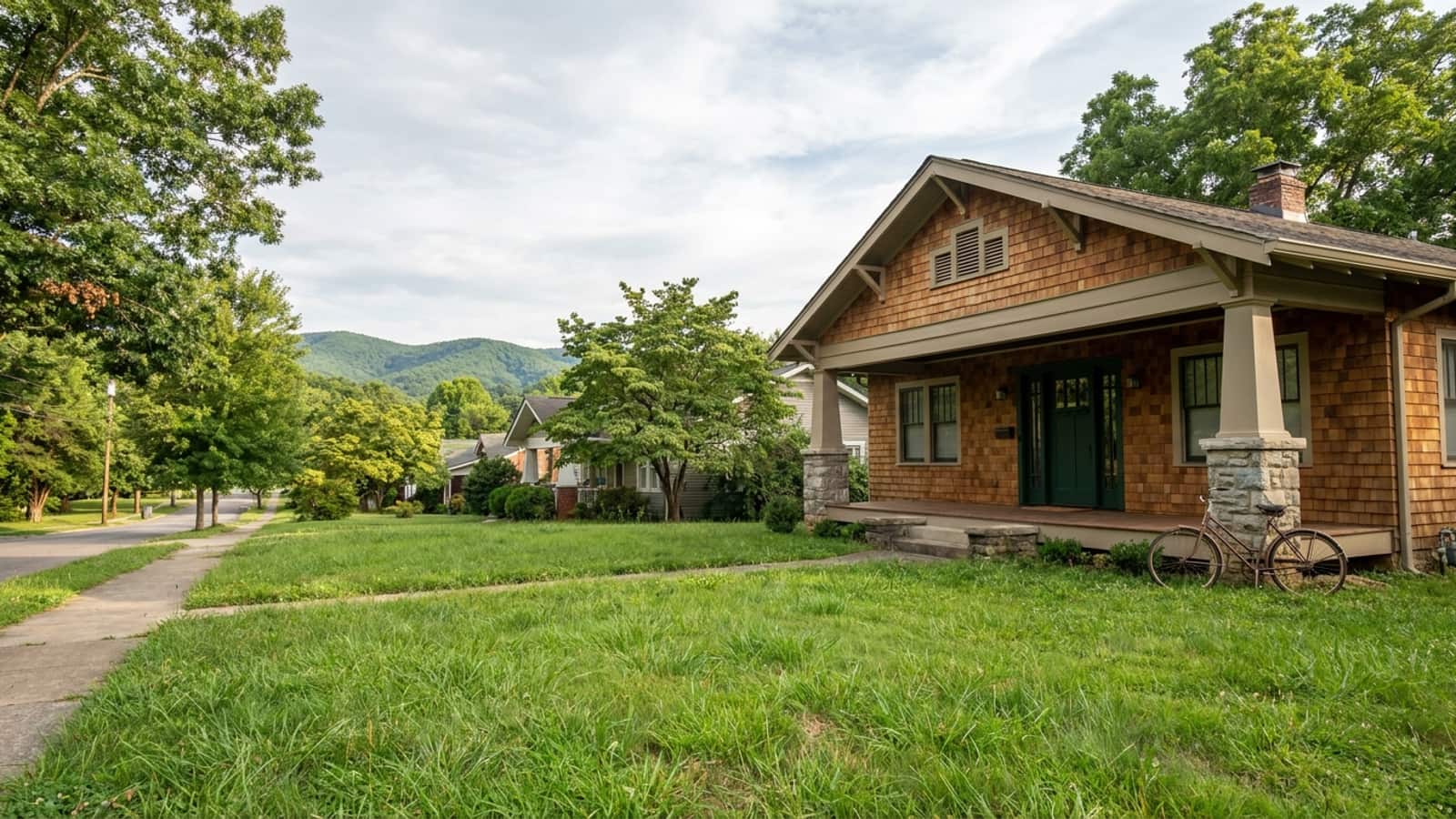
If your house mixes materials, such as siding over a brick water table or stone veneer at the base, pick the undertone of whichever material covers the most square footage of the front elevation and work from that.
How much contrast should the door have?
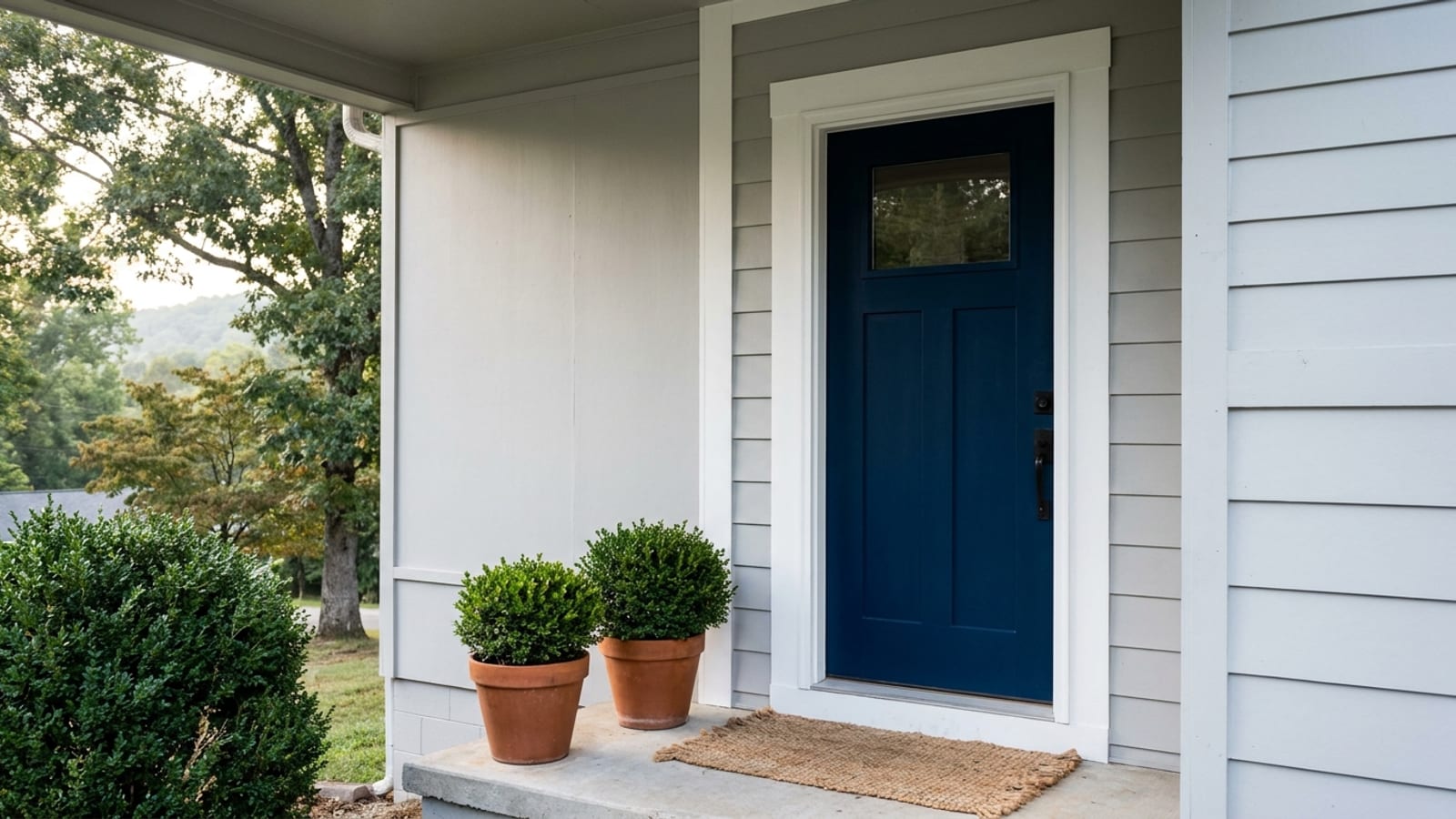
Think in value, meaning light to dark, before you think in hue. The clearest front entries follow a simple hierarchy: siding is the mid value, trim is the lightest value, and the door is the darkest or most saturated. That order is why a navy door with white trim on gray siding works on so many houses in Chattanooga, Dalton and metro Atlanta subdivisions. It is predictable, and predictable looks intentional.
The pattern can be inverted. A white or natural wood door on charcoal siding is the same idea run backward, with the door becoming the lightest element. What rarely works is a door only one or two steps away from the siding in both hue and value, because the entry stops reading as an entry from the street.
How far away are people looking at this?
Most people see your front door from the sidewalk or from a car. At that distance, subtle colors flatten out. If you want someone to notice the entry, commit to the contrast. If you want the door to recede, which is sometimes the right call on a house with strong architectural detail elsewhere, keep it close to the siding value and let the trim do the work.
Does the trim color matter more than the door color?
Often, yes. Trim, soffit and fascia wrap the whole house and frame every opening, so they influence how every other color reads. A door color that looks wrong against the siding will frequently look right once the casing around it is corrected.
Two working approaches:
- White or near-white trim. The safest and most common. It separates the door from the siding cleanly and makes saturated door colors look crisp instead of muddy.
- Trim matched to the siding. The door becomes the only break in the field, which suits modern and farmhouse elevations. This demands a strong door color, because there is no light frame helping it stand out.
If you are already planning a siding project, decide trim and door together. Full siding replacement includes trim, soffit and fascia as part of the envelope, so the trim color is a live decision at the same moment the door color is.
Which door colors hold up in the Southeast sun?
Color longevity is a real consideration here. Strong afternoon sun on a west facing entry fades saturated reds and some blues faster than it fades blacks, charcoals, whites and earth tones. Factory applied finishes on fiberglass and steel doors hold color better than a brush coat applied on site, because they are sprayed and cured under controlled conditions.
Dark doors also absorb heat. That matters most on an uncovered entry taking direct afternoon sun. Fiberglass is the more forgiving material in that spot because it does not dent, rot or rust and takes weather and humidity well, while steel is the value choice and is better suited to a door that sits under real cover. Exposure usually decides this question more than budget does.
What about hardware, storm doors and house numbers?
Hardware finish is a third color, and it should be chosen with the door rather than after it.
- Black hardware on almost any door color, and the default on black, navy and charcoal doors.
- Satin nickel or chrome with cool siding and cool door colors.
- Oil rubbed bronze or antique brass with warm siding, wood tones and earth colors.
- Polished brass with black, navy and deep green doors, where it reads as a deliberate accent.
If you add a storm door, choose a frame color that matches the trim, not the door. A storm door frame in a contrasting color draws a rectangle around the entry and visually cuts the door in half. Keep in mind that a full view storm door over a dark slab in direct sun traps heat against the door face, which is one reason a storm door is not automatically the right call on a new insulated door under a deep porch.
How do you test a color before you commit?
For a painted door, buy sample pots and paint two foot squares on poster board rather than directly on the door. Tape the boards to the door and look at them at three times of day, including after sunset under your porch light, which is usually warmer and dimmer than daylight. Look from the street, not from the porch.
For a factory finished fiberglass or steel door, get physical sample chips from the manufacturer's finish line and hold them against the siding outdoors. Printed brochures and screen images are not reliable for undertone, and a difference of a few degrees of warmth is exactly what separates a pairing that works from one that does not.
One more check: look at the three or four houses nearest yours. Not to copy them, but to confirm you are not about to install the fourth navy door in a row on the same block.
What if the door and siding are being replaced at once?
Then you have the easiest version of this problem, because nothing is fixed yet. Choose the siding color first since it is the biggest surface and the hardest to change later, then the trim, then the door. Doing it in that order means the door is the last and smallest decision rather than the constraint everything else has to work around.
It is also worth noting that active military, veterans, police, fire, EMS and dispatchers get 50 percent off exterior doors through our standing Hometown Hero program. That changes what a better door and a better finish cost, which sometimes changes the color options worth considering.
Whatever you choose, the install is what makes it last. A door set plumb and square, air sealed at the perimeter and flashed properly at the threshold keeps its finish and its fit, and that work is covered in writing under The Patriot's Promise.
Your next step
Bring your siding color, a photo of the front elevation and the colors you are considering to a free in-home estimate. An estimator measures the opening, checks the condition of the frame and threshold, shows you actual door and finish samples against your siding in daylight, and gives you one itemized price. Schedule your free estimate and we will help you settle the color on the porch, where the light is honest.