Short answer
You have four realistic options: a track insert panel that drops into the slider channel, a replacement glass unit built with a pet port in it, a new patio door ordered pet ready from the factory, or a pet door placed in the wall or an adjacent entry door. The one thing you cannot do is cut a hole in the existing tempered glass, because tempered glass shatters when it is cut. Which option fits comes down to how permanent you want it, how well it needs to seal, and how big the dog is.
There are four realistic ways to put a dog door in a patio door, and only one of them involves touching the door you already own. You can set an insert panel into the slider track, replace the glass with a sealed unit that has a pet port built into it, order a new patio door that comes pet ready from the factory, or move the pet door off the patio door entirely and put it in the wall or in an adjacent entry door.
What you cannot do is cut a hole in the glass you have. Patio door glass is tempered safety glass, and tempered glass cannot be cut after it is manufactured. Any attempt to cut, drill or grind it turns the whole panel into gravel. Every legitimate option works around that fact.
What are the four options, honestly compared?
Each approach solves a different problem. Renters and short-term owners usually want reversibility. Owners staying put usually want the opening to look and seal like part of the house.
| Option | How it works | Reversible | Seal quality | Best for |
|---|---|---|---|---|
| Track insert panel | A tall narrow panel with a pet flap drops into the slider channel and shortens the opening | Yes, fully | Fair, depends on the fit at the top and the jamb | Renters, trial runs, older dogs needing quick access |
| Glass unit with a built-in pet port | The sealed glass in the fixed or operating panel is replaced with a factory unit containing the pet opening | No | Good, the port is part of the glass assembly | Owners keeping a door that is otherwise in good shape |
| New patio door ordered pet ready | The door is built with the pet opening already in the panel | No | Best, everything is factory integrated | Owners replacing the door anyway |
| Wall or entry door installation | The pet door goes through the wall beside the patio door, or into a new entry door slab prepped for it | No | Best, a framed and flashed opening | Houses where the patio door should stay untouched |
The track insert panel
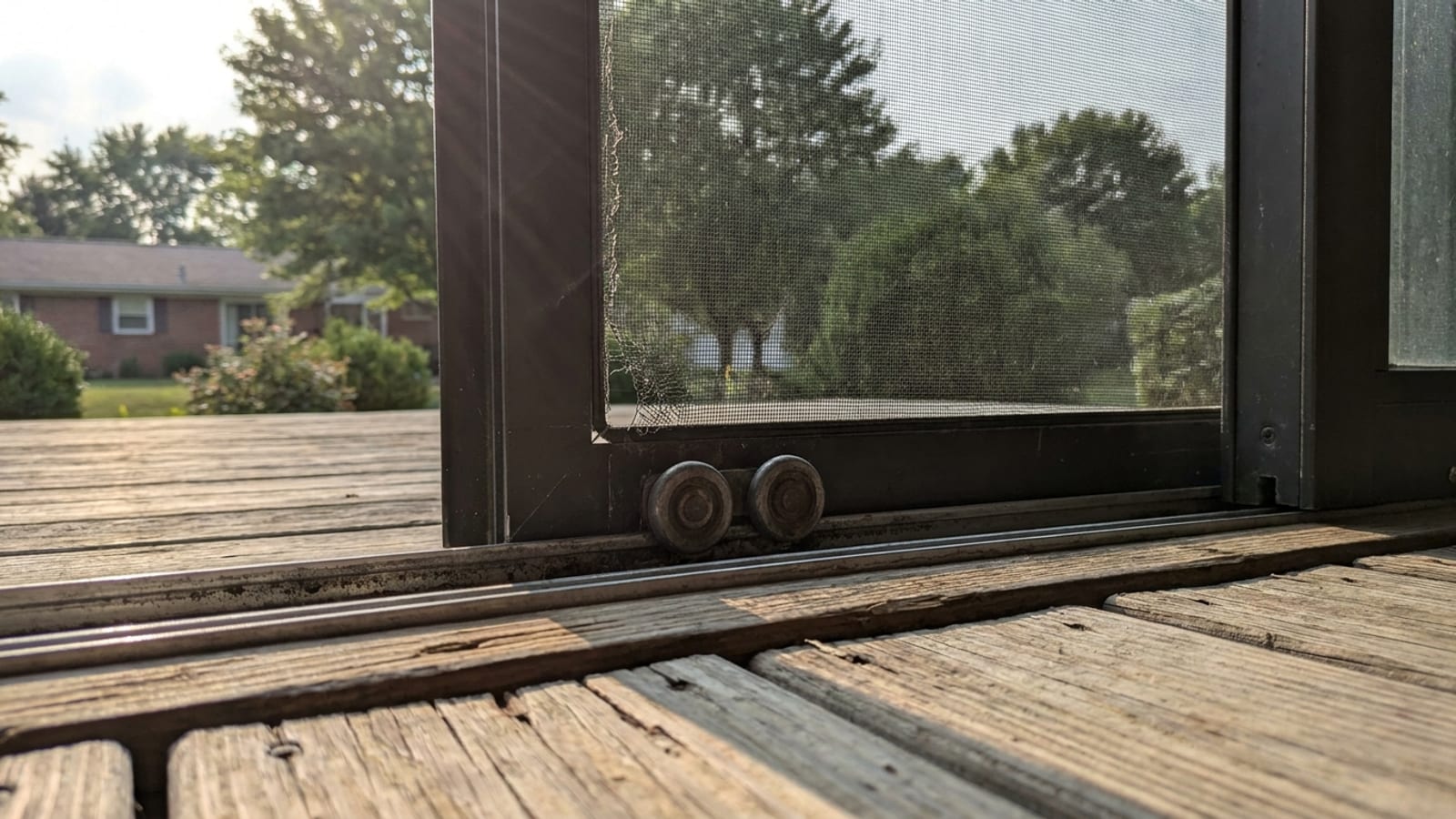
This is the option most homeowners picture. The panel sits in the slider channel, the operating panel closes against it, and a lock bar or security pin keeps the door from sliding open. Nothing is cut and nothing is drilled, so it comes out when you move.
The tradeoffs are real. The opening gets narrower by the width of the panel, usually somewhere between about eight and sixteen inches. The slider now closes against a panel rather than against its own jamb, so the weatherstripping is not meeting what it was designed to meet. Cheap panels gap at the head and let air and bugs through. Better panels have adjustable height and a compression seal at the top, which is worth paying for in a climate where summer humidity finds every gap.
Glass with a factory pet port
Here the sealed insulated glass in one panel is swapped for a new unit built with a pet opening in the lower section. It looks intentional, it does not shrink the opening, and the flap assembly is anchored in the glass rather than wedged in a track.
This is a manufactured product, not a field modification. The glass is ordered to the exact dimensions of the panel with the port located and framed at the factory. That means lead time, and it means the existing door has to be in good enough condition to be worth the investment. If the frame is racked, the rollers are shot or the glass elsewhere in the door is already fogged, the money is better spent on the next option.
A new patio door ordered pet ready
If the patio door is already on the replacement list, this is the clean answer. The pet opening arrives as part of the panel, the weatherstripping is designed around it, and there is one party responsible for the whole assembly.
Patio doors in our market fall inside the same installed range as other exterior doors, roughly $3,973 to $7,500, with configuration, glass and size driving where a particular job lands. A pet opening is an added specification on the panel rather than a separate project. If you are already weighing sliding versus French patio doors, add the pet door to that conversation up front instead of treating it as an accessory later.
Through the wall or through an adjacent door
Sometimes the right place for the dog door is not the patio door at all. A wall opening next to the slider, or a prepped entry door into a garage or mudroom, keeps the patio door working exactly as designed and puts the dog traffic somewhere easier to clean. A wall installation is a framing and flashing job, so it costs more than an insert, but it is also the version that disappears into the house.
How does a pet door change the way the patio door seals?
Every pet opening is a deliberate hole in the thermal envelope. The flap is the only thing between conditioned air and the backyard, and flaps are not insulated glass.
Things that measurably help:
- Dual flaps. Two flaps with a small air space between them cut drafts far better than one.
- Magnetic closure. Magnets along the bottom and sides pull the flap back flat instead of letting it hang loose.
- A rigid locking cover. A hard panel that slides over the opening at night restores most of the seal when the dog is in for the evening.
- Correct sizing. An oversized flap is heavier, swings wider and seals worse. Size to the dog, not to the largest dog you might ever own.
Electronic pet doors that open only for a collar tag go a step further, since the panel stays sealed except for the seconds it is in use. They cost more and need power or batteries, but on a west-facing wall in a Southeast summer that difference is noticeable.
What about security?
A sliding door with an insert panel needs two things handled: the panel has to be locked into the track so it cannot be lifted out, and the slider itself needs a lock or pin that works with the shortened opening. Most quality panels include both. A pet port in glass or in a door panel is the more secure arrangement by default, because there is nothing removable about it.
Size matters here too. A flap big enough for a large dog is big enough for a person to reach through and in some cases crawl through. If the door faces a street or an unfenced yard, the locking cover is not optional, and an electronic door is worth the upgrade.
How do screens work with a dog door?
This is the detail homeowners discover after installation. If the dog has to pass through a screen door as well as the glass, the screen needs its own pet opening or the dog will make one. Options include a screen with a factory flap, a pet-resistant mesh, or simply running the insert panel so the screen slides clear of the opening. Decide this when the door is specified rather than afterward, because retrofitting a screen flap on a worn screen is usually a replacement anyway.
Does a pet door make sense for every dog?
A few cases argue against it. Puppies not yet house-trained will use it inconsistently. Dogs that bark at everything gain a full-time exit to bark from. Very small dogs and very old dogs can be defeated by a high step-over, which is the height from the floor to the bottom of the flap. And in neighborhoods with coyotes or raccoons, an unlocked flap at night is an invitation.
None of those are reasons to skip it. They are reasons to pick the flap type, the size and the locking method on purpose.
How do you budget for this?
If the patio door stays, the cost is the pet door product plus the labor to fit it, and an insert panel is the least expensive path by a wide margin. If the door is being replaced, the pet opening is a line item on a door project rather than a project of its own, and installed patio doors in this market run about $3,973 to $7,500 depending on configuration. For larger projects, financing through the GreenSky program includes no-interest-if-paid-in-full plans and fixed-rate terms, with zero down for most approved homeowners.
Whatever route you take, ask what is covered in writing on both the product and the installation. Our material and labor coverage is spelled out in The Patriot's Promise, and a pet opening does not change the expectation that the door seals, latches and operates the way it should.
What is the next step?
Measure your dog at the shoulders, decide whether you want the opening to be reversible or permanent, and look honestly at the condition of the patio door you have. Then book a free in-home estimate. An estimator measures the opening, checks the frame, rollers and glass, walks the pet door options with you and gives you one itemized number. If you already bought a pet door insert or a door unit somewhere else, bring it up, because we install owner-supplied doors to manufacturer specification.