Short answer
ColorPlus is a finish applied and baked on at the factory before the plank ever reaches your house, while site painting is a coating rolled or sprayed on after the siding is installed. For most homeowners in our market ColorPlus is the better choice, because the finish goes on under controlled conditions and there is no weather window to wait on after install. Site painting earns its place when you want a custom color outside the available palette, or when you are recoating fiber cement that is already on the wall.
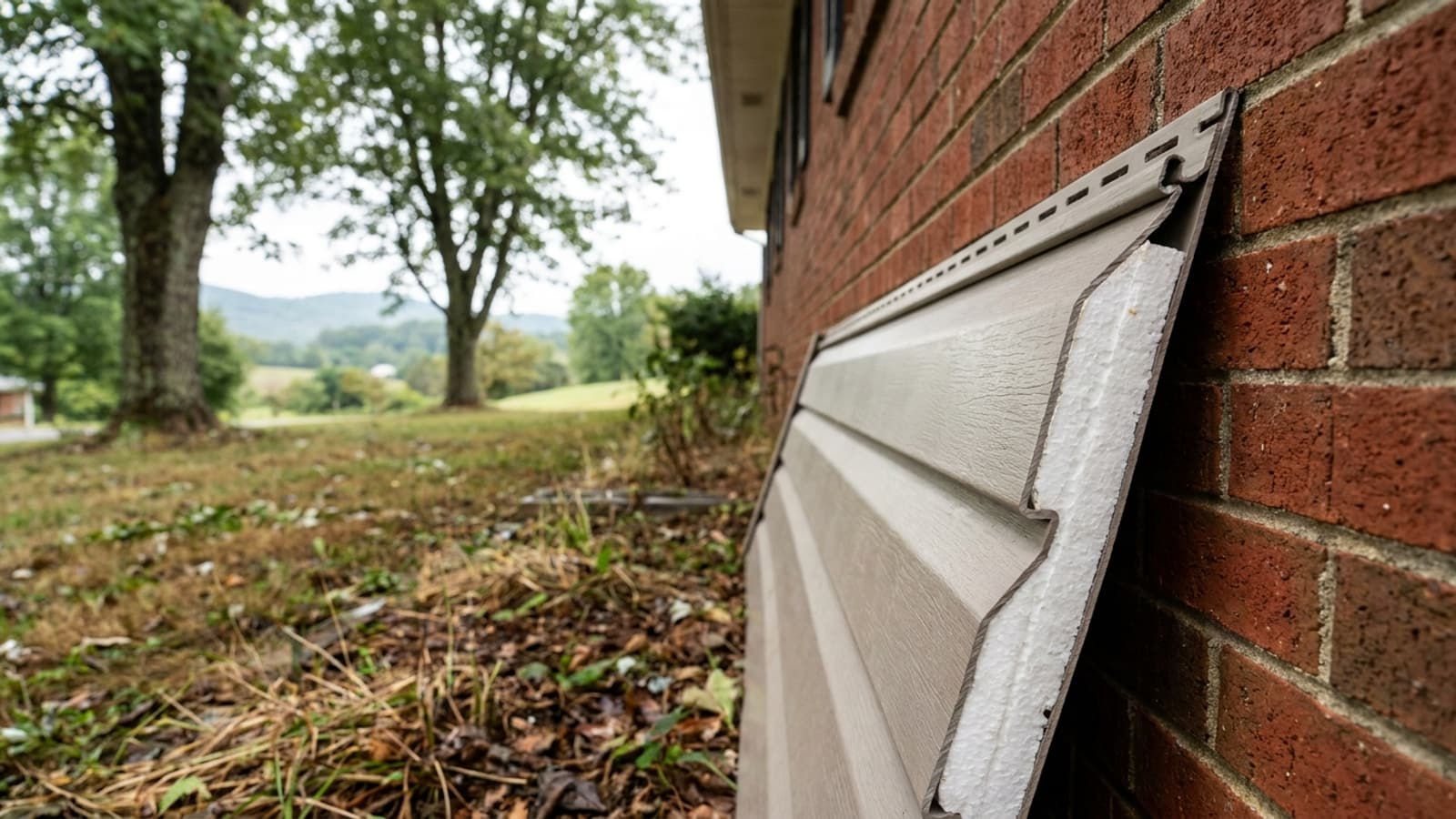
James Hardie ColorPlus is a factory-applied finish baked onto the plank before it ever gets on a truck. Site painting is a coating applied in the field, after the primed siding is installed on your house. Both end with a painted fiber cement wall, but they are different products with different schedules, different failure patterns and different maintenance down the line.
For most homeowners in Tennessee, North Georgia and Northeast Alabama, ColorPlus is the better call. Site painting still has legitimate uses, and this post lays out exactly where each one belongs.
What is ColorPlus, and how is it different from paint?
ColorPlus is James Hardie's factory finish. The board is coated on a production line under controlled temperature and humidity, the coating is oven-cured rather than air-dried, and it is applied in multiple coats including the back side and the edges of the plank. The color is locked in before the product is palletized.
That sounds like a small distinction. It is not. A field paint job is at the mercy of whatever the weather did that week — dew point, surface temperature, humidity, pollen, a surprise afternoon storm two hours after the last coat went on. The factory line has none of those variables. The coating goes on at a consistent film thickness and cures the same way on every plank.
The other difference is coverage. Factory finishing coats the faces and the edges before the plank is handled, so the parts of the board that end up hidden behind the course above it are still sealed. Paint applied after installation reaches the exposed face and not much else.
When we quote a full siding replacement, ColorPlus is what we spec by default on fiber cement, and as a James Hardie Alliance Select contractor we install it to the manufacturer's specification for fastening, clearances, flashing and touch-up.
What does painting fiber cement on site involve?
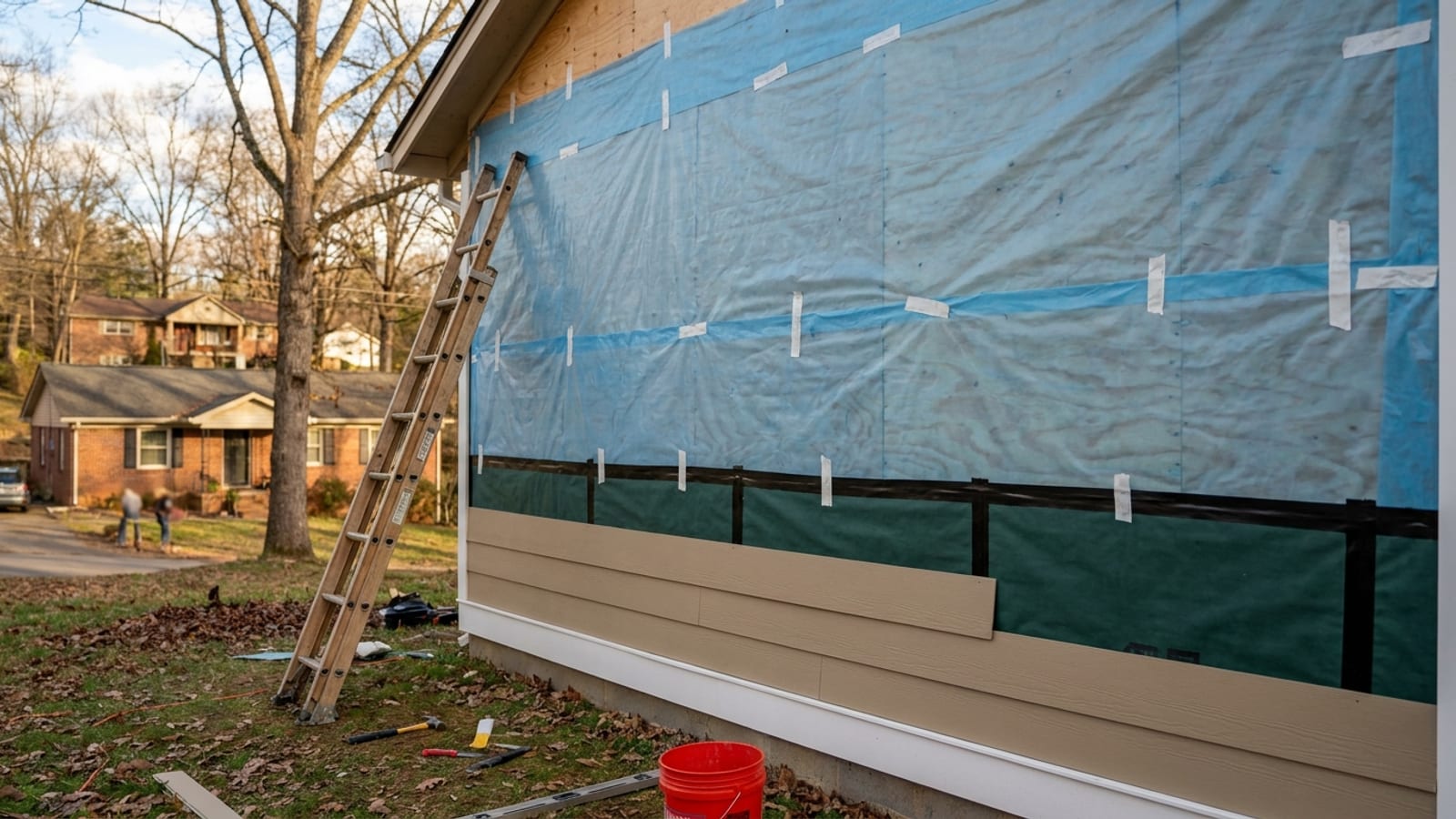
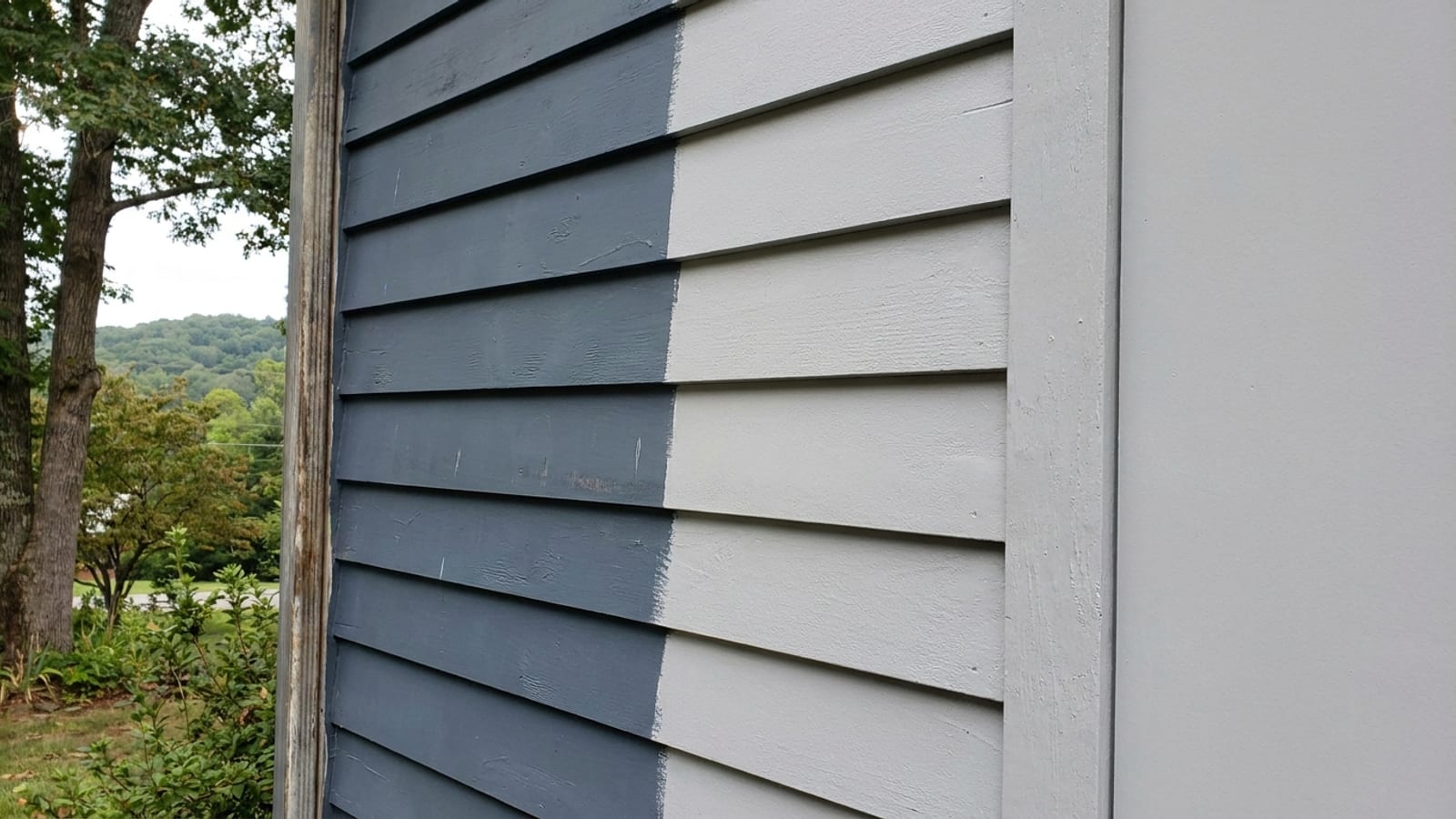
Site painting starts with primed Hardie board — the product ships with a factory primer and no color. The siding goes up, the fasteners and joints get finished, and then a painting crew preps, caulks where required, and applies two coats of a quality exterior acrylic.
Done well, it looks good and it lasts. The catch is everything that has to go right:
- The wall has to be clean and dry, which in a humid Southeast summer is not a given on a given morning.
- Surface and air temperature have to sit inside the paint manufacturer's range for the whole cure.
- Two full coats have to actually go on. Thin coverage on a hot wall is the single most common reason a site-painted job fades early.
- The job needs a second trade on the schedule, which adds days between install and a finished-looking house.
None of that is exotic. It is just more moving parts, and more moving parts means more places for the finish to come out inconsistent from one elevation to the next.
How do the two compare side by side?
| Factor | ColorPlus factory finish | Painted on site |
|---|---|---|
| Where the coating is applied | Factory line, controlled conditions | On your wall, in whatever weather you get |
| Coverage | Faces and edges, multiple coats, oven-cured | Exposed face only, air-dried |
| Color options | Set palette plus extended color program | Any color a paint store can mix |
| Schedule impact | None — the board arrives finished | Adds days and a second trade after install |
| Repaint timing | Long interval; check current finish warranty terms | Commonly seven to fifteen years by exposure |
| Touch-up method | Matching factory touch-up product on cuts and nicks | Standard paint touch-up from your saved can |
| Best fit | Most homes, especially sun-exposed elevations | Custom colors, recoating existing Hardie |
Does ColorPlus cost more than site painting?
On the material line, yes — a finished plank costs more than a primed one. On the finished-wall line, the gap narrows a lot, because site painting is not free. You are buying prep, caulk, two coats of a good exterior acrylic, labor and the extra days on the calendar.
A full siding replacement in our market typically runs $12,000 to $25,000 installed, including trim, soffit, fascia and house wrap, with most jobs taking four to seven days. What moves a number inside that range is square footage, story count, how much trim detail the elevations carry, and what the sheathing looks like once the old cladding comes off. The finish choice is a factor in the total, but it is rarely the factor that decides where a house lands in the range.
The better way to think about it is cost over time. Site painting puts a repaint on your calendar, and a two-story house with difficult access is an expensive repaint. The factory finish pushes that date out considerably. If you plan to be in the house ten or more years, that math usually favors ColorPlus even when the day-one price is higher. If the budget is the binding constraint on the whole project, financing through the GreenSky program is often what lets a homeowner buy the finish they actually want instead of the one that fit the check that month.
Which one holds up better in Southeast sun?
UV is the main enemy of any exterior color, and our south and west walls take a beating. A baked-on factory coating applied at a controlled thickness starts with an advantage over a field coat that may or may not have been two honest coats on a 95-degree wall.
The second factor is moisture. Fiber cement handles water well, but the coating is what keeps the surface from cycling through wet and dry extremes. A finish applied to the edges and the back at the factory simply has fewer unprotected paths than one brushed onto the exposed face.
This is also why we spec by elevation rather than treating all four walls as one problem. A shaded north wall under a deep overhang is a forgiving place for almost any finish. A west-facing gable with no overhang over a light-colored wall is not, and that is the elevation that tells you which finish you should have bought.
When does site painting actually make sense?
Three situations, and they are real ones:
- You want a color that is not in the palette. HOA color schemes, historic district requirements and strong personal preference all end up here. Primed board plus a site-applied custom color is the only way to hit an exact spec.
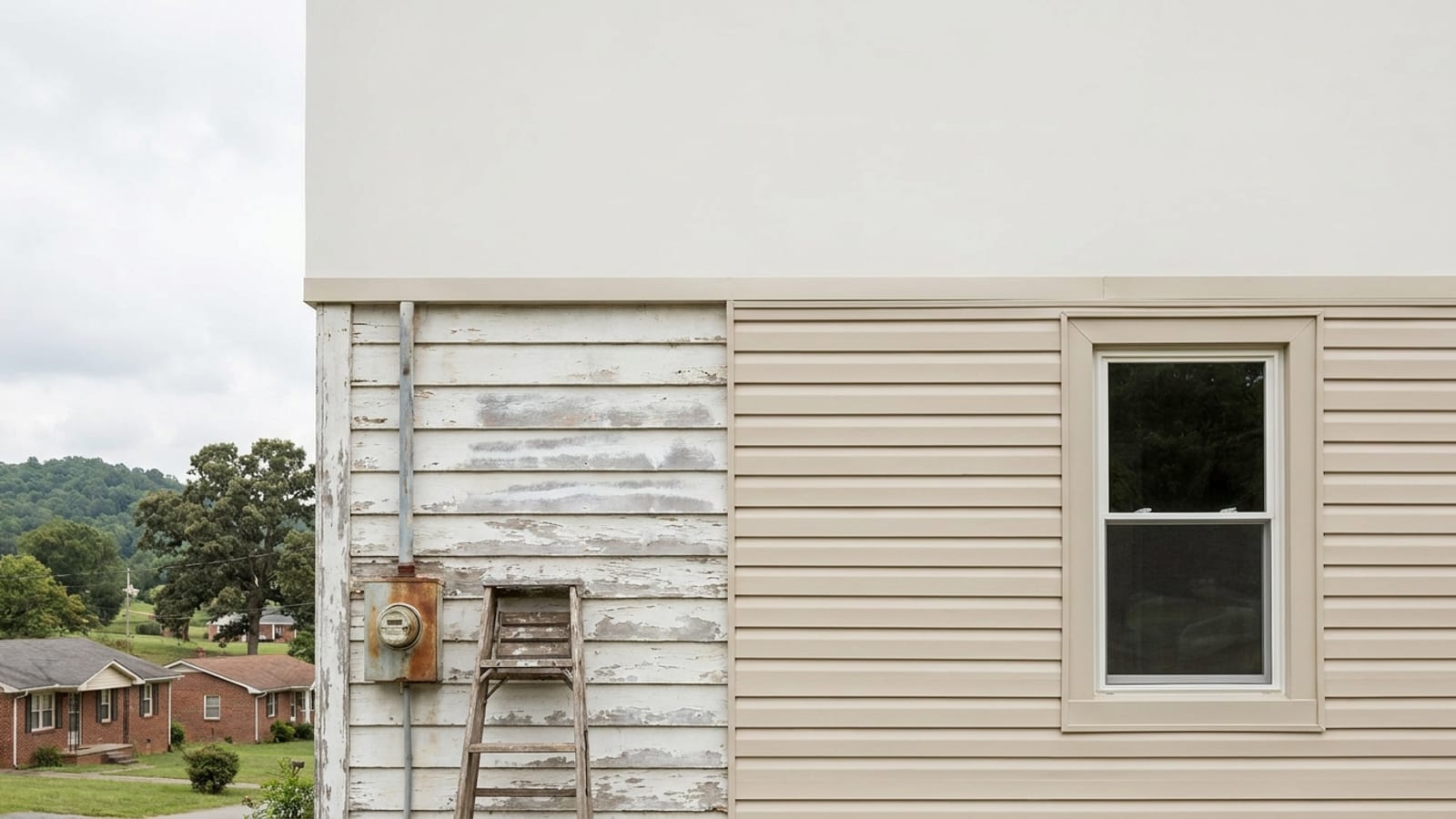
- The Hardie board is already on the house. If you have an existing fiber cement installation that has faded or that you simply want a different color on, painting is the answer. Nobody is pulling sound siding off a wall to swap a finish.
- You are coating a small accent area to match existing work. A gable, a dormer, a porch wall tied into an older painted elevation — site painting keeps it consistent.
Outside those cases, the factory finish is the lower-risk path.
How does the finish choice affect your warranty?
There are two warranties on a siding job, and homeowners mix them up constantly. The manufacturer stands behind the product, including the factory finish on ColorPlus, and the installing company stands behind the workmanship. Our siding carries a 30-year material and labor warranty under The Patriot's Promise, backed in writing with $2 million in liability insurance on every job.
When the siding is painted on site, that field coating is a separate system with its own terms from whoever supplied and applied the paint. It does not void the fiber cement product warranty, but it does mean the finish is governed by a different document than the board. Ask for both terms in writing and read the labor line on each, because that is where a strong-sounding warranty usually turns out to be thin.
What should you ask at your estimate?
Bring these to the appointment and the comparison gets easy:
- Is the quote for ColorPlus or for primed board plus a site paint job?
- If it is site painted, who applies it, how many coats, and is that labor inside this price or a separate contract?
- How are field cuts sealed and touched up?
- What is the warranty term on the finish, and what is the term on the workmanship?
- Does the trim get the same finish system as the field siding?
A real estimate for siding means walking the elevations and looking at how much sun, water and overhang each wall actually gets, then pricing it as one itemized number. It is a sales appointment, and it is also the only way anyone gives you a figure instead of a guess.
The next step
If you are deciding between a factory finish and a site-painted wall, the fastest way to settle it is to see both in person on your own house, against your own brick, roof and trim. Request a free in-home estimate and we will measure the elevations, show you the actual product and finish options, and give you one itemized price with the install method spelled out.