Short answer
Usually not — most windows that won't lock have a worn cam lock, a keeper that has shifted, or a sash sitting slightly out of alignment, and all three are repairs. Replace the window when the sash or frame is out of square, the rails are rotted or bowed, or the failed lock is one of several problems on an old single-pane unit. The question to answer is whether the lock is failing or the window is failing.
A window that won't lock is usually a repair, not a replacement. In most houses the cause is a worn cam lock, a keeper screwed slightly out of position, or a sash that has settled a quarter inch out of alignment — small, fixable things. The window itself only needs to go when the sash or frame has moved permanently, when the wood is soft, or when the lock is simply the most obvious of several failures on a unit that is already at the end of its life.
That distinction is worth getting right before anyone quotes you a whole-house window replacement. A lock is a moving part, and moving parts wear out on windows that are otherwise perfectly sound. On the other hand, a sash that will not latch because it no longer sits square in its opening is telling you something structural, and no amount of new hardware fixes that.
What actually makes a window stop locking?
Work through these in order. The first three cover the large majority of calls.
The cam lock itself is worn or broken
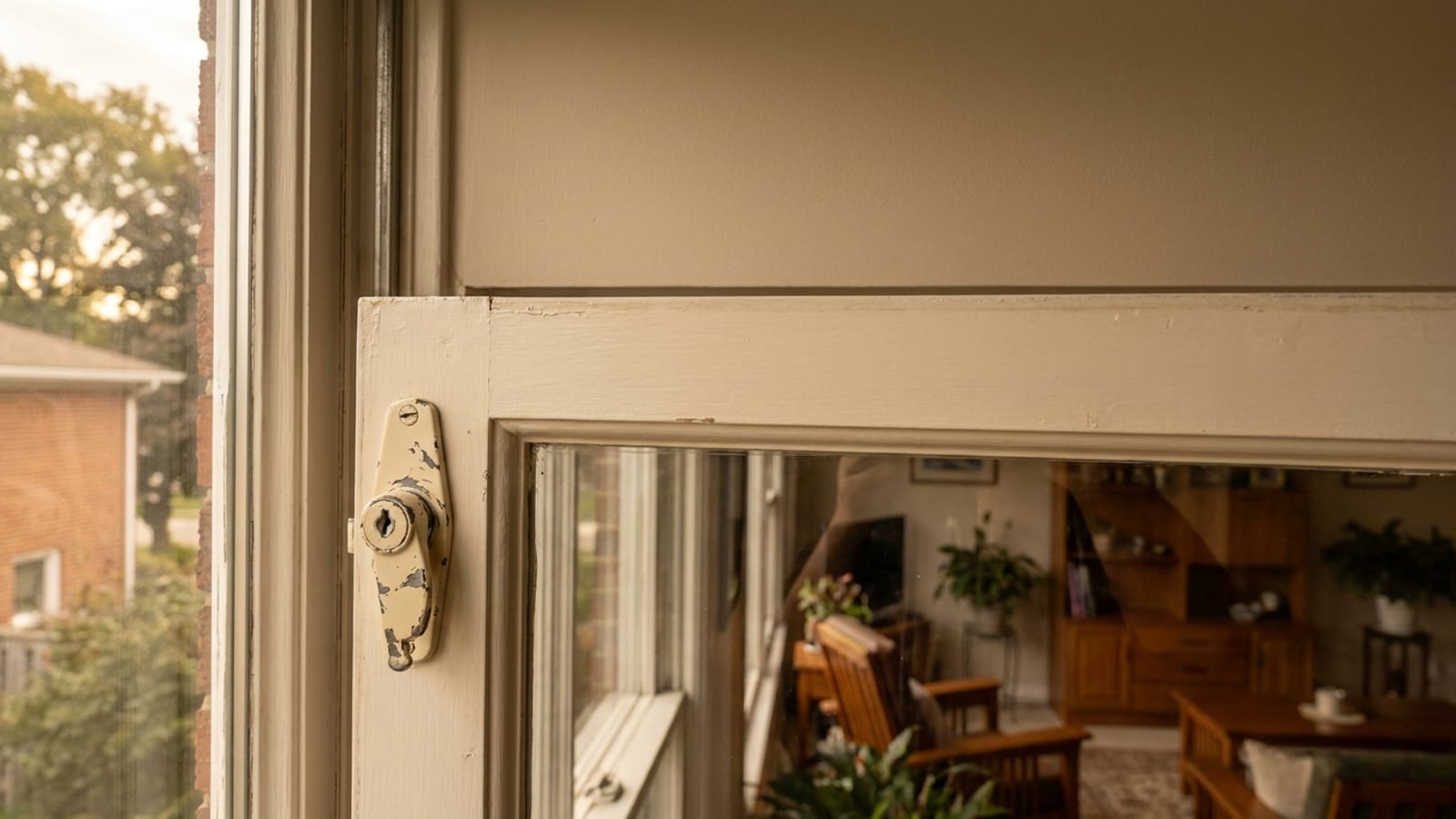
Most double-hung and slider windows use a cam-action lock: you rotate a lever, a cam swings into a keeper on the other sash, and the wedge shape of the cam pulls the two sashes tight together. Those parts are die-cast metal or reinforced plastic, and after twenty or thirty years of being twisted the cam rounds off, the lever gets sloppy, or the internal spring breaks. The symptom is a lock that turns but never grabs, or one that grabs and then pops loose.
This is the cheapest outcome and the easiest to confirm. Look at the cam with the lock in the open position. If the leading edge is visibly rounded or a piece has snapped off, you have your answer.
The keeper has shifted
The keeper is the small piece of hardware the cam catches. It is held by two screws into the sash rail, and in older wood windows those screw holes strip and the keeper walks out of position. A keeper that is an eighth of an inch off will stop the lock from engaging completely. On vinyl windows the keeper is usually molded into the sash, which removes this failure mode but also means damage there is harder to fix.
The sash is out of alignment
If you can push the top sash sideways or forward while trying to latch, the lock is not the problem — the sash is not landing where it is supposed to land. Causes include a broken balance letting the sash hang crooked, a sash that has racked over time, worn jamb liners that no longer hold the sash against the stops, and a bottom sash sitting high because the sill or the weatherstripping has swollen.
Paint, debris and humidity
In older homes, paint on the meeting rail is a common culprit — decades of coats build up until the two sashes cannot close far enough for the cam to reach. Dirt and pollen packed into the track or the keeper does the same thing at smaller scale. And in a Southeast summer, wood sashes swell enough that a window that latched in February will not latch in July.
The sash or frame is damaged
This is the group that changes the answer. Soft wood at the bottom rail, a bowed vinyl sash that has taken years of direct west sun, a frame that has gone out of square because the opening settled — these are not hardware problems. A new lock installed on a bowed sash will fail the same way in a year.
Repair or replace: how do you decide?
| What you find | Likely fix | Why |
|---|---|---|
| Cam rounded off, lever loose | Replace the lock hardware | Sash and frame are fine; only the part failed |
| Keeper loose or stripped screws | Re-set the keeper | Alignment is right, fastening is not |
| Paint buildup on meeting rails | Scrape and clean | Nothing is broken, the sashes just can't close |
| Broken balance, sash hangs crooked | Replace the balance | Restores where the sash lands |
| Worn jamb liners, sash rocks | Repair or replace the window | Depends on whether parts are still available |
| Soft or rotted sash rail | Replace the window | Hardware won't hold in compromised wood |
| Frame out of square | Replace, usually full-frame | The opening has to be rebuilt, not re-latched |
| Single-pane unit, lock is one of several issues | Replace | You would be repairing a window you will replace anyway |
The honest dividing line is availability plus condition. If the hardware exists and the sash is sound, repair. If the hardware is discontinued — extremely common on off-brand vinyl from the 1980s and 1990s — or the sash has moved permanently, replacement is the real answer.
Why does a broken lock matter beyond security?
Security is the obvious reason, and it is a legitimate one on a ground-floor window facing a side yard. But three other things ride on that lock working.
Air sealing. On a double-hung, the lock is what pulls the two sashes together against the weatherstripping at the meeting rail. An unlocked sash sits loose. That is why homeowners often report the draft and the lock at the same time — they are the same problem. If you feel air at the middle of a window, try locking it and feel again.
Noise. Sound moves through gaps more readily than through glass. A sash held tight by a working lock is measurably quieter than the same sash sitting loose, which is why air sealing does more for street noise than most glass upgrades do.
Egress and safety. Upstairs bedrooms need a window that opens, and a sash that binds badly enough not to latch often binds badly enough not to open under pressure either. A window that takes two hands and a shoulder is not a usable escape route.
What does the fix cost compared with replacement?
Hardware repair is a small fraction of the cost of a new window — you are paying for a part and a service visit rather than a manufactured unit and an install. Replacement windows in our market run $700 to $2,200 per window installed, and that figure includes the unit, the labor, the sealing, the trim work and the cleanup.
The math usually settles itself. One lock on an otherwise good window is a repair every time. Four or five windows that will not lock, on a single-pane or early-vinyl house where the sashes also stick and the glass is fogged, is a replacement conversation — the locks are just the symptom you noticed first. If the total number is what is standing in the way, our financing options through the GreenSky® program include no-interest-if-paid-in-full plans and fixed-rate terms, with zero down for most approved homeowners.
Which windows are worth repairing, and which are not?
Older wood double-hungs are frequently worth repairing. The sashes are thick, the parts are simple, and a stripped keeper hole or a broken sash cord is genuinely a parts job. If the frame is square and the wood is hard, put hardware on it.
Original aluminum sliders are usually not worth it. The latch is thin stamped metal, the frame conducts heat badly, and repairing the lock leaves you with a window that still performs poorly in a Southeast summer. Those are the units that most often come out.
Off-brand vinyl from the 1980s and 1990s is the frustrating middle. The window may look fine, but the manufacturer may be gone and the hardware pattern may not match anything current. When the part cannot be sourced, replacement stops being a choice.
What about matching the new window to the rest of the house?
If you end up replacing two or three windows rather than all of them, say so at the estimate. Frame color, grid pattern, glass tint and sash profile can be specified to sit alongside what you already have instead of standing out. We spec glass by elevation anyway — a west wall and a north wall should not carry the same solar heat gain number — so the conversation about which openings get what is one we are already having.
On the warranty side, our window installs carry lifetime material and labor coverage under the Patriot's Promise, transferable one time and prorated after that. Ask any installer for the labor term specifically. A lifetime material warranty paired with a one-year labor warranty covers the part and not the visit, and hardware and alignment are exactly what service calls turn out to involve.
Your next step
Start by identifying which of the five causes you actually have — cam, keeper, alignment, buildup, or damage. If it is the first four and the sash is sound, you are looking at a repair. If the sash or frame has moved, or the lock is one item on a longer list, get the opening measured and priced.
Schedule a free in-home estimate. An estimator measures every opening you want quoted, checks the frames and sills, and gives you one itemized price per opening with the install method spelled out. It is a sales appointment, and it is also the only way to get a real number on the windows that are actually failing instead of a guess on all of them.