Short answer
Replacement windows in Cleveland, TN run about $700 to $2,200 per window installed, and that figure covers the unit, the labor, the sealing, the trim and the cleanup. Most whole-house projects land in the middle of that range, with standard double-hungs in sound frames near the bottom and large, shaped or full-frame openings near the top. The total depends on how many openings you have and what the crew finds when the old units come out.
Replacement windows in Cleveland, TN cost about $700 to $2,200 per window installed. That range is the whole job per opening — the window itself, the labor, the air sealing, the interior and exterior trim work, and hauling the old unit away — not a product price that installation gets added to later.
Where your house lands inside that range comes down to four things: how many openings you have, how large they are, whether the existing frames can take an insert or need full-frame replacement, and what frame material and glass package you choose. Nothing about Bradley County makes windows cost more or less than the rest of the Tennessee Valley. The house decides the number. You can see the styles and product series we install on our window replacement page, and the local detail on our Cleveland, TN windows page.
What does a single window cost installed?
It helps to think in terms of where an opening sits inside the range rather than chasing a single average, because an average of a 3-foot bathroom window and an 8-foot living room slider describes neither one.
| Opening | Where it lands in the $700–$2,200 range | Why |
|---|---|---|
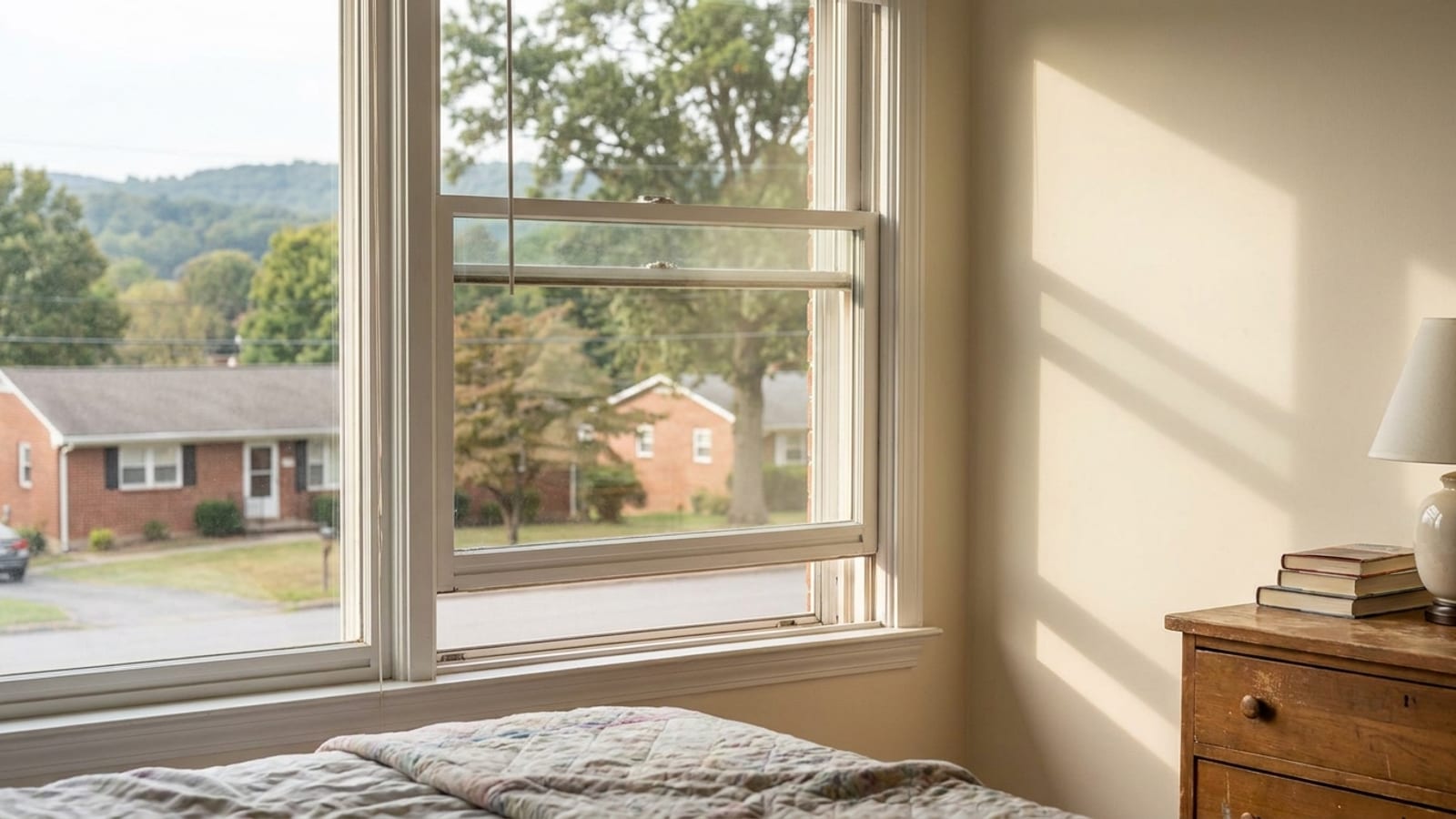
| Standard double-hung, insert into a sound frame | Near the bottom | Least labor, no frame rebuild, stock-friendly size |
| Standard double-hung, full-frame replacement | Lower middle | Adds tear-out, framing repair and new exterior trim |
| Casement or awning unit | Middle | Crank hardware and a compression seal cost more than a sliding sash |
| Large picture or slider | Upper middle to top | Big glass, more weight, often two-person handling |
| Arched, Palladian or custom shape | Top of the range | Built to a template, no standard size to fall back on |
| Fiberglass or composite frame, any size | Adds roughly 40–60% over vinyl | Stronger material, worth it on wide openings and dark colors |
A bay or bow window is a separate conversation entirely, because you are buying three to five units plus carpentry, roofing and trim over the projection.
What does a whole-house project cost in Cleveland?
Multiply, then adjust. A house with 12 openings that are mostly standard double-hungs in sound frames is a very different total than a 22-opening two-story with a stair window and a picture unit in the living room.
- 10 openings at the lower end of the range is roughly $8,000 to $11,000.
- 15 openings in the middle of the range is roughly $15,000 to $19,000.
- 20-plus openings with several large or shaped units can pass $25,000.
That is arithmetic, not a quote. The honest version of this answer is that no one can tell you your number over the phone, because the count, the sizes and the condition of the frames are the whole equation.
What actually moves the price on a Bradley County home?
Insert or full-frame
This is the single biggest swing after opening count. An insert replacement sets a new window inside your existing frame — faster, less invasive, and correct when the frame is sound, square and dry. A full-frame replacement strips everything back to the rough opening and rebuilds it, which typically adds several hundred dollars per opening.
Full-frame is not an upsell when it is required. It is the only right answer when the sill or jamb is rotted, when the opening has a history of water intrusion, when the frame has gone out of square, or when you want to recover the glass area that old aluminum frames ate. Many houses correctly get a mix — inserts on the protected elevations, full-frame where water has been working.
Frame material
Vinyl is the right call for most homes here, and the money saved is better spent on the glass. Fiberglass and composite frames earn the upgrade in three specific situations: very wide or very tall openings, dark exterior frame colors that absorb more heat, and cases where you want the narrowest possible frame for maximum glass. Expect roughly 40 to 60 percent more per window for fiberglass.
The glass package
Cleveland sits in the ENERGY STAR South-Central climate zone, where a qualifying window needs a U-factor of 0.28 or lower and an SHGC of 0.23 or lower. SHGC — solar heat gain coefficient — is the number that matters most in this market, because our energy load is dominated by keeping summer sun out, not by holding furnace heat in.
That is also why the same glass does not belong on every side of a house. A west-facing wall that takes full afternoon sun in July wants a more aggressive low-E coating than a shaded north elevation. Spec by elevation and the house performs better for the same money.
Triple-pane glass is available on request, but it is not the default we recommend here. Its returns are strongest in heating-dominated northern climates. In this zone, the same dollars spent on a better coating, argon fill and a warm-edge spacer do more.
What the crew finds when the old unit comes out
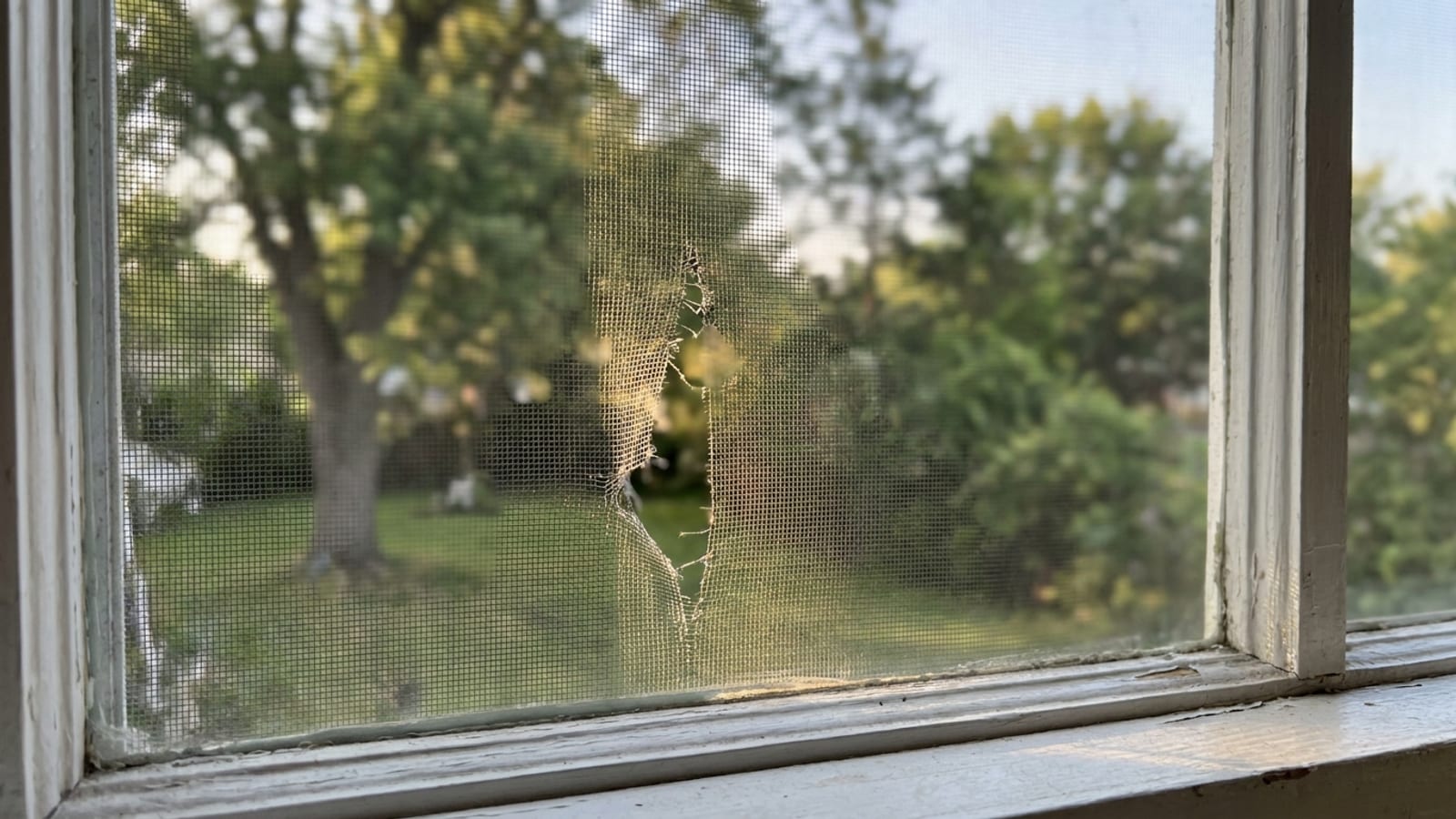
Older homes and any house that has been fed by a leaking gutter or a bad head flashing can hide soft framing behind trim that looks fine. A good estimate names what happens if rot is found before anyone starts, rather than turning it into a phone call on install day.
Why do two quotes on the same house come back so far apart?
Because a lower number almost always means a different product or a different scope. Line the two up item by item before you compare totals:
- Frame material and the exact product series, not just "vinyl."
- The glass package, including the SHGC number in writing.
- Insert or full-frame, opening by opening.
- Who physically performs the installation.
- The warranty term on labor, separately from the material term.
- What happens to the old windows, the trim and the debris.
A lifetime material warranty paired with a one-year labor warranty is a much weaker promise than it sounds, and installation details are what most service calls turn out to involve. Our windows carry a lifetime material and labor warranty, transferable once and prorated after that, which is spelled out in The Patriot's Promise.
How do Cleveland homeowners pay for it?
Most pay cash, use contractor-arranged financing, or draw on home equity. We offer financing through the GreenSky® program, including no-interest-if-paid-in-full plans at 6, 15 or 18 months and fixed rates starting at 6.99% APR, with zero down for most approved homeowners and subject to credit approval. The promotional plans reward a payoff date you can realistically hit; the fixed-rate terms are for spreading the cost on purpose. The plan details are on our financing page.
One budgeting note worth repeating: there is no federal tax credit for windows in 2026. The 25C credit was terminated for property placed in service after December 31, 2025. Anyone still quoting you 30 percent back on a project installed now is working from old information.
What does the in-home estimate actually involve?
An estimator comes to the house, measures every opening you want priced, checks the frames and sills, asks how each room behaves in August and in January, shows you the actual product and glass options, and leaves you with one itemized price per opening with the install method stated. Plan on 45 to 90 minutes for a whole house.
It is a sales appointment — that is what an in-home estimate is. What it is not is a two-hour sit-down presentation or a price engineered to drop three times before you sign. One number, itemized, and it is still good tomorrow.
What to do next
Count your openings and note which ones fog, stick or feel drafty with the sash closed. That short list plus a walk-through is all it takes to turn a $700 to $2,200 range into your actual number. Request a free in-home estimate at /get-estimate/, or call the Chattanooga office and we will get someone out to Cleveland. There is no trip charge inside the service area.