Short answer
Weather moves the calendar far more often than it changes the work. Rain and sustained wind are the two conditions that genuinely stop an exterior crew in the Southeast, and they stop siding long before they stop windows or doors, because a window goes in one opening at a time while siding leaves a whole wall open. Cold almost never stops work in this region, and a signed timeline agreement is what turns a lost rain day into a rescheduled day instead of an open-ended wait.
Weather changes the calendar on an exterior project more often than it changes the work. In this region, two conditions actually stop a crew: steady rain and sustained wind. Everything else — cold mornings, humidity, a hot August afternoon, a passing shower — gets worked around, and how much it gets worked around depends entirely on which trade is on the house that day.
That is the part most homeowners never get told. Windows, doors and siding are not equally exposed to the sky. A window replacement opens one hole in a wall for 30 to 60 minutes and closes it. A full siding replacement takes the cladding off entire elevations. Those are two very different relationships with a rain forecast, and understanding the difference is what keeps a homeowner from assuming every gray day is a lost day. If you are trying to plan around a season or a specific window of time, the honest way to get a real date is a free in-home estimate, where the scope and the schedule get set together.
Does rain stop a window installation?
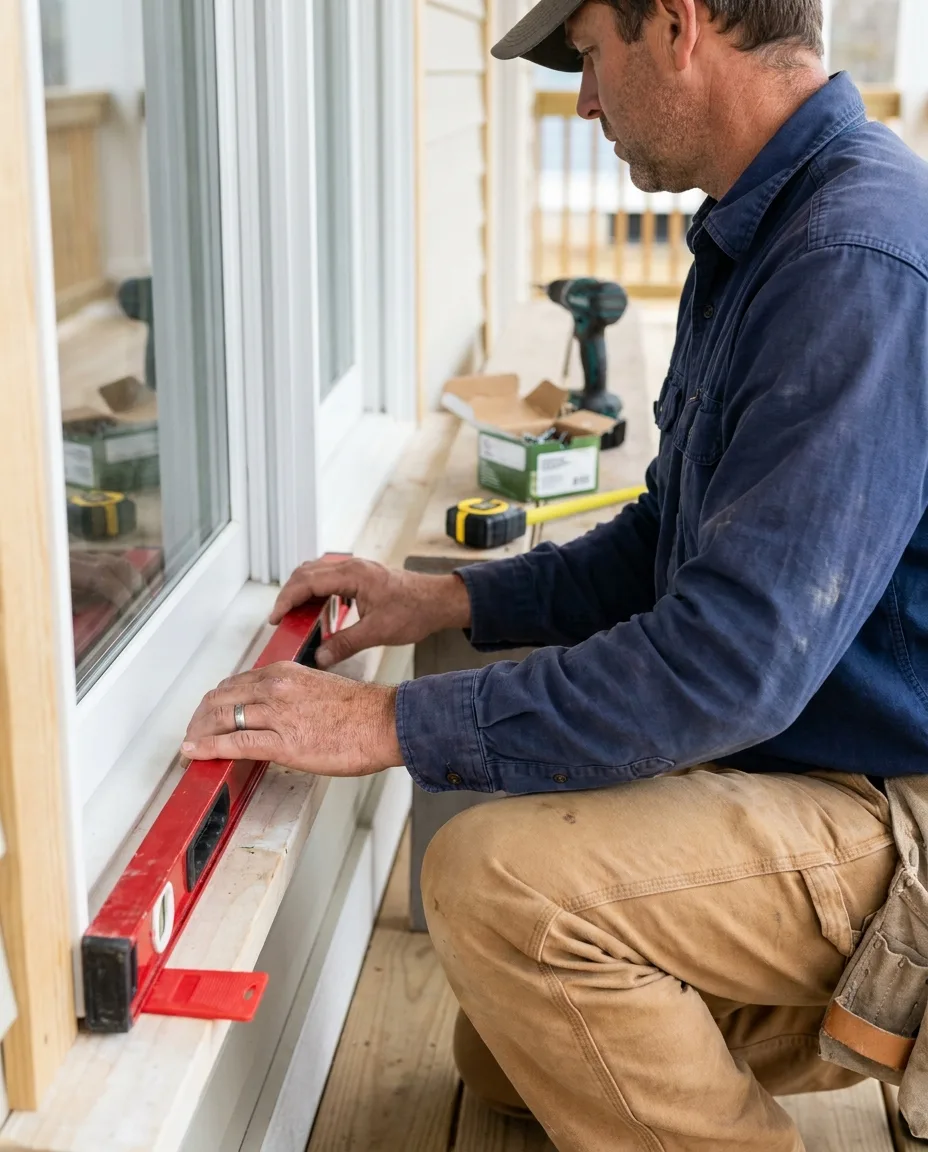
Usually not, and this surprises people. Replacement windows go in one opening at a time. The old unit comes out, the opening is prepped and the new unit goes in and gets sealed before the crew moves to the next window. An insert replacement is 30 to 60 minutes per opening; a full-frame is 2 to 4 hours. At no point is the house standing open with the weather coming in, and at no point does an entire wall sit exposed waiting on a dry hour.
What rain does affect on a window job is the exterior sealant and the exterior trim work. Sealants have application conditions, and a surface that is actively wet is not a surface anything bonds to. So a light drizzle usually means the crew keeps setting units and holds the exterior caulk and capping until the surface dries. A steady soaking rain with wind driving it against the wall is a different call, because the interior of the room is exposed for the minutes an opening is empty and that becomes a housekeeping problem for you rather than a technical one for the crew.
Doors behave the same way. A single entry door is a one-day install, the opening is only open while the new unit is being set, and the work under cover of a porch roof is barely affected by rain at all. An unsheltered entry taking driving rain is the case where a crew waits.
Why is siding more weather-dependent than windows?
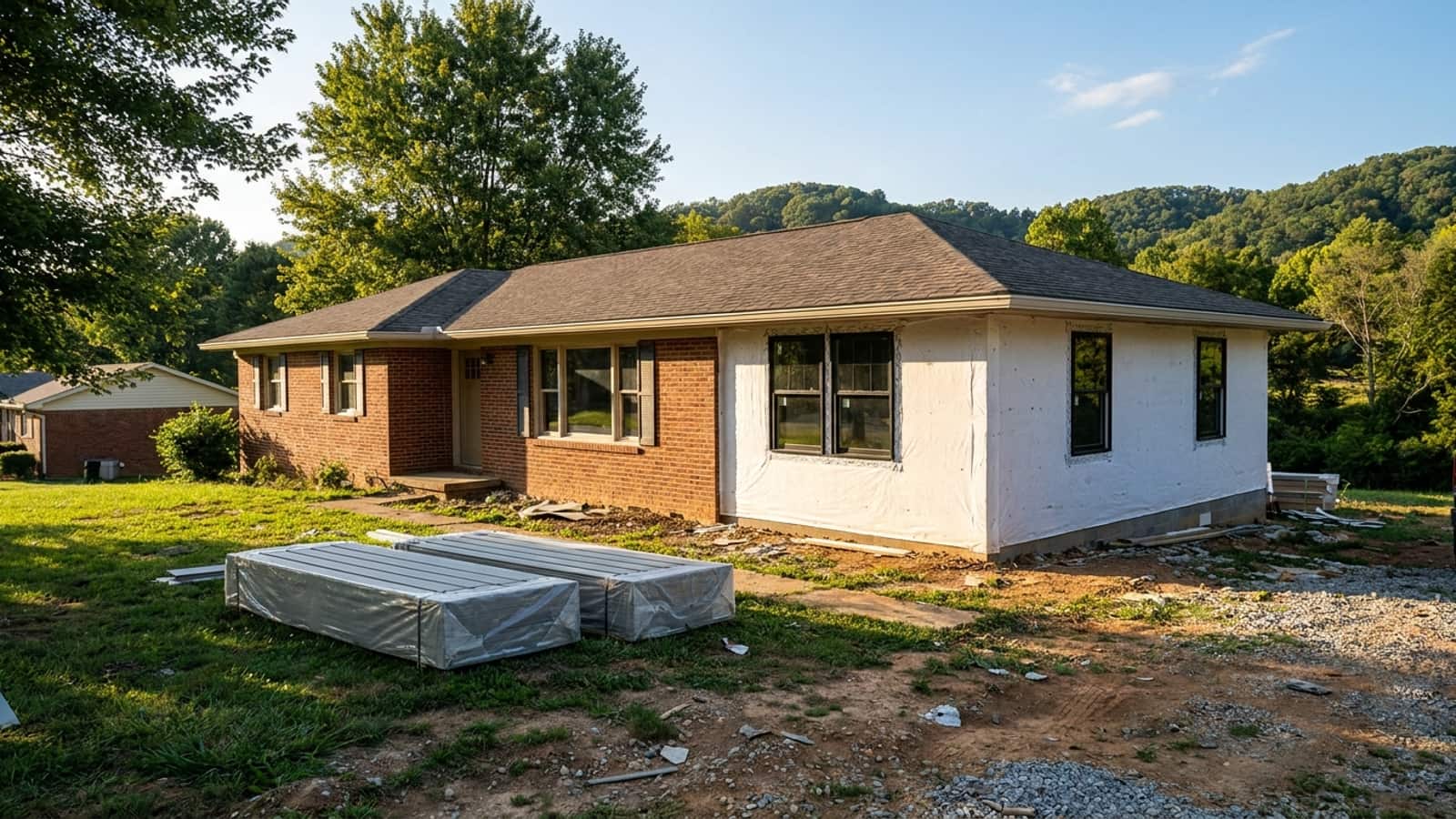
Because siding is the wall. A full siding replacement takes the old cladding off, exposes the sheathing, gets the house wrap and flashing details right, and then puts the new material back on. That sequence means real square footage of wall is open at once. Weather-resistive barrier does its job in the rain, but you do not want to wrap a wet sheathing surface, and you do not want to trap moisture behind new material — that is the same reason we do not side over existing siding.
Wind is the underrated one on siding. Long boards and long panels act like sails. Handling a 12-foot plank on a ladder or a lift in a 25-mph gust is not a quality problem, it is a safety problem, and safety is where a good crew stops without being asked. Fiber cement also generates dust when it is cut, and wind moves that dust across a property in ways nobody wants.
The practical result: a siding project quoted at 4 to 7 days can stretch across a longer stretch of calendar in a wet week, even though the total labor is unchanged. The house is never left unprotected — open sections get dried in before the crew leaves — but the finish date moves.
What weather actually stops work, trade by trade?
| Condition | Windows | Doors | Siding |
|---|---|---|---|
| Light drizzle | Work continues; exterior sealant waits | Work continues, especially under cover | Usually pauses; wrap and cut work may continue |
| Steady rain | Interior work continues; openings held | Sheltered entries continue | Stops |
| Sustained wind above roughly 20–25 mph | Slows large units and any lift work | Minimal effect | Stops — long panels are unsafe to handle |
| Cold morning, 30s | No practical effect | No practical effect | Vinyl handled more carefully; work continues |
| Heat and high humidity | No effect on the unit; crew paces itself | No effect | Sealant and paint cure times shift |
| Lightning in the area | Stops | Stops | Stops |
| Snow or ice on the ground | Rare here; access and ladder footing decide | Same | Stops |
Nothing on that list is a judgment call about whether a crew feels like working. Each one is either a bonding condition, a safety condition, or a moisture-in-the-wall condition.
Does cold weather hurt installation quality?
In this climate, almost never. Southeast Tennessee, North Georgia and Northeast Alabama get cold snaps, not winters that shut down construction. Windows and doors install fine in the 30s and 40s. Sealants have low-temperature ratings and the products used on a properly specified job are chosen with that in mind.
Vinyl siding is the one material where cold changes handling. Vinyl gets more brittle as temperature drops, so it is cut and fastened with more care in cold weather. That is a technique adjustment, not a reason to postpone a project to April. Fiber cement is unaffected by cold in any way a homeowner would notice.
There is a scheduling upside to this. Late fall through winter is generally the easiest time to get on a calendar in this market, because spring and early summer carry the longest waits from signing to install. If flexibility on dates matters to you more than working in shirt sleeves, the cold months are the ones to ask about.
What about summer heat and humidity?
Heat affects people more than product. Crews start earlier, take water breaks, and sequence the shaded elevations for the worst part of the afternoon. Caulk and paint cure differently in high heat and high humidity, which is a reason to leave finish work to a crew that does it daily rather than rushing it.
The one summer pattern worth planning around is the Tennessee Valley afternoon storm. It shows up, dumps for 40 minutes and clears. On a window job that is a pause. On a siding job it is a scramble to secure open wall, and it is a real reason siding sometimes runs a day longer in July than the same house would in October.
How does a signed timeline agreement handle a rain week?
This is where the paperwork matters. Patriots' Pride puts project dates into a signed timeline agreement between both parties — not a verbal "we'll get to you sometime next month." When weather takes a day, the agreement is what makes the conversation concrete: the day comes back to you as a rescheduled date rather than a shrug.
Owner-operators handle the front end and the back end here, which is the part that keeps a delayed job from disappearing into a dispatch queue. The same accountability shows up in The Patriot's Promise — the warranty covers material and labor, and workmanship coverage only means something if the crew is allowed to work in conditions that let them do it right. A crew that installs siding on a soaked wall to make a date is not saving anyone money.
Two separate clocks are worth keeping straight. Manufacturing lead time — the weeks between signing and install day, because replacement windows and doors are built to your openings — is not weather-dependent at all. Install week is. Homeowners who hear only the install number get frustrated by the wait; homeowners who hear only the lead time get frustrated by a rain day. They are different things.
What can you do to keep your schedule on track?
- Clear access before day one. Three feet inside and outside each opening for windows. For siding, that means moving grills, planters, furniture and vehicles well away from the walls.
- Trim back shrubs and low limbs against the elevations being worked. Wet foliage against a wall slows everything.
- Keep pets inside and plan for noise. This is not weather, but it is the other thing that costs a crew time.
- Be reachable on install week. A schedule change made at 7 a.m. is easy; one nobody can confirm is not.
- Ask about permits at the estimate. When your jurisdiction requires one, it is pulled as part of full service, and inspection timing is its own calendar item independent of weather.
The next step
No one can tell you a real start date, a real duration or a real number over the phone, because the count and condition of your openings decide all three. Book a free in-home estimate and you will get one itemized price and a schedule you can actually plan around, with the weather realities for your trade spelled out before anything is signed.