Short answer
You do not have to do them together, but if both are due within a few years of each other, doing them in one project is the better technical decision. The window flashing and the weather barrier are one system, and the only time they can be integrated correctly is while the wall is open. If only one of the two is actually failing, replace that one and phase the other deliberately.
You do not have to replace windows and siding together, but if both are within a few years of failing, doing them as one project is the better technical decision — not just the more convenient one. The reason is narrow and specific: the window flashing and the wall's weather barrier are a single drainage system, and the only moment anyone can integrate them properly is while the wall is stripped to the sheathing. Do the trades separately and you get two good-looking results with a seam between them that nobody ever fully details.
The flip side matters just as much. If your siding is sound and only the windows are failing, there is no reason to spend siding money to prove a point. This post lays out when the combination is worth it, when it is not, and how to sequence the work if you have to split it.
Why does doing both at once matter technically?
A wall keeps water out in layers. Cladding sheds the bulk of it. Behind that sits a water-resistive barrier — house wrap — that carries anything that gets past the siding down and back out. Windows interrupt that barrier, so each opening gets flashed: sill pan first, then jamb flashing, then head flashing lapped over the window flange and under the wrap above it, so water always travels over the next layer down and never behind it.
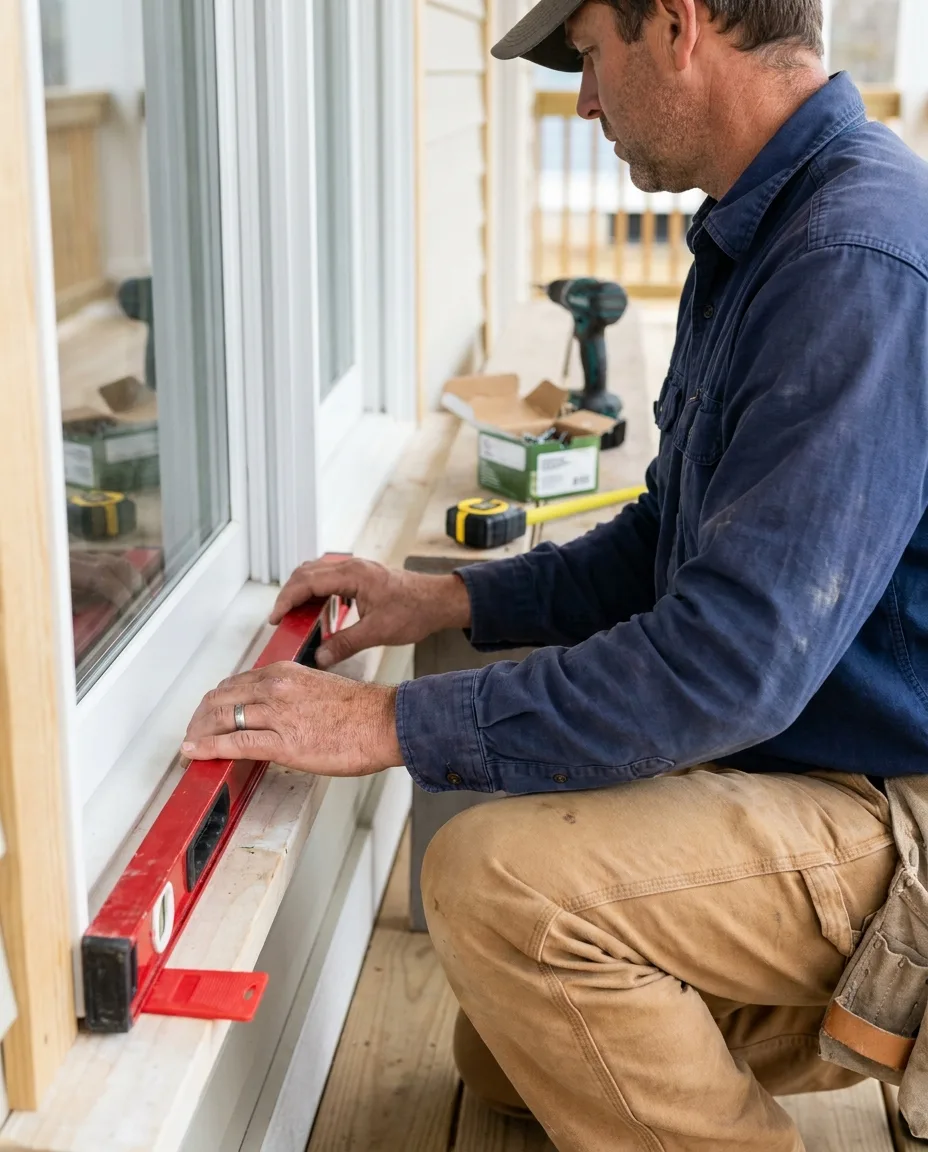
That lapping sequence only works if it is built in order. When windows are installed into an existing wall, the installer works with what is there and details the opening to spec from the outside in. When siding goes on over existing windows, the siding crew works around units they did not set. Both are done correctly every day. But when the two happen at once, the sill pan, the jamb flashing, the head flashing and the house wrap are all installed as one continuous assembly, and the crew can see the sheathing condition behind every opening before anything covers it.
That is the real argument for combining. If you already know both trades are coming, the free in-home estimate is where the scope for both gets measured on the same visit and priced as one itemized number.
What does combining the two projects actually save?
Three things, and only one of them is a big line item.
One mobilization instead of two
Scaffolding, staging, dumpster, material drops, protection of landscaping, permitting where required — a lot of that is set up once whether the crew is hanging siding, setting windows, or both. Doing them together does not halve your total, because the product cost and the labor on each trade do not change. What it removes is the duplicated setup and the second round of disruption.
Trim and exterior detail get done once
This is where the overlap is largest. A full siding replacement includes trim, soffit and fascia. Full-frame window replacement also involves exterior trim at every opening. Done separately, somebody pays to detail those openings twice. Done together, the window trim is simply part of the siding trim package and it all matches, in one material, in one color.
You only open the wall once
What the crew finds under old siding is the single biggest variable in an exterior project. Soft sheathing, rot below a window, a previous repair that was never flashed — those are found and corrected while the wall is open. Finding them two years later means reopening a wall you just paid to close.
When should you not do both at once?
| Situation | The better move |
|---|---|
| Windows fogged or drafty, siding is sound | Windows now, insert replacement where frames allow |
| Siding buckled or soft, windows are recent double-pane | Siding now, flash around the existing windows |
| Both failing, one budget | Do both together while the wall is open |
| Both failing, budget only covers one | Do the one keeping water out of the wall first |
| Storm damage covered by a claim | Match project scope to what the claim actually covers |
| Selling within a year | Fix the visible defect that a buyer will price against you |
There is no virtue in bundling for its own sake. If your siding has twenty good years left, replacing it to get cleaner window flashing is backwards math. New windows alone, installed and sealed correctly into an existing wall, perform well — that is the majority of what we install.
What does a combined project cost?
Both trades are priced as ranges because both depend on what the house actually is. In our market, replacement windows run about $700 to $2,200 per window installed, and a full siding replacement typically runs $12,000 to $25,000 installed including trim, soffit, fascia and house wrap.
A house with 14 windows and average siding square footage therefore lands across a wide band, and the honest answer is that the number comes from a measured estimate rather than a calculator. What moves it most:
- Opening count and size. Large and shaped units sit at the top of the per-window range.
- Insert versus full-frame. Full-frame adds several hundred dollars per opening and is required when a sill or frame is rotted, out of square, or has a history of water intrusion.
- Siding material. Vinyl is the value answer. James Hardie fiber cement costs more and lasts longer, and mixing — fiber cement on street-facing elevations, vinyl elsewhere — is a legitimate compromise.
- Stories and trim detail. Two-story elevations with heavy trim take more labor than a simple ranch.
- Sheathing condition. Unknown until the old cladding comes off, which is why a good quote says in writing what happens if rot is found.
If the combined number is more than you want to write a check for at once, that is a financing question rather than a scope question. Our financing through the GreenSky program includes no-interest-if-paid-in-full plans at 6, 15 or 18 months and fixed-rate terms, with zero down for most approved homeowners, subject to credit approval.
If you have to phase it, which one goes first?
The rule is simple: whichever one is letting water into the wall goes first.
Siding that is buckled, cracked, soft to the touch, or showing mold on the interior side of an exterior wall is an active water problem. That gets replaced first regardless of how the windows look, because the wall is degrading on a schedule you do not control.
Windows that are fogged between the panes, drafty with the sash locked, or sitting in rotted sills are the first priority when the cladding is still sound. A failed insulated glass seal is a comfort and efficiency problem, not usually a structural one — but a rotted sill is.
Siding first, windows later
Workable, with one condition: plan for insert replacement where the frames allow it. An insert drops into the existing frame and leaves the exterior trim and siding largely undisturbed. If those frames are already rotted, you are going to need full-frame later, which means cutting into siding you just paid for. Have the estimator evaluate the frames before you commit to this order.
Windows first, siding later
The cleaner of the two phased orders. New windows set and flashed into the existing wall perform on their own, and when the siding comes off later, the crew can inspect and improve the flashing details around units that are already correct and modern. Tell the window crew the siding is coming, so flange type and trim detail are chosen with that in mind.
How does a combined install week actually run?
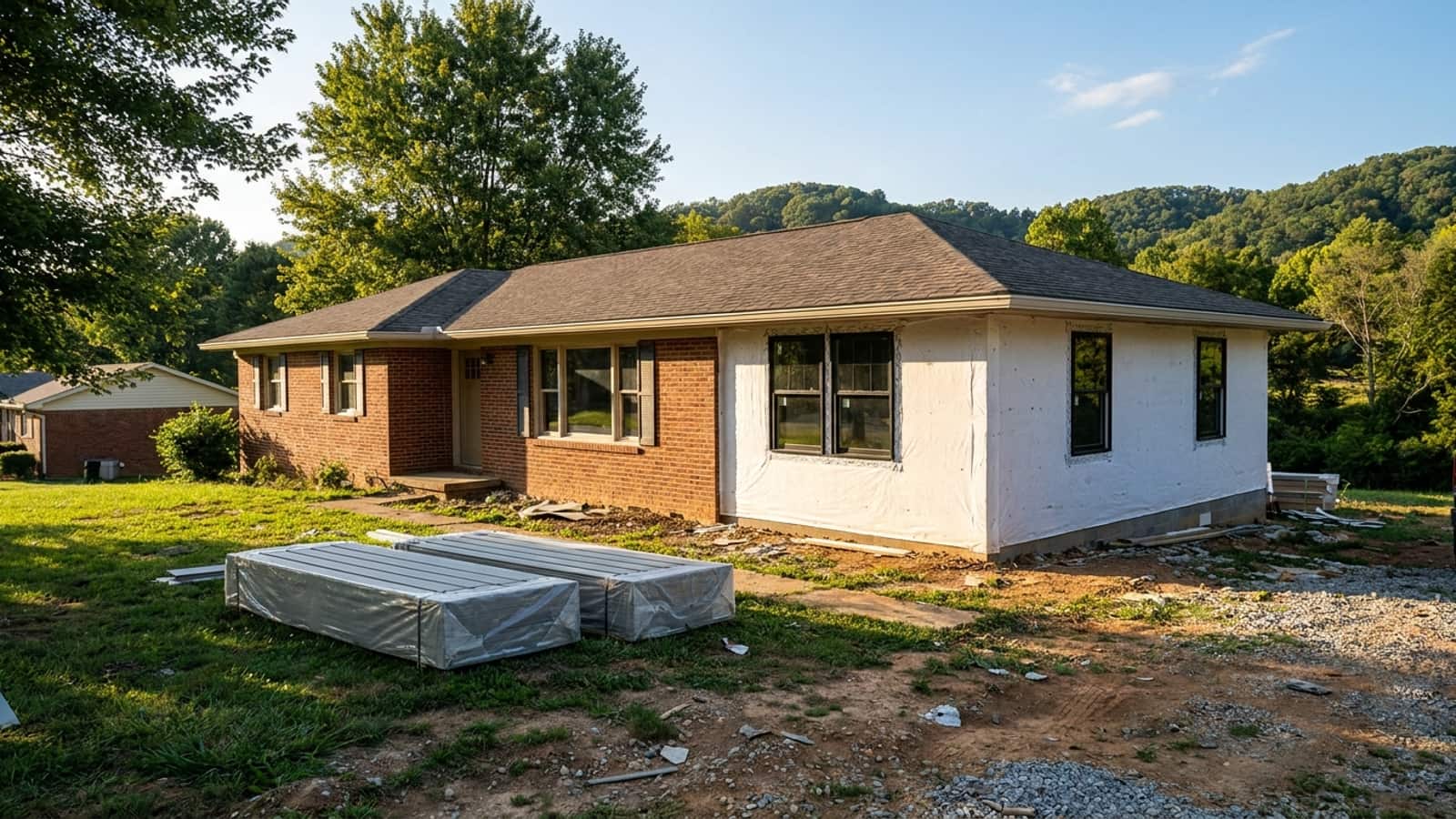
Windows alone typically run one to two days for a whole house. Siding alone runs four to seven days. Combined, the two are sequenced by elevation rather than by trade — old siding comes off a wall, the sheathing is inspected and repaired, windows in that wall are set and flashed, house wrap and trim go on, then the new cladding. Then the crew moves to the next elevation.
The practical consequences for you: the house stays livable and closed to weather every night, you need clear access roughly three feet inside and outside each window, and the site looks worse mid-week than it does at any other point. Both trades carry material and labor coverage under The Patriot's Promise, and the timeline is committed in a signed agreement rather than left open-ended.
What should you ask the estimator?
- Is each opening getting an insert or full-frame replacement, and why that one?
- What happens, in writing, if rot is found under the siding or at a window sill?
- How will the window trim be detailed in the new siding material?
- What is the labor term on each warranty, not just the material term?
- Does the schedule sequence by elevation, and how long is the house under way?
Your next step
If both trades are on your list, get them measured on the same visit so you can see one itemized price and decide with real numbers instead of estimates from two different companies that do not line up. Book a free in-home estimate at /get-estimate/ and we will walk the openings, look at the cladding, and tell you plainly if one of the two can wait.