Short answer
A full siding replacement in the Dalton area typically runs $12,000 to $25,000 installed, and that figure covers the cladding plus trim, soffit, fascia and house wrap as one system. Where a specific house lands in that range comes down to square footage, number of stories, how much trim detail the elevations carry, and what the sheathing looks like once the old siding comes off. Material is the other lever, with vinyl sitting at the low end of the range and James Hardie fiber cement at the high end.
A full siding replacement in Dalton typically costs $12,000 to $25,000 installed. That is a complete number covering the siding itself plus the trim, soffit, fascia and house wrap, not a panel-only price that grows every time someone adds a line.
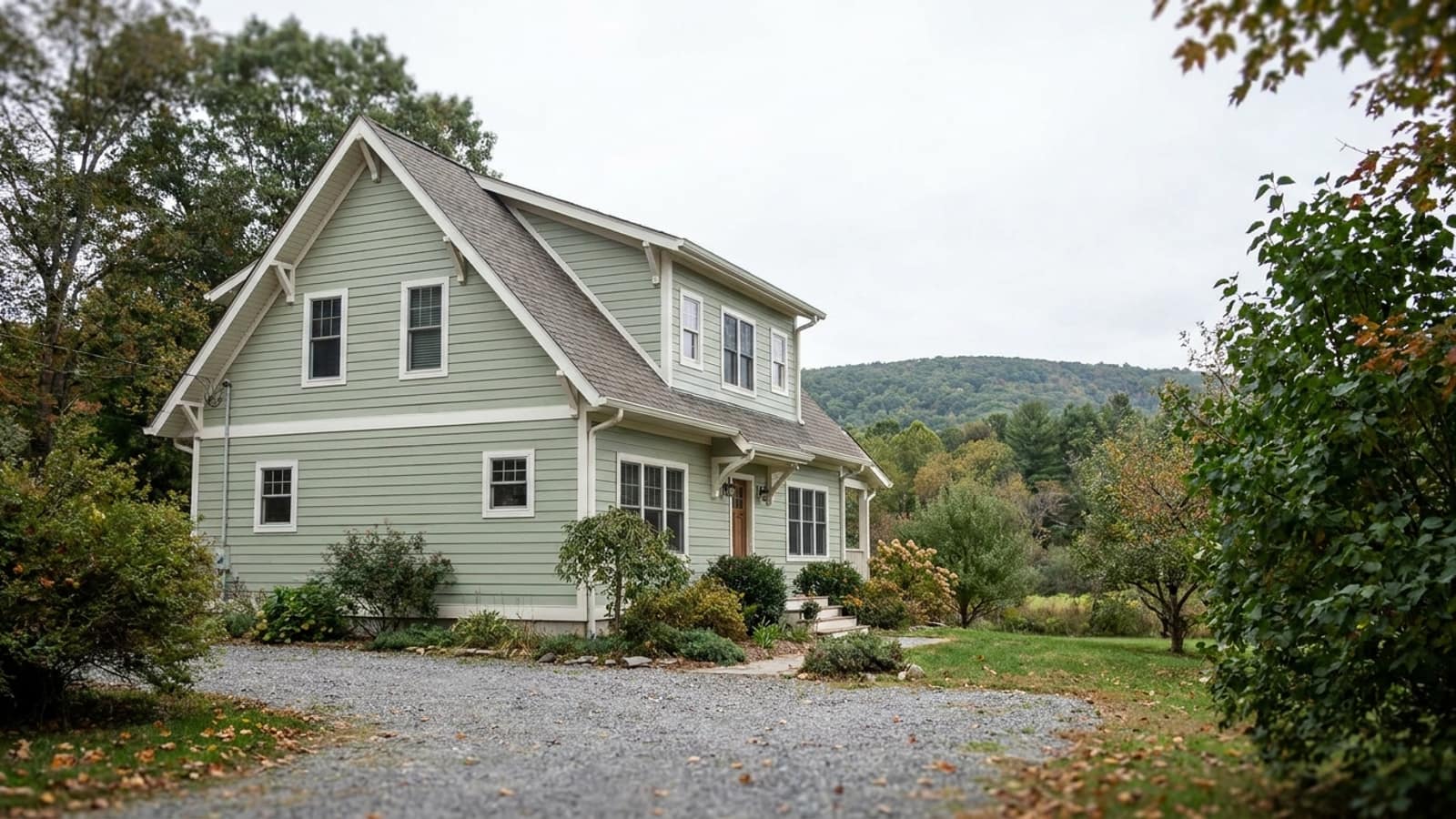
The spread is wide because houses are not alike. A single-story ranch off Cleveland Highway with simple gable ends is a very different job from a two-story house on a wooded lot above Dug Gap with dormers, deep overhangs and a lot of trim. Both are normal Dalton projects, and they are not going to land in the same place on that range.
What is actually included in a siding replacement price?
When we quote siding replacement, the number is for the whole exterior envelope going back on as one system. That means:
- Removal and disposal of the old cladding
- Inspection of the sheathing underneath, with any damaged sections called out
- House wrap, a continuous water-resistive barrier across the walls
- Flashing at windows, doors and other wall penetrations
- New siding, installed to the manufacturer's fastening and clearance spec
- Corner posts, J-channel and trim
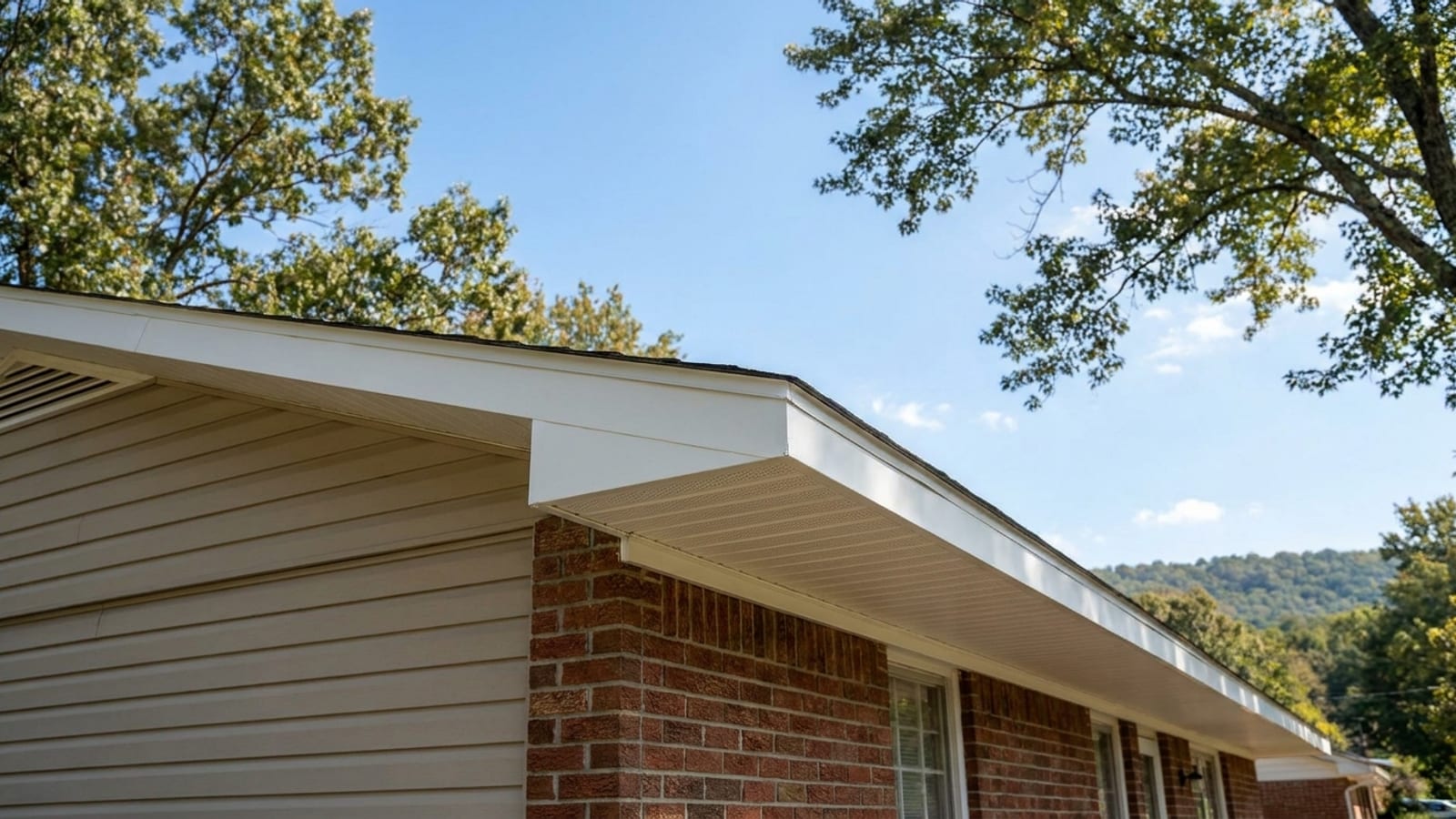
- Soffit and fascia
- Cleanup, including magnet sweeps for fasteners
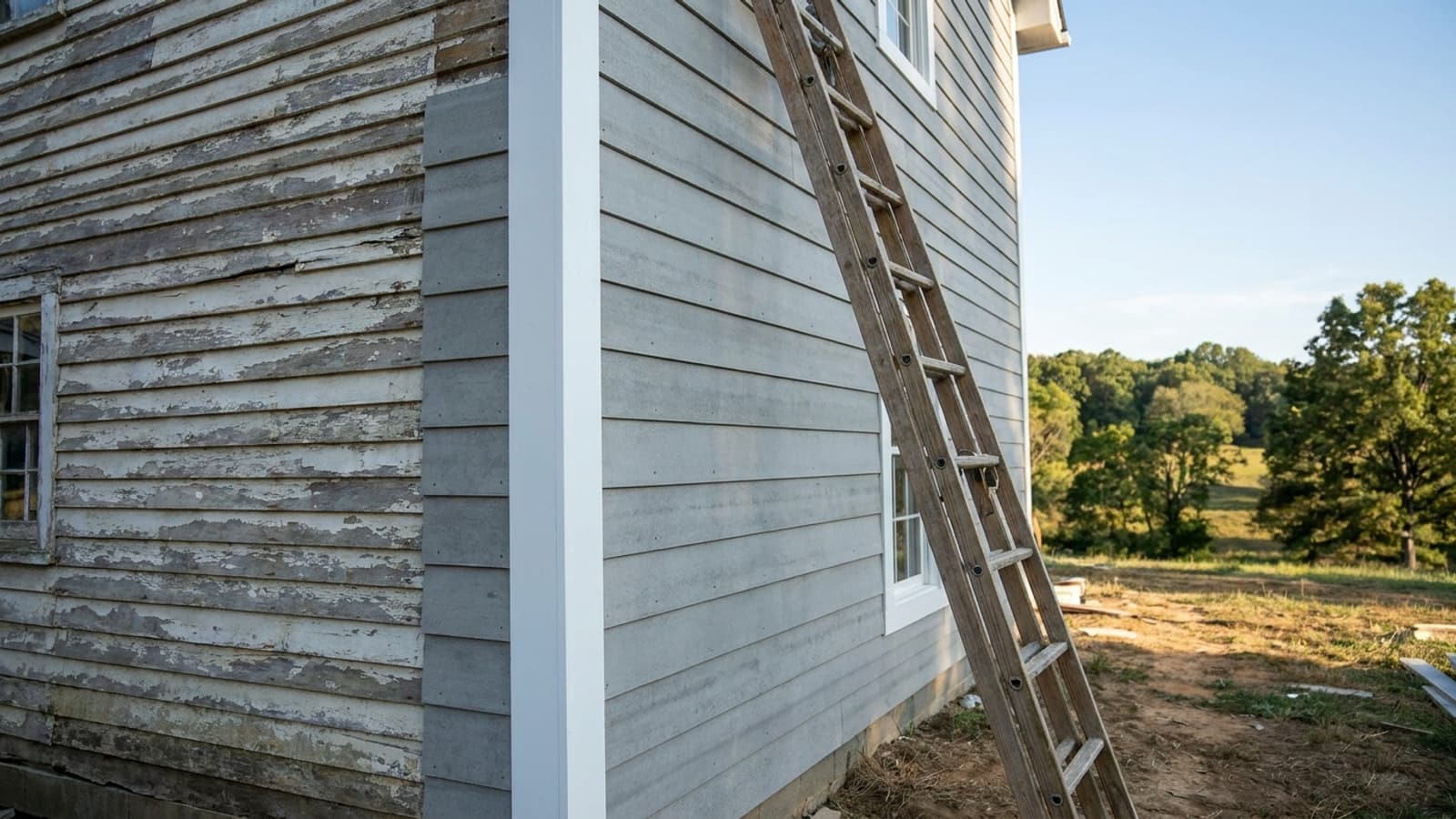
What the number does not include is work that only reveals itself after demolition. Rotted sheathing, a failed window flashing detail or a section of framing that has been wet for years gets quoted as it is found, with photos, before anyone covers it back up. That is the single most common reason a siding project moves off its original figure, and it is the reason we will not side over an existing wall.
What moves a Dalton siding quote up or down?
| Factor | Why it matters | Effect on price |
|---|---|---|
| Square footage of wall area | The main driver of material and labor | High |
| Number of stories | Staging, ladders and slower work | Moderate to high |
| Material choice | Vinyl to composite to fiber cement is a real spread | High |
| Trim and architectural detail | Dormers, gables, bump-outs and wide casings add cut time | Moderate |
| Condition of the sheathing | Repairs found after tear-off | Low to high |
| Soffit and fascia condition | Often replaced at the same time | Low to moderate |
| Site access and grade | Sloped lots and tight setbacks slow a crew down | Low to moderate |
| Accent features | Stone veneer, board and batten, shake accents | Low to moderate |
The detail line is the one homeowners underestimate. Two houses with identical wall square footage can differ by thousands because one has four simple elevations and the other has three gables, a bay projection and a porch roof tying into the wall. Every one of those is cut work, flashing work and trim work.
Does the material really change the number that much?
It does. Quality vinyl runs roughly 40 to 70 percent cheaper installed than fiber cement, which is why material choice usually decides whether a house lands near the bottom or the top of the range.
| Material | Typical lifespan | What it is good at | Where it sits on cost |
|---|---|---|---|
| Royal and Mastic vinyl | 20 to 40 years | Lowest installed cost, no repainting, wide color range | Low end of the range |
| Insulated vinyl | 20 to 40 years | Vinyl benefits with a thicker, more rigid panel | Low to middle |
| Everlast composite | Long service life | Impact resistance without a painted finish | Middle |
| James Hardie fiber cement | 30 to 50 years | Fire resistance, impact resistance, ColorPlus finish that holds color in Southeast sun | Upper end of the range |
The deciding question is usually how long you plan to stay. Under five years, quality vinyl is a sound choice and the money is better spent elsewhere. Ten years or more, or a house with architectural detail worth doing well, and fiber cement generally wins on total cost of ownership. We are a James Hardie Alliance Select contractor, so when Hardie is the right answer it goes on to warranty spec, with the correct fastening, the correct clearance at grade and roof lines, and the correct treatment at cut edges.
Mixing is also legitimate. Fiber cement on the elevations the street sees and vinyl on the sides and back is a common way to get the look without the whole-house premium.
What do crews find behind old siding in North Georgia?
Dalton sits in a humid, storm-prone part of North Georgia, and the two things that age a wall here are water and sun. On tear-off, the usual findings are:
- Sheathing darkened or soft below a window that was never properly flashed
- Rot at the bottom course where mulch or grade was built up against the wall
- Sections where the original house wrap was lapped the wrong way, so water ran behind it instead of over it
- Fascia that has gone spongy from a gutter that has been overflowing for several seasons
- Hail bruising or impact cracking on the elevations that take weather
None of that is unusual on a house that is 25 or 30 years old. What matters is that it gets found and fixed rather than wrapped up inside a new wall. Siding over an existing layer skips the inspection entirely, which is why we do not do it.
How long does the project take?
Most siding installations take 4 to 7 days depending on house size and complexity. The crew works elevation by elevation, so the house is never open to weather overnight, and you stay in it the whole time.
Before that, there is a shorter stretch for the estimate, the signed timeline agreement, any permit your project requires, and material ordering. Color availability on fiber cement with the ColorPlus finish can add time, so if you have landed on a specific color, decide early rather than late.
How do homeowners in Dalton pay for a siding project?
Most pay one of four ways: cash, contractor-arranged financing, a home equity line, or an insurance claim when the damage is storm related. Siding is difficult to phase because the envelope comes off and goes back on as one system, so the decision is usually about spreading one number rather than splitting up the work.
Our financing runs through the GreenSky program. There are no-interest-if-paid-in-full plans at 6, 15 and 18 months, and fixed-rate terms for spreading the balance on purpose, including 6.99% APR for 60 months at $19.80 per month per $1,000 financed and 9.99% APR for 144 months at $11.94 per month per $1,000 financed. Zero down for most approved homeowners, subject to credit approval. A second option is available through LevelCore.
One thing to budget without: there is no federal tax credit for siding work placed in service in 2026. The Energy Efficient Home Improvement Credit was terminated for property placed in service after December 31, 2025. We would rather say that up front than have you discover it at tax time.
What warranty should come with the work?
Ask for the labor term specifically, not just the material term. A long material warranty paired with a one-year labor warranty is a much weaker promise than it sounds, because most service calls turn out to involve installation details rather than defective panels.
Our siding work carries a 30-year material and labor warranty under The Patriot's Promise, along with signed timeline agreements, $2 million liability insurance and workers' compensation on every job. We are owner-operated, so the people who priced your job are the people accountable for it.
What is the next step for a Dalton homeowner?
Get a real number on your actual house. Wall square footage, story count, trim detail and the condition of what is behind the old siding are what decide your price, and none of those can be guessed from a map.
We cover Dalton and the rest of Whitfield County, and you can read more on our Dalton siding page. When you are ready, request a free in-home estimate or call (423) 830-7138. An estimator measures the elevations, walks the material options with you and leaves you with one itemized price. It is a sales appointment, and it is also the only way anyone can hand you a number that means something.