Short answer
Yes for the dust and pollen riding in through gaps around a failed window, and no for what is already in the house or arriving through doors, attic bypasses and the HVAC system. A properly sealed replacement window closes one specific air leakage path, which is the number reported as air leakage on the NFRC label. Windows are one part of the building envelope, so treat new units as one fix among several rather than as an air quality solution on their own.
Yes for one specific source, and no for several others. If air is being pulled through gaps around a worn-out window, it is carrying whatever is outside with it — road dust, pollen, soot off a nearby street, fine grit from a gravel drive. Sealing that opening stops that particular delivery route. What new windows do not touch is the pollen already circulating in the house, the pollen that walks in on shoes and pets, and the very large volume of outside air that most houses take in through the attic, the crawl space, the doors and the duct system.
That distinction matters in this region, because pollen season here is heavy enough that homeowners reasonably assume the windows are the problem. Sometimes they are. Often they are one contributor among four or five, and it is worth knowing which before writing a check.
Where does dust and pollen actually get into a house?
A house is not sealed. Air moves in and out of it constantly, driven by wind, by the stack effect of warm air rising, and by the pressure your own HVAC system creates when it runs. Air carries particles. Wherever there is an opening that air moves through, particles come along.
The common paths, roughly in order of how much air they typically move:
- Attic and ceiling bypasses — recessed lights, top plates, chases around plumbing and flues
- Duct leakage, especially return ducts running through an unconditioned attic or crawl space
- Crawl space and rim joist gaps
- Doors, both from the seal around them and from simply being opened
- Windows — the sash seal, the frame perimeter, and the gap between the frame and the rough opening
- Dryer vents, bath fans and exhaust penetrations
Windows are on the list. They are rarely at the top of it. But they are the item on the list that homeowners can see, touch and feel a draft from, which is why the question comes up as a window question. If you are already looking at replacement windows for comfort or condensation reasons, the dust reduction is a real secondary benefit — it is just not the reason to buy on its own.
What does a new window actually change?
Three things, and they are worth separating because only one of them is about the window you pick out of a catalog.
The sash seal
On an old double-hung with worn weatherstripping or a broken balance, the sashes no longer pull tight against each other or against the jamb. That gap runs the full width of the window. A new unit closes on fresh weatherstripping, and a casement or awning closes on a compression seal that pulls tight on all four sides. This is the part the manufacturer controls, and it shows up on the NFRC label as the air leakage number.
The frame perimeter
This is the gap between the window frame and the rough opening in the wall — the space that was shimmed and, on a lot of older houses, stuffed loosely with fiberglass batt or nothing at all. Fiberglass batt does not stop air. It filters it, which is why the insulation in that cavity is often gray with the dust it has been straining out of the airstream for twenty years. A correctly installed replacement gets that cavity insulated and air-sealed, then flashed and sealed on the exterior.
The exterior detail
Sealant at the exterior trim, proper flashing at the head, and a sill detail that sheds water outward. This part keeps both water and wind-driven air out of the wall assembly, and it is the part that is invisible once the job is done.
Of those three, the second and third are installation, not product. That is the honest answer to why two quotes for the same window can produce different results, and it is why the labor side of a warranty is worth reading — ours is spelled out in The Patriot's Promise, which covers material and labor for life on windows rather than material only.
Which entry points do new windows fix?
| Entry path | Do new windows address it? | What actually addresses it |
|---|---|---|
| Gaps around the window frame | Yes, directly | Full-frame or insert replacement with the cavity sealed |
| Worn sash weatherstripping | Yes, directly | New unit with intact seals |
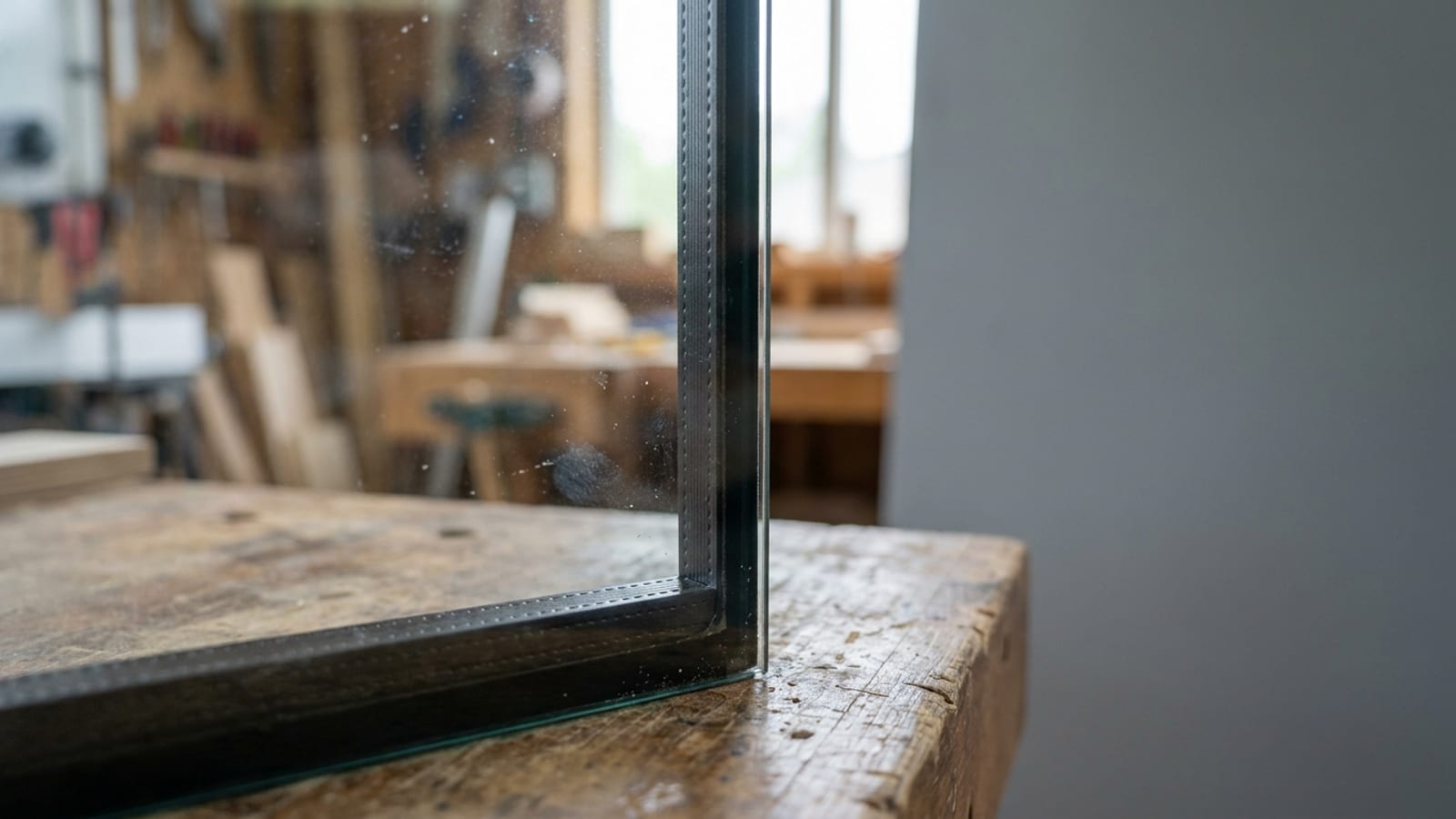
| Failed glass seal letting in haze | Yes, but that is moisture, not particles | Replacement of the insulated glass unit or window |
| Attic bypasses and can lights | No | Air sealing and insulation work in the attic |
| Leaky return ducts | No | Duct sealing |
| Crawl space and rim joist | No | Encapsulation or rim joist sealing |
| Doors opening and closing | No | Entry mats, and a well-sealed door for the closed condition |
| Pollen already indoors | No | Filtration and cleaning |
Read that table as a scoping tool rather than a discouragement. If your windows are original single-pane or early aluminum units, the first two rows may be moving a genuinely large amount of unfiltered air, and closing them is a noticeable change. If your windows are fifteen-year-old double-pane units that still latch and seal, the dust is almost certainly coming from somewhere else.
How can you tell if your windows are the source?
A few checks anyone can do without equipment:
- Look at the sills after a windy dry day. A fine line of grit along the sill, concentrated at the sash meeting rail or at one corner of the frame, points to an air path at that spot.
- Check the insulation at the frame edge. If you can pull back a piece of interior trim on one window, gray or dirt-streaked insulation in the cavity means air has been moving through it.
- Feel the perimeter on a windy day. Run the back of your hand around the frame edge and the sash seam with the window shut and locked. A draft you can feel is a path particles are using.
- Look for daylight. With the window closed, a visible line of light at the frame or sash edge is an unambiguous gap.
- Compare rooms. If one room is consistently dustier than the rest of the house and it faces the prevailing wind or a road, that room's openings are worth looking at first.
If several of those check out across the house, windows are a real part of the problem. If none of them do, spend the money on the attic and the ducts first — it will do more.
Does the glass package matter for dust and pollen?
No. Particles do not pass through sealed glass, so the number of panes, the low-E coating and the argon fill are irrelevant to this question. They matter enormously for something else: in our ENERGY STAR South-Central climate zone, a qualifying window needs a U-factor of 0.28 or lower and an SHGC of 0.23 or lower, and SHGC is the number that does the heavy lifting here because cooling load dominates. We spec glass by elevation for that reason. But it is a comfort and cooling-cost decision, not a dust decision.
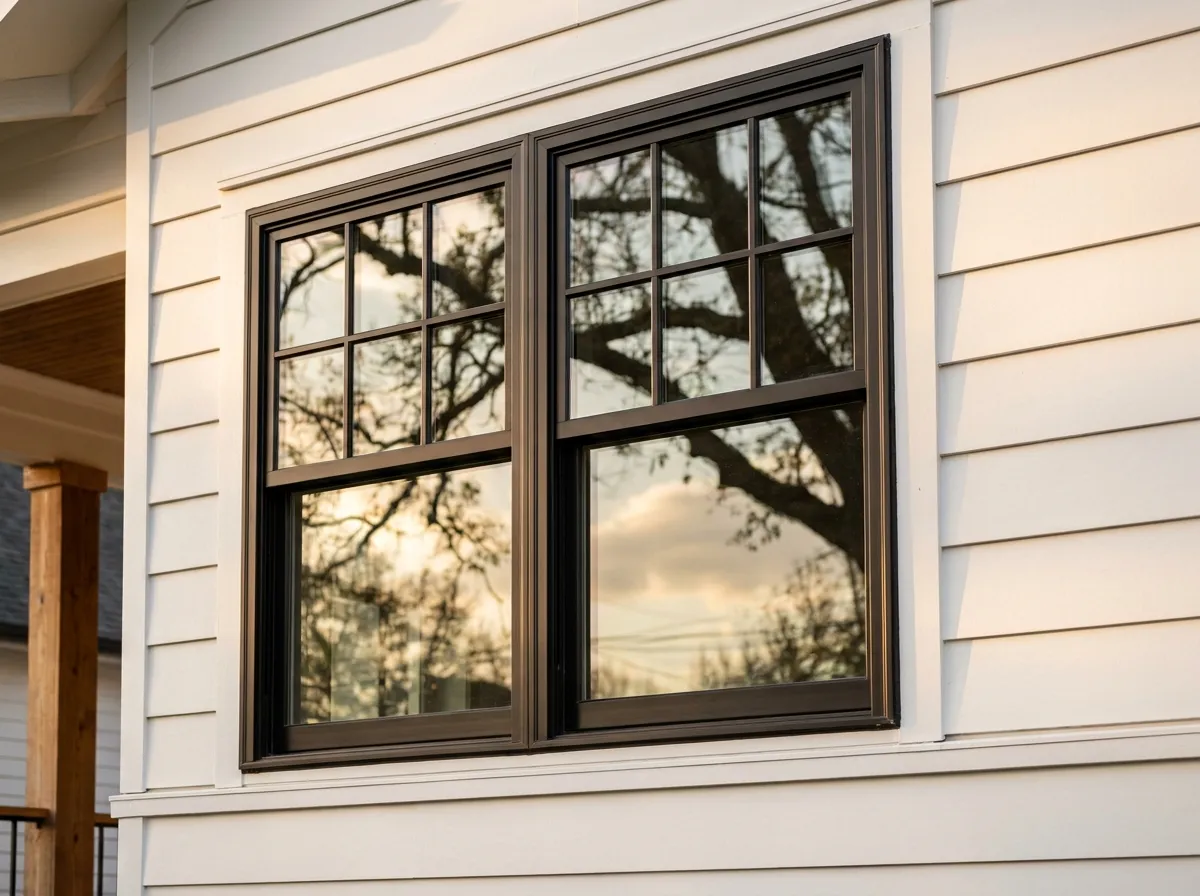
What does matter for dust is the operating style and the hardware. A casement or awning that pulls tight on a compression seal all the way around seals better than any sliding sash, simply because a sliding sash has to move past its weatherstripping to operate. That is a reason to consider a casement over a kitchen sink or on a hard-to-reach opening, not a reason to convert a whole house.
What does this cost, and how do homeowners pay for it?
Replacement windows run about $700 to $2,200 per window installed in our market. That figure covers the unit, the labor, the sealing and the trim work. Where a project lands depends on the count and size of the openings, the frame material, the glass package, whether the job is insert or full-frame, and what the crew finds when the old unit comes out. Most whole-house jobs are one to two days of crew time on site.
If spreading it out makes more sense than paying at once, we offer financing through the GreenSky program — no interest if paid in full within 6, 15 or 18 months, or fixed-rate terms starting at 6.99% APR, with zero down for most approved homeowners, subject to credit approval.
One budgeting note worth repeating: there is no federal tax credit for windows placed in service after December 31, 2025. The Energy Efficient Home Improvement Credit was terminated for that property. Work performed in 2025 or earlier may still be claimable on that year's return, and a tax advisor is the right person to confirm it. Budget without a credit for work done now.
What should you do at the same time?
If reducing dust and pollen is the actual goal, treat it as an envelope project rather than a window project. Seal the attic bypasses. Have the ducts checked, particularly return ducts running through a hot attic. Look at the crawl space. Then handle the windows and the doors, which is where the visible, feelable leakage usually is and where you also get the comfort and cooling benefit that pays you back every summer.
Done in that order, each item does its own job and none of them is asked to do work it cannot do.
What is the next step?
Have someone measure the openings and look at the condition of the frames and sills. That is the only way to know whether your windows are a real air path or a bystander. Schedule a free in-home estimate at /get-estimate/ — an estimator measures every opening you want quoted, checks frame and sill condition, shows you the product and glass options, and leaves you with one itemized price per opening with the install method spelled out. It is a sales appointment, and it is also the only way anyone can give you a real number instead of a guess.