Short answer
Water on the room side of your glass is indoor humidity condensing on a cold surface, not a leak and not usually a defective window. Your house is producing more moisture than it is removing, and the glass is the coldest surface in the room, so that is where the moisture shows up first. Lowering indoor humidity and raising the glass temperature with better-insulated units are the two fixes that actually work.
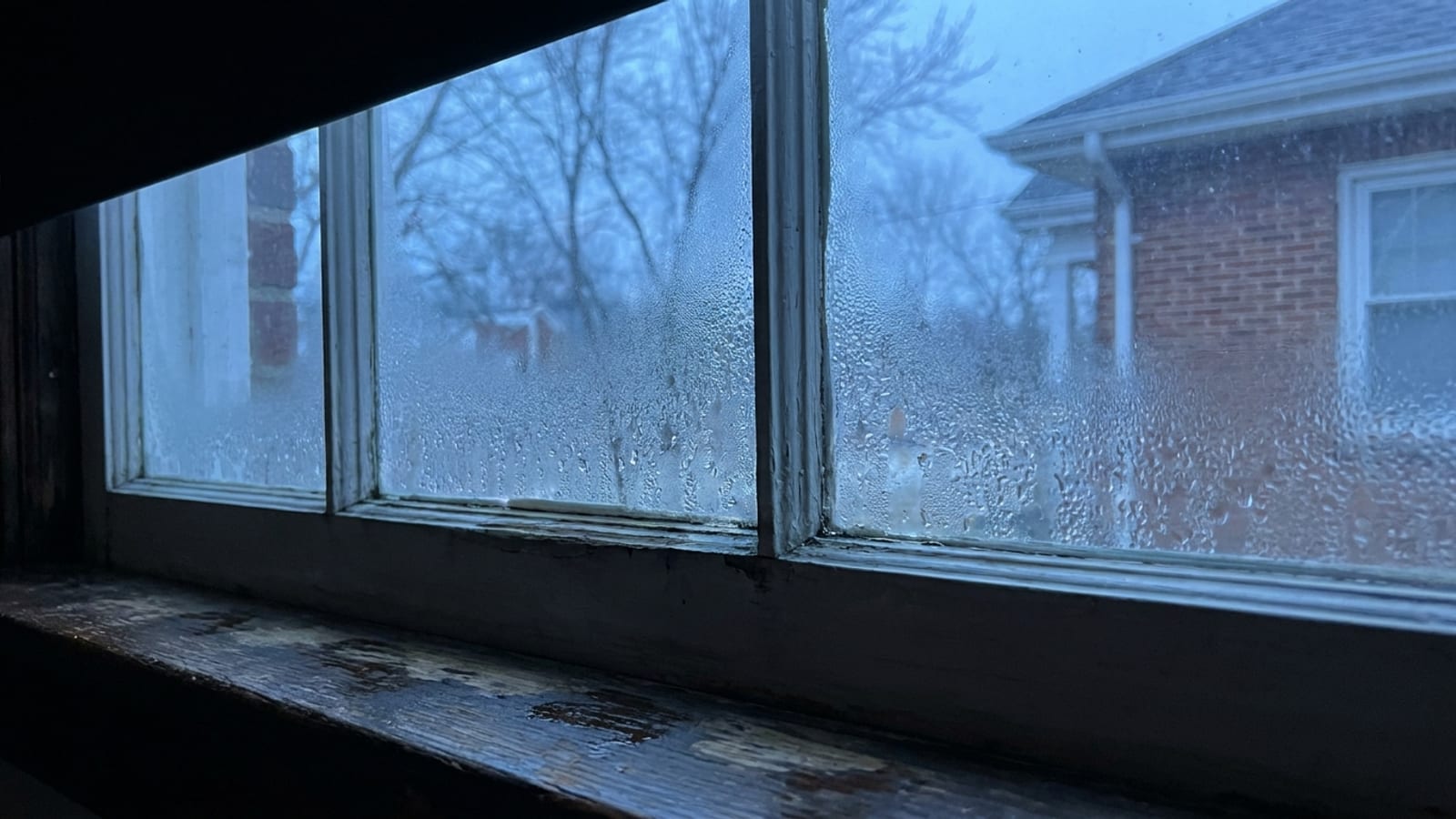
Water beading on the inside of your windows in January is almost never a window leak. It is indoor humidity condensing on the coldest surface in the room, and in nearly every house that surface is the glass. The air in your home is carrying more water vapor than it can hold once it touches a cold pane, so the vapor turns back into liquid right there on the glass and runs down onto the sill.
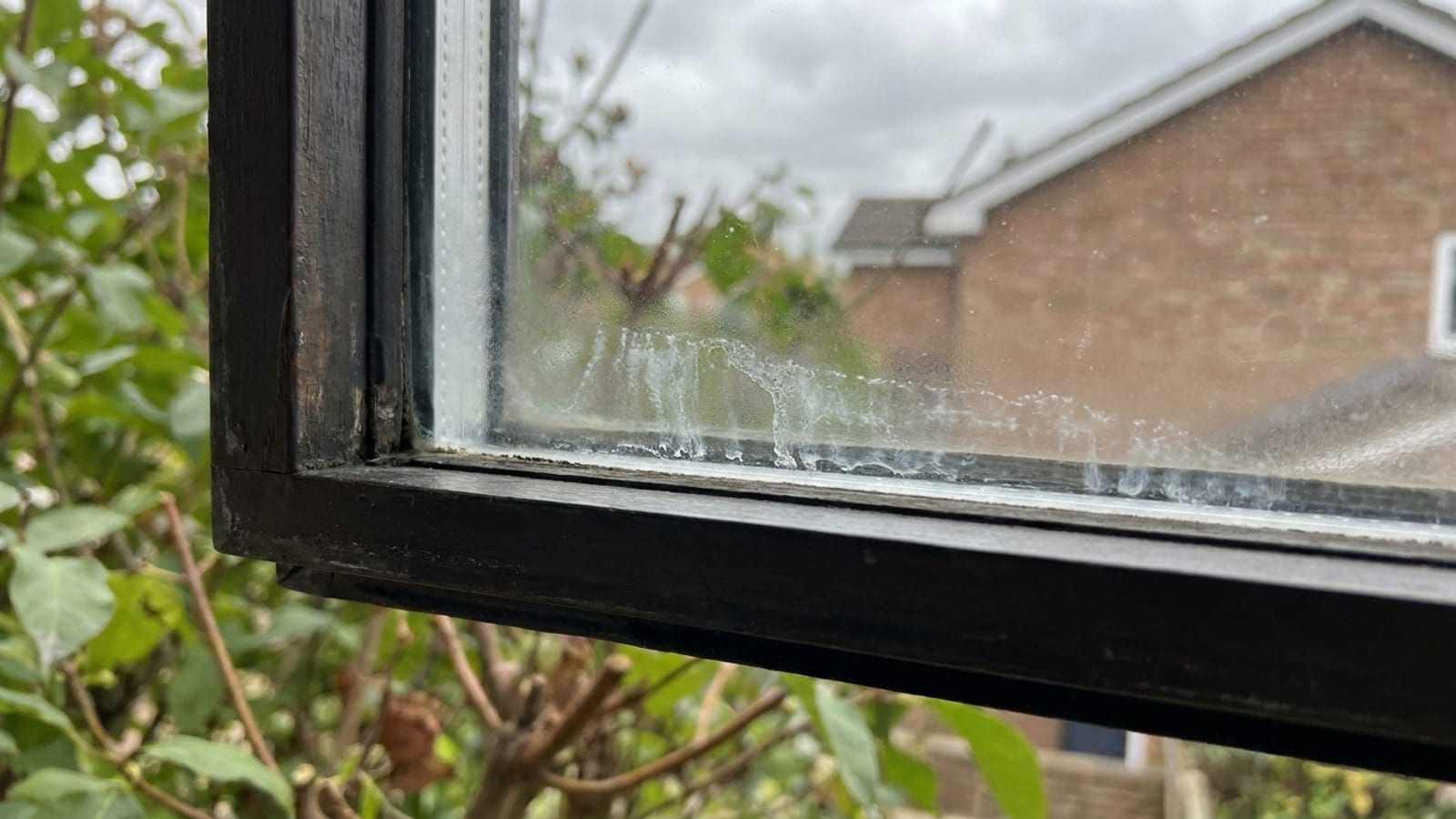
That distinction matters, because the fix is completely different depending on where the water is. Moisture you can wipe off with a towel is a humidity problem. Fog trapped between the two panes that no towel reaches is a failed seal in the insulated glass unit. This post is about the first one.
What is actually happening on the glass?
Air holds water vapor, and warm air holds more of it than cold air. Every surface in your house has a temperature, and when humid indoor air touches a surface cold enough, the air right at that surface cools below its dew point and releases moisture. That is condensation, and it is the same process that puts beads on a glass of iced tea in July, running in the other direction.
In winter, the glass in a window is the coldest large surface in most rooms. An old single-pane window in a Chattanooga living room can sit near 35 degrees on the interior face when it is 25 degrees outside. A modern insulated unit with a low-E coating and argon fill might hold that same interior surface in the 50s. The warmer that surface runs, the more indoor humidity the room can carry before water appears, which is why upgrading to properly specified replacement windows changes the picture even though the humidity in the house has not moved.
So there are only two levers: less moisture in the air, or a warmer piece of glass. Everything useful you can do falls under one of those two.
Where is all that moisture coming from?
Houses generate a surprising amount of water vapor, and in winter we seal the place up and stop letting it out. The usual sources, roughly in order of how much they contribute:
- Showers and baths, especially without a working exhaust fan or with one that runs for two minutes
- Cooking, boiling and simmering without the range hood on
- Drying clothes indoors, or a dryer vent that is disconnected or clogged
- Unvented gas space heaters, which release water vapor as a combustion byproduct
- Humidifiers running on a setting nobody has checked since last winter
- A damp crawl space or basement with no vapor barrier, pushing moisture up into the house
- Firewood stacked indoors, aquariums and a lot of houseplants
- Simply breathing. A family of four adds several pints of water to the air every day
New construction and recently air-sealed homes sweat more than drafty old ones for a reason. A leaky house exchanges air constantly and dumps humidity outside without anyone noticing. Tighten the envelope with new windows, new siding or added insulation and that free ventilation goes away, so the moisture you were always producing finally has nowhere to go.
What indoor humidity level should I be running in winter?
There is no single correct number, because the right target drops as the outdoor temperature drops. The colder it is outside, the colder your glass gets, and the less humidity the house can carry before condensation starts. This table is the general guidance builders and HVAC technicians use as a starting point.
| Outdoor temperature | Suggested maximum indoor relative humidity |
|---|---|
| 50 degrees F and above | 50 percent |
| 40 degrees F | 45 percent |
| 30 degrees F | 40 percent |
| 20 degrees F | 35 percent |
| 10 degrees F | 30 percent |
| 0 degrees F | 25 percent |
A $15 digital hygrometer in the main living area tells you where you actually are. Most homeowners who call about sweating windows are sitting at 50 to 60 percent in the middle of winter and have never measured it. If the number on the meter is above the row that matches your weather, the glass is telling you the truth.
How do I stop condensation on the inside of my windows?
Work the humidity side first, because it is cheap and it is often the whole answer.
- Run the bathroom exhaust fan during every shower and for 20 to 30 minutes after. A timer switch handles this without anyone remembering.
- Use the kitchen range hood whenever you boil or simmer, and confirm it vents outside rather than recirculating.
- Confirm the dryer vents outdoors and the duct is clear.
- Turn down or turn off any whole-house humidifier and check the setting against the table above.
- Cover the crawl space dirt with a proper vapor barrier if it is bare. A damp crawl space can drive humidity through an entire floor of the house.
- Open blinds and heavy drapes during the day. Closed window coverings trap a cold, still pocket of air against the glass, which is exactly where condensation forms.
- Keep interior doors open or run the furnace fan on circulate so bedrooms do not become humid dead zones.
- Resist the urge to close off unused rooms completely. They go cold, and the glass in them sweats hardest.
When the humidity is already right and the glass still sweats
If your hygrometer reads 35 percent on a 20 degree morning and the windows are still running with water, the glass is too cold. That points at the window itself: single-pane units, old aluminum frames that conduct cold straight through to the room, a failed insulated glass unit, or a metal spacer at the edge of the glass that chills the perimeter of the pane. The classic tell is condensation that forms in a band along the bottom edge and the corners while the center of the glass stays clear. That is the spacer and the frame doing it, not your shower.
What damage does interior condensation actually do?
A light fog that burns off by mid-morning on the coldest day of the year is not an emergency. Persistent water is.
- Paint and stain on wood sills blister and peel, then the wood under them darkens
- Sills and sash bottoms rot from the inside of the house outward, which surprises people
- Mold and mildew take hold on the sill, the sash and the drywall return below the window
- Water wicks into the drywall corner bead and stains the wall
- Curtains and blinds stain where they touch the wet glass
If you are wiping sills every morning, you are managing damage rather than preventing it. That is the point where the repair conversation becomes a replacement conversation.
Do new windows fix it, and what should I be looking for?
New windows do not remove a drop of moisture from your air. What they do is raise the interior glass temperature so the same air no longer condenses on it. Three features do the heavy lifting:
Low-E coating and argon fill. The coating reflects heat back into the room and the argon slows heat transfer through the cavity, both of which keep the room-side pane warmer.
A warm-edge spacer. The spacer holds the two panes apart at the perimeter. Traditional aluminum spacers conduct cold efficiently, which is why old units sweat at the edges first. A non-metal or hybrid warm-edge spacer raises that edge temperature noticeably.
A frame that does not conduct. Vinyl and composite frames are far better insulators than the old aluminum frames found on a lot of 1970s and 1980s homes across Tennessee, North Georgia and Northeast Alabama.
Our whole service area sits in the ENERGY STAR South-Central climate zone, where a qualifying window needs a U-factor of 0.28 or lower and an SHGC of 0.23 or lower. The U-factor is the number tied to winter glass temperature, and the SHGC is the one that carries most of the weight in our long cooling season. A good window for this region hits both rather than chasing one of them.
Replacement windows in our market run about $700 to $2,200 per window installed, which covers the unit, the labor, the sealing and the trim work. If spreading that out matters, our financing options include no-interest-if-paid-in-full plans and fixed-rate terms through the GreenSky program. Every window we install is backed by the lifetime material and labor coverage described in The Patriot's Promise.
How do I tell humidity condensation from a failed seal?
This is the single most useful diagnostic a homeowner can do, and it takes ten seconds. Wipe the glass with your hand.
- The water wipes away and the glass is clear. That is room-side condensation and a humidity issue.
- The water or haze is still there after wiping and you cannot reach it from either side. That is a failed insulated glass seal. The argon is gone, moisture is inside the sealed cavity, and no cleaning method reaches those surfaces.
- Water is on the exterior face only in the morning. That is outdoor dew on cold glass, and it is actually a sign the unit is insulating well.
If you want to read more about the sealed-unit failure case and the rest of our cost and buying guides, the blog covers them in detail.
What is the next step?
Start with the hygrometer and the exhaust fans. Give it two weeks of running the bath fan properly and keeping the blinds open during the day, and watch whether the glass still sweats on the next cold morning. A lot of houses solve it right there without spending anything.
If the humidity is in range and the glass still runs with water, or the sills are already soft and stained, book a free in-home estimate. An estimator measures every opening you want quoted, checks the condition of the frames and sills, and gives you one itemized price per opening with the install method spelled out. It is a sales appointment, and it is also the only way to get a real number for your house instead of a guess.