Short answer
A basement hopper window sits at the lower end of our installed window range of about $700 to $2,200 per opening, because the units are small, though a concrete or block opening adds labor that a framed wall does not. Hoppers hinge at the bottom and tilt inward from the top, which keeps the open sash out of a window well and sheds rain away from the opening. They are a daylight and ventilation window rather than an egress window, so a hopper alone does not satisfy a basement bedroom egress requirement.
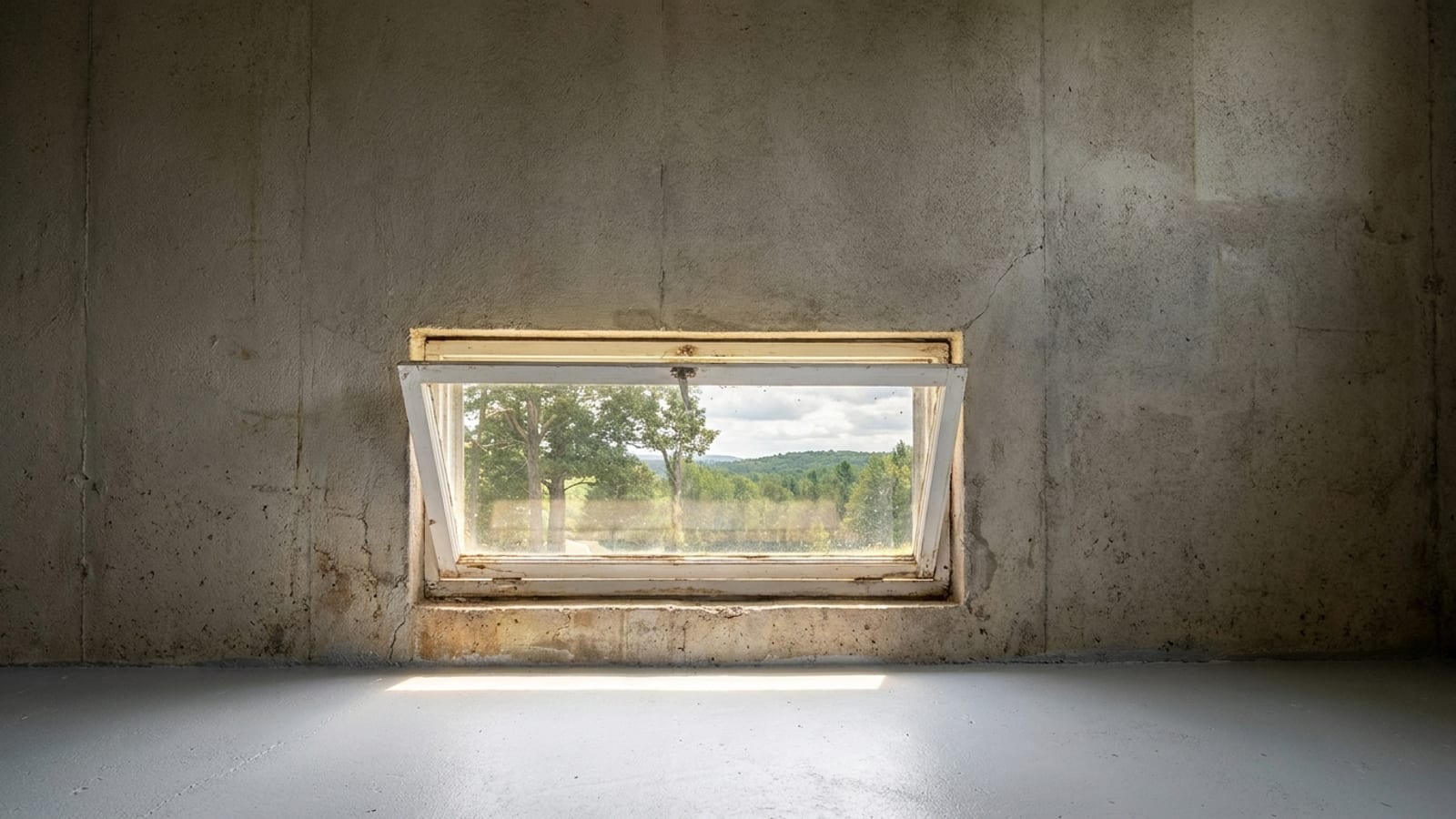
A hopper window is hinged at the bottom and tilts inward from the top, and that single detail is why it has been the default basement window in this part of the country for decades. The sash swings into the room instead of out into a window well, it sheds rain away from the opening when it is cracked for air, and it fits the short, wide openings that foundation walls tend to have. Replacing one is one of the least expensive window projects a homeowner can take on.
Here is what they cost, where they belong, and where a different unit is the better answer.
What is a hopper window, and why do basements use them?
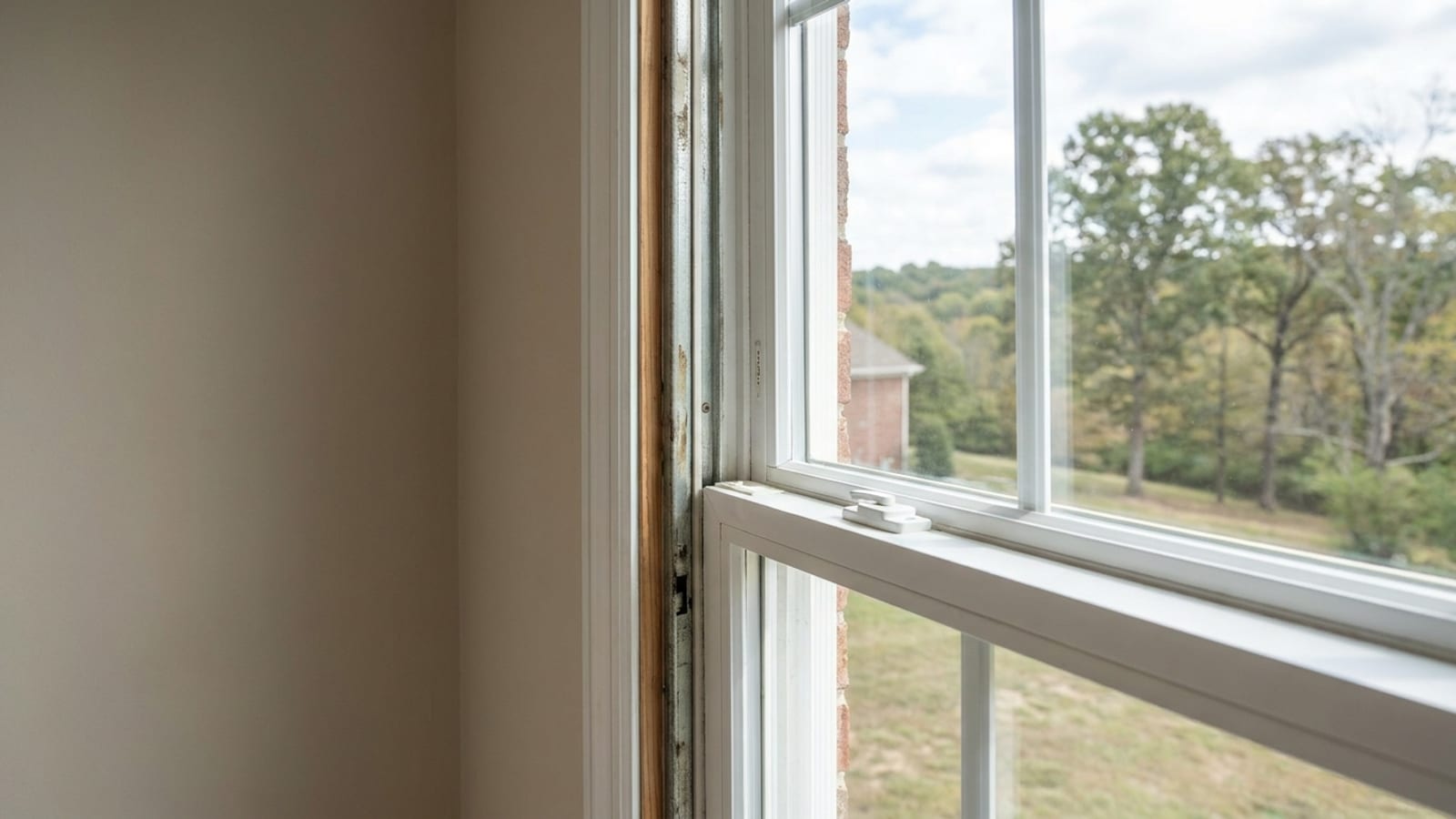
Picture a double-hung sash turned on its side and hinged along the bottom rail. Push the top in and the glass tips toward you at an angle, leaving a gap along the top of the frame for air to move through. Close it and a cam latch pulls the sash tight against compression weatherstripping all the way around.
Foundation walls create short, wide openings, typically somewhere around 30 to 36 inches wide and 14 to 24 inches tall, because the opening has to sit above grade and below the floor framing. A double-hung sash in that shape would barely open. A casement would swing out into a window well full of gravel. A hopper uses the whole height of a short opening and opens into clear space. That is the entire reason the style exists down there.
If you are pricing a whole basement or pairing this with the rest of the house, our window replacement page covers the frame materials and glass packages we install, and the same Low-E and argon glass that goes in the upstairs windows is available in these small units.
Where else do hoppers show up?
Basements are the common case, but hoppers also work above a shower in a bathroom, high on a stairwell wall, in a garage or workshop where a swinging sash would hit something, and as the operable bottom section under a large fixed picture window. Anywhere the opening is wider than it is tall and you still want air, a hopper is worth considering.
What does a basement hopper window cost installed?
Replacement windows in our market run about $700 to $2,200 per opening installed, and that figure covers the unit, the labor, the sealing, the trim and the cleanup. Hopper windows are the smallest units we install, so they land toward the bottom of that range in the simplest cases. What pushes a basement window up the range is rarely the window. It is the wall.
| What the crew finds | Why it matters | Effect on price |
|---|---|---|
| Sound existing frame, square opening | New unit sets into the existing liner | Lowest |
| Old steel frame cast into the concrete | Frame has to be cut out of the pour | Moderate |
| Block opening with crumbling mortar | Masonry repair before the window goes in | Moderate |
| Rotted wood buck around the opening | Buck rebuilt and flashed before install | Moderate |
| Opening being enlarged | Saw cutting, lintel, excavation | Highest |
| Interior finished basement | Drywall and trim returned to finish condition | Adds finish labor |
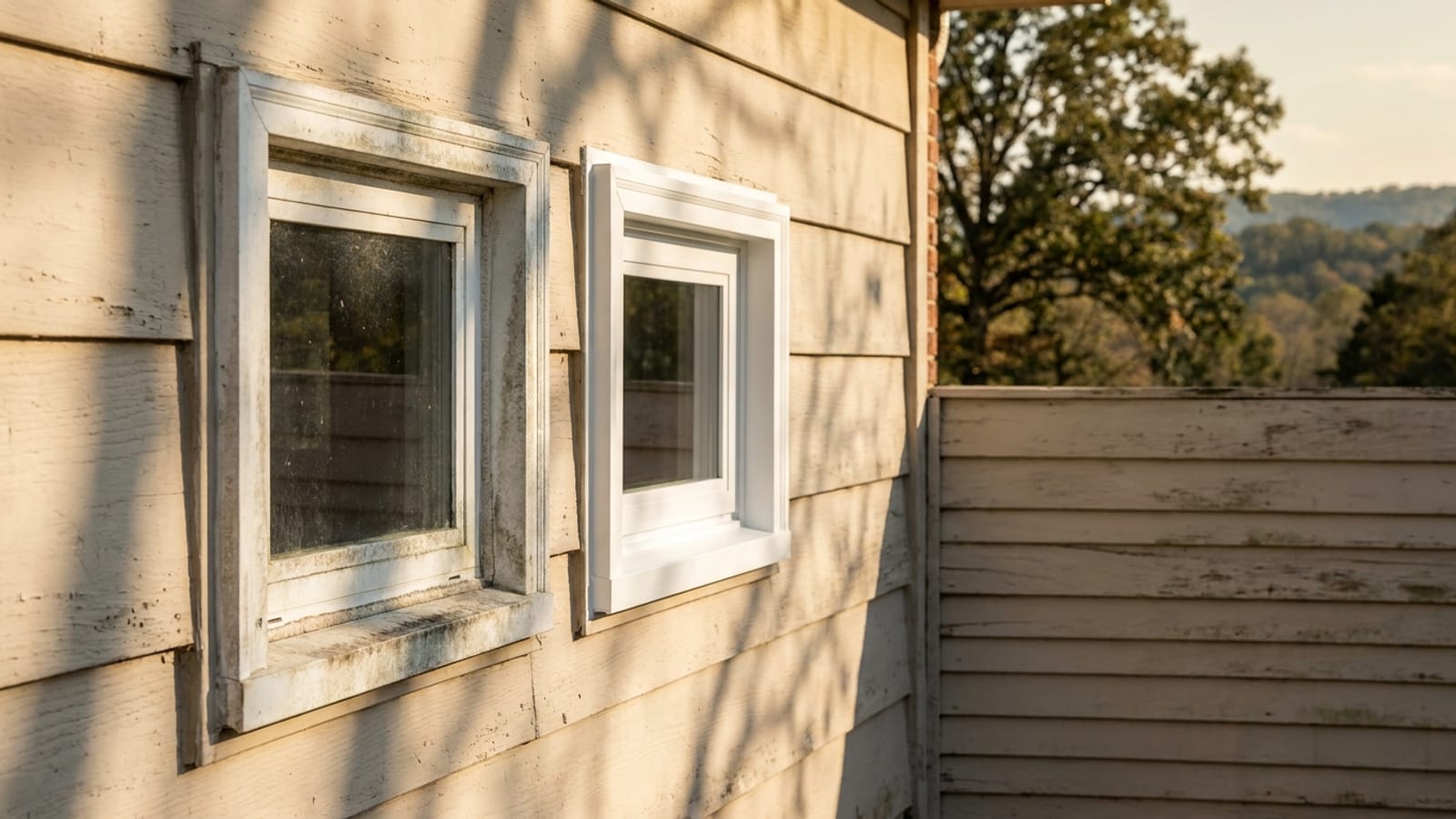
Two more things change the number. Glass block replacement, where a solid block panel comes out and an operable window goes in, is more work than a window to window swap. And an exterior window well that is failing is its own line item, because a new window in a well that holds water is a new window that will be wet.
If the basement is one piece of a larger project, financing through the GreenSky program includes no interest if paid in full within 6, 15 or 18 months and fixed rates starting at 6.99% APR, with zero down for most approved homeowners.
Does a hopper window count as egress?
No, and this is the single most important thing to settle before you order anything. A basement bedroom has to have a window that meets minimum clear opening dimensions and a minimum net clear opening area so a person can get out and a firefighter in full gear can get in. A short hopper sash cannot produce those dimensions, and the tilted sash itself eats into whatever opening there is.
So the rule is simple. Sleeping room in the basement means an egress unit and almost always an enlarged opening with a well and a ladder. Storage, mechanical room, laundry, workshop or an unfinished area means a hopper is a perfectly correct choice. If you are planning to finish the basement later and add a bedroom, decide now, because enlarging the opening is far cheaper before the drywall goes up.
Hopper, slider or glass block: which belongs in the wall?
| Option | Ventilation | Security | Daylight | Best use |
|---|---|---|---|---|
| Hopper | Good, deflects rain | Cam latch, small opening | Good | Most basement openings |
| Basement slider | Good, half the opening | Locks on the sash | Good | Wider openings |
| Awning | Good, sheds rain | Crank operator | Good | Above grade walls |
| Glass block with vent | Minimal | Highest | Diffused only | Security priority, no view needed |
| Fixed unit | None | Highest | Best | Light only, no air needed |
Glass block is the one people ask about most. It is secure and it is durable, but it gives you diffused light with no view and, unless you specify a small vent insert, no air at all. If the basement has a moisture or musty air problem, the ability to open the window on a dry day matters more than most homeowners expect.
How are hopper windows installed in a concrete or block wall?
The method depends on what is holding the old window.
- The crew measures the opening at the top, middle and bottom, because foundation openings are frequently out of square by a noticeable amount.
- The old unit comes out. A wood buck is pried and cut free. A steel frame cast into the pour is cut out in sections rather than pulled.
- The opening is cleaned, and any crumbling mortar, spalled concrete or rotted wood gets repaired first.
- The new unit is set, shimmed plumb and level, and fastened through the frame into solid material.
- The perimeter is insulated with low expansion foam and sealed, then caulked and flashed on the exterior so water drains away from the opening.
- Interior trim or a finished return closes it out, and the crew walks the opening with you.
The exterior detail is the part that separates a basement window that stays dry from one that does not. Below grade or near grade, the ground wants to send water at that opening. Sealing alone is not a drainage plan. A window well that has filled with soil and leaf litter over fifteen years needs to be cleaned out and, if the drain is blocked, dealt with. We flag that at the estimate rather than after.
What should the spec look like in Tennessee, Georgia and Alabama?
Our whole service area sits in the ENERGY STAR South-Central climate zone, where a qualifying window needs a U-factor of 0.28 or lower and a solar heat gain coefficient of 0.23 or lower. Basements are already the coolest part of the house, so the glass is doing less heavy lifting here than it does on a west facing wall upstairs, but the same package is worth specifying for consistency and for the condensation resistance that comes with a warm edge spacer.
For frame material, vinyl is the right call in almost every basement. It does not rot, it does not rust the way the old steel frames did, and it tolerates the humidity swings that basements see better than wood. Reinforced vinyl frames in these small sizes are stiff by nature because the spans are short.
One more spec item: screens. A hopper screen mounts on the interior side, since the sash tilts in. That is different from the rest of the house and worth knowing before install day so nobody is surprised.
What does the warranty cover on a small window like this?
The same thing it covers on a large one. Our window warranty under The Patriot's Promise is lifetime on material and labor, transferable one time and prorated after that. A basement hopper is not a lesser window with a lesser promise behind it. If anything, the small units in masonry openings are where the installation detail matters most, which is exactly why the labor term is worth reading on any quote you get.
What is the next step?
Measure nothing and guess at nothing. Basement openings are the least standard openings in the house, and the difference between a liner insert and cutting an old steel frame out of concrete is the difference between a short morning and a full day. Schedule a free in-home estimate and we will measure each opening, check the condition of the buck and the exterior well, confirm whether anything in the basement needs to meet egress, and give you one itemized price per opening with the install method spelled out. It is a sales appointment, and it is also the only way to get a real number instead of a guess.