Short answer
A window balance is an inexpensive part, so most of what you pay to replace one is the service trip, the diagnosis and the labor to pull the sash and fit the new balance. That is why one stuck window is usually a cheap fix and a houseful of failed balances rarely is. Replacement windows in our market run $700 to $2,200 per opening installed, and once several sashes in an aging unit are failing, that is the number worth comparing against.
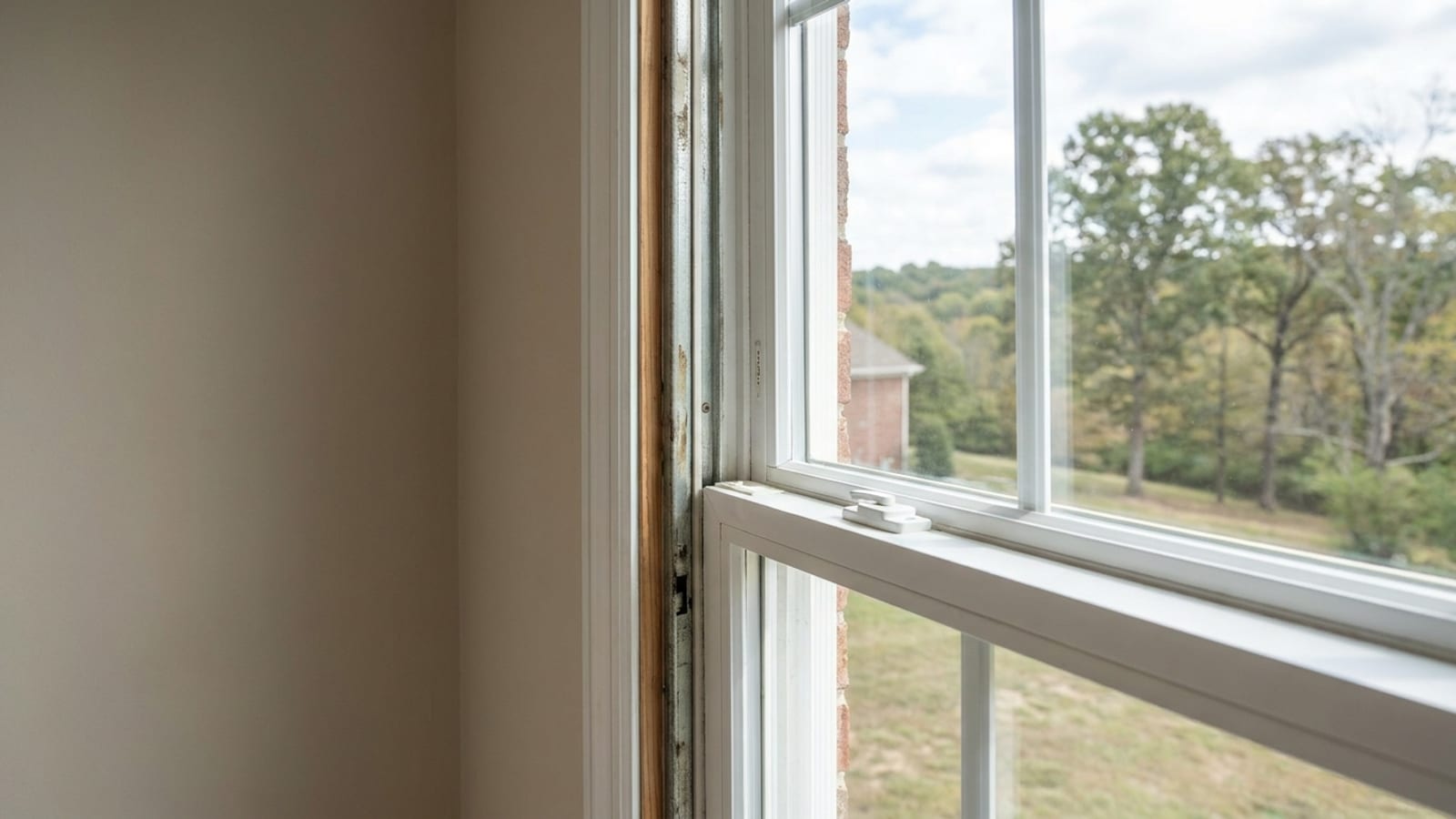
A window balance is the spring mechanism hidden inside the jamb that holds a double-hung or single-hung sash wherever you push it. The part itself is one of the cheapest components in the whole window. Almost everything you pay to replace one is labor: pulling the sash, identifying the exact balance by type, length and weight rating, sourcing it, and reassembling the window so it slides, seals and locks the way it did when it was new.
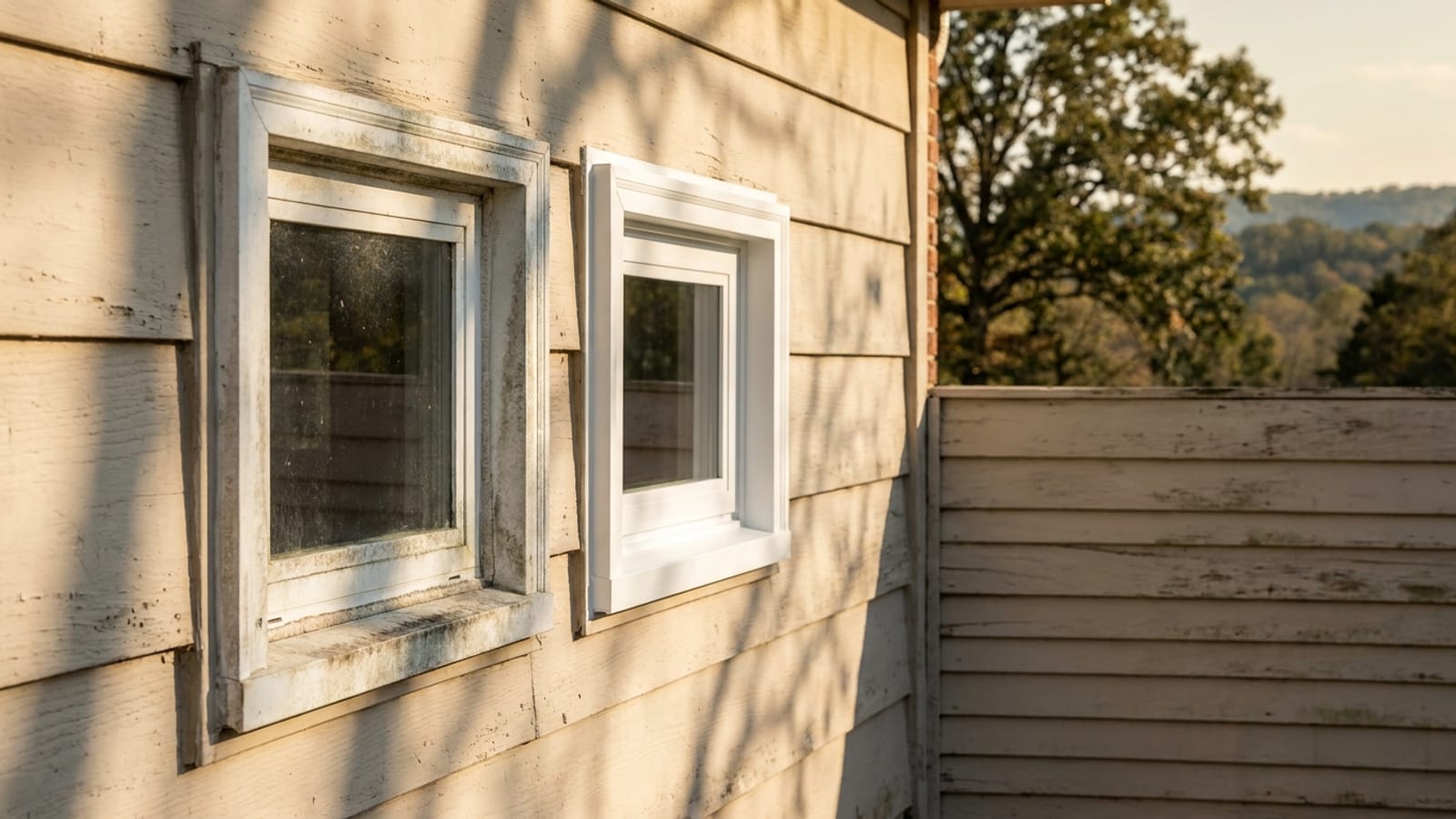
That is the honest cost story, and it means the useful question is not "what does a balance cost." It is "how many balances are failing, and in what kind of window." One failed balance in a ten-year-old vinyl unit is a small repair. Four failed balances in a twenty-five-year-old builder-grade unit with hazy glass is a window replacement conversation wearing a repair costume.
What does a window balance actually do?
A double-hung sash is heavy. Left to itself it would slam to the sill every time you let go. The balance is what counteracts that weight so the sash stays where you put it and so you can raise it with one hand.
When a balance fails, the symptoms are predictable:
- The sash drops as soon as you let go, or creeps down over a few minutes.
- The sash is suddenly very hard to lift on one side.
- One side rises faster than the other and the sash racks in the opening.
- You hear a snap or a loud pop from the jamb, then the window stops holding.
- The sash no longer meets the lock, because it is sitting a quarter inch off square.
None of those are glass problems and none of them are sealing problems. They are hardware problems, which is exactly why they are often worth fixing on their own.
The common balance types
You cannot buy a generic balance. The replacement has to match the system in your jamb and the weight of your sash.
- Block and tackle (coil and pulley). The standard in most modern vinyl double-hungs with tilt sashes. A spring and pulley assembly in a channel, clipped to the sash shoe.
- Constant force (coil spring). A flat coiled steel ribbon, common in newer vinyl and some aluminum units. Simple, and the coil is rated for a specific sash weight.
- Spiral balance. A twisted rod inside a tube, typical of 1970s through 1990s aluminum and early vinyl windows. These can often be retensioned rather than replaced.
- Weights and cords. Not a balance at all. Original wood double-hungs use iron weights hung on cords inside a pocket in the jamb.
Getting the type right is most of the diagnosis. Getting the length and weight rating right is the rest of it, and that is why a phone estimate for this work is a guess.
Why can nobody quote a balance over the phone?
Because three things have to be known before the part can be ordered, and none of them are visible from the driveway: the balance system, the sash weight, and whether the window brand still supports parts for that series.
That last one is the quiet dealbreaker. Window manufacturers come and go, and series get discontinued. A balance for a current production line is a stock item. A balance for a sash made by a company that stopped producing that series fifteen years ago may not exist, in which case the only paths left are a universal substitute that may not match the original tension, or a new window.
Repair or replace: which one is right?
This is a judgment call about the whole window, not about the broken part. Use the condition of the glass, the frame and the count of failures to decide.
| Path | What it involves | Relative cost | When it is the right call |
|---|---|---|---|
| Retension a spiral balance | Adjusting existing hardware, no new parts | Lowest | Sash drifts slightly, hardware is otherwise intact |
| Replace one or two balances | Correct part sourced, sash pulled and reset | Low | Glass is clear, frame is sound, window is under 15 years old |
| Rebuild hardware across many windows | Multiple parts, multiple visits, possible discontinued series | Moderate and unpredictable | Rarely the better value once the count climbs |
| Insert replacement window | New unit set into the existing sound frame | $700 to $2,200 per opening installed | Frames are square and sound, hardware and glass are both tired |
| Full-frame replacement | Everything out to the rough opening, rebuilt | Several hundred more per opening | Sill or frame is rotted, out of square, or has a water history |
The honest dividing line is the one we use on every service question: repair when the failure is in the parts, replace when the failure is in the window. A balance is a part. Fogged glass, a soft sill, a racked frame and a single-pane sash are the window.
Is replacing a balance a do-it-yourself job?
On a tilt-sash vinyl double-hung, often yes. The sash tilts in, lifts out of the shoes, and the balance clips into the channel. People do it with a putty knife and a screwdriver every weekend.
The parts of it that go wrong are worth naming:
- Ordering the wrong balance. Length is measured a specific way for each system, and the weight rating has to match the sash. A balance that is too strong pushes the sash up on its own.
- Releasing the spring. A charged coil balance under tension can let go hard. Eye protection is not optional.
- Handling the sash. A double-pane sash in a large opening is heavier and more awkward than it looks, and it is glass.
- Second-floor openings. Some balance systems require access from outside. That changes the job entirely.
If the window is still covered by a manufacturer or installer warranty, call before you open anything. Self-service on a covered unit can complicate a claim that would have been handled at no cost to you.
What if the window was installed with a warranty?
This is where the fine print on an old quote finally earns its keep. Many window warranties cover the material forever and the labor for one year, which means a balance in year six is a service call you pay for even though the part is free.
Patriots' Pride windows carry a lifetime material and labor warranty under The Patriot's Promise, transferable one time and prorated after that. The reason we point homeowners at the labor term when they are comparing two quotes is simple: hardware and installation details are what most service calls turn out to involve, years after the glass package has stopped being interesting.
How many failures mean the window is done?
There is no official threshold, so use a practical one. Walk the house and count. For each window, note whether the sash holds, whether the glass is clear, whether the lock engages without a shove, and whether you can feel air at the meeting rail with the window shut.
- One or two windows with hardware problems and everything else sound: fix the hardware.
- Hardware problems in half the house, all in the same series, all around the same age: the hardware is at the end of its design life and will keep going.
- Hardware problems plus fogged glass plus drafts: the unit has reached the end, and money spent on parts is money spent twice.
That third case is the common one on homes built in the 1990s, because the windows went in all at once and they age at the same rate. It is also the case where doing the whole house at once is less expensive per opening than doing it in pieces over five years. If the total is the obstacle rather than the decision, financing through the GreenSky program is how a lot of homeowners spread it, including no-interest-if-paid-in-full plans and fixed-rate terms.
What is the next step?
If one sash in an otherwise healthy window will not stay up, chase the part. Photograph the brand label, measure the balance channel, and get the right component.
If you are counting failures across several windows, or the glass has gone hazy in any of them, have someone measure the openings and give you a real number so you can compare the two paths honestly. Schedule a free in-home estimate. An estimator measures every opening you want quoted, checks the condition of the frames and sills, shows you the product and glass options, and leaves you with one itemized price per opening with the install method spelled out. It is a sales appointment, and it is also the only way to find out whether your windows need a part or a plan.