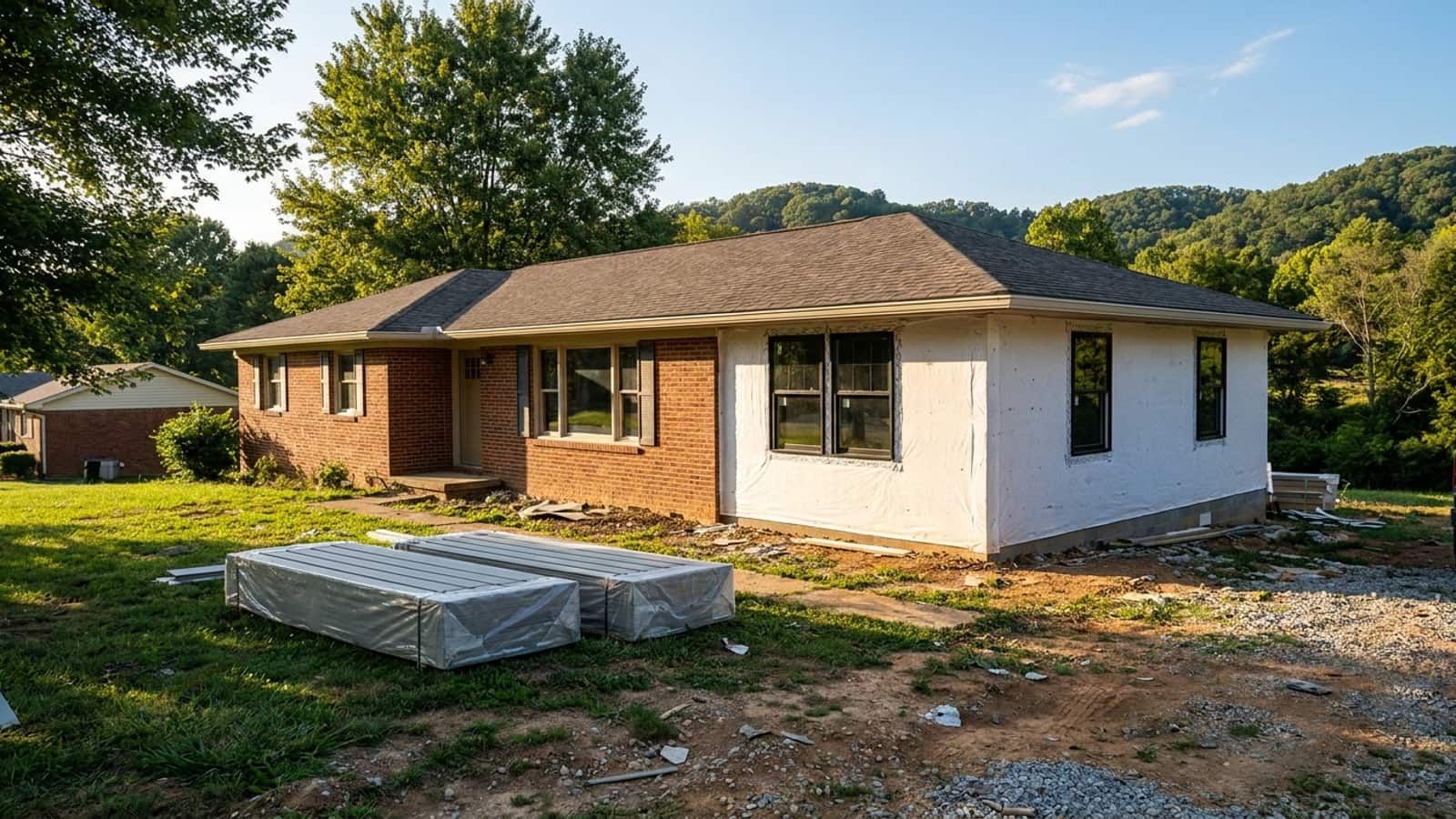
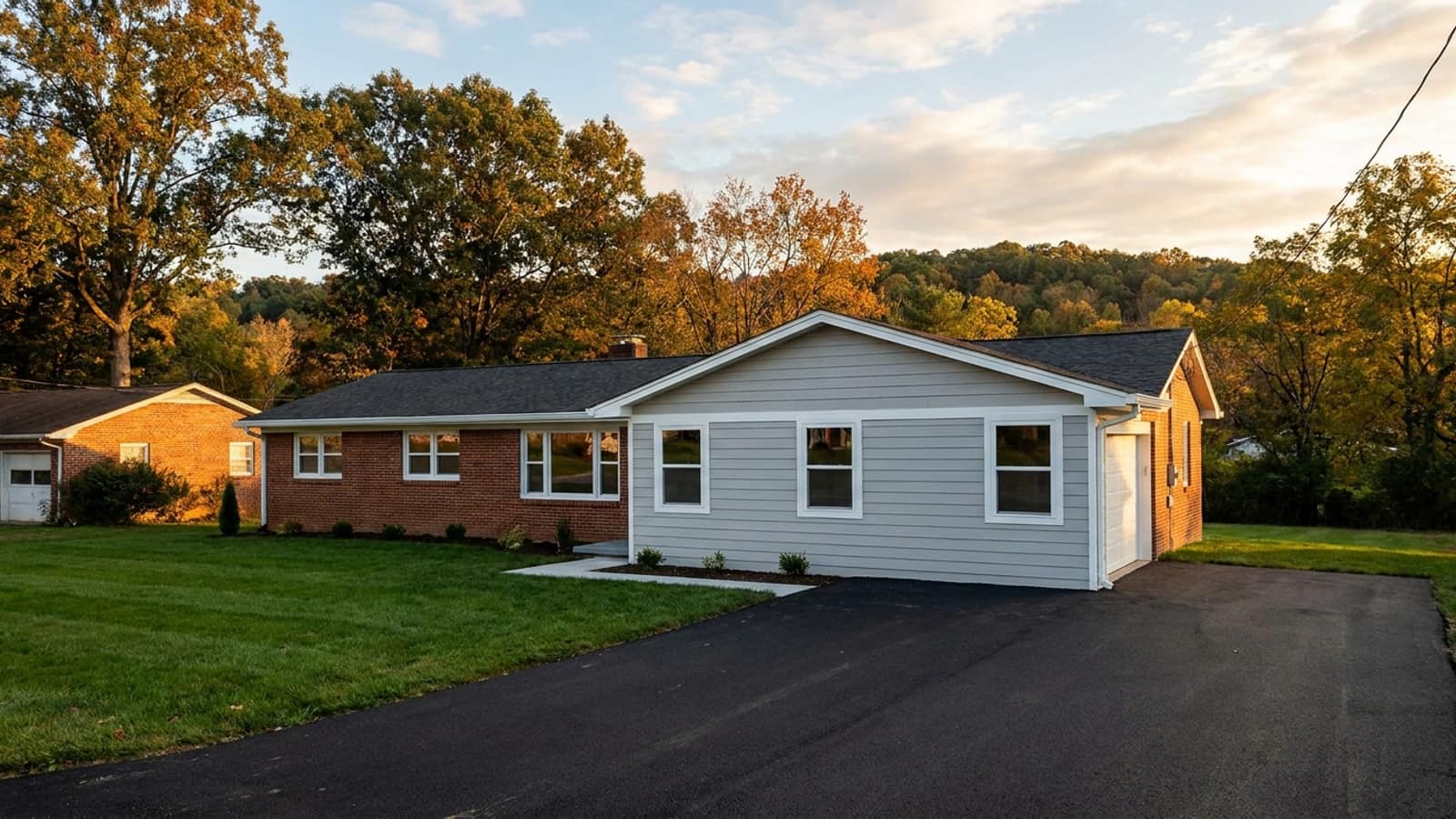
Short answer
Yes. Windows and siding can be quoted and financed as one project, and Patriots' Pride offers financing through the GreenSky program with no-interest plans at 6, 15 or 18 months plus fixed rates starting at 6.99% APR. The question that actually decides it is not whether one approval can cover both trades, it is whether the combined balance fits a term you can realistically finish.
Yes. Windows and siding can be written, approved and paid for as a single financed project, and that is how a large share of full exterior jobs get done in this market. One estimate, one itemized price covering both trades, one financed balance.
The part worth slowing down on is not the approval. It is the math on the back end. A combined exterior project is a bigger number than either trade alone, and the plan that fits a $14,000 window job is not always the plan that fits a $34,000 windows-and-siding job. Picking the term is the real decision.
Can one loan actually cover both trades?
It can. Patriots' Pride offers financing through the GreenSky program, and the amount financed is based on the project total, not on how many trades are inside it. If the estimate covers 14 replacement windows and a full siding replacement including trim, soffit, fascia and house wrap, that is one number, and one number is what gets financed. Zero down is available for most approved homeowners, subject to credit approval.
There is also a second financing option available through LevelCore. Financing is available, subject to credit approval, and approval and terms depend on your credit.
What combining does not do is change the scope rules. Siding is full-replacement work, because the envelope comes off and goes back on as one system. Windows are priced per opening. Those stay separate line items on the estimate even when they share a payment.
What does a combined project usually total?
Use the published ranges rather than a single guess, then let the in-home estimate produce the real number.
| Trade | Typical installed range | Install time | Warranty |
|---|---|---|---|
| Windows | $700 to $2,200 per window | 1 to 2 days typical | Lifetime, material and labor |
| Siding (full replacement) | $12,000 to $25,000 typical | 4 to 7 days | 30 years, material and labor |
| Entry or patio door, if added | $3,973 to $7,500 | 1 to 2 days | 15 years, material and labor |
Run the arithmetic on your own house before anyone comes out. Twelve openings at the lower half of the window range plus a mid-range siding job lands in the low thirties. Twenty openings, several of them large or shaped, plus a two-story elevation with heavy trim detail lands higher. Neither of those is a quote. They are the shape of the number you should be mentally prepared for when you ask about a term.
Which financing plan fits a combined number?
The promotional plans and the fixed-rate plans are built for two different homeowners. Here is what is actually on the table.
| Plan | Structure | What it suits |
|---|---|---|
| 6 months, no interest if paid in full | No payments required during the promo period | A balance you are clearing from savings or a pending sale |
| 15 months, no interest if paid in full | Low payments during the promo period | A mid-size balance with a known payoff date |
| 18 months, no interest if paid in full | No payments required during the promo period | The longest runway on the no-interest side |
| Fixed 6.99% APR, 60 months | $19.80 per month per $1,000 financed | A combined project you intend to pay down briskly |
| Fixed 9.99% to 22.99% APR, 120 months | Fixed monthly payment | Spreading a larger exterior number |
| Fixed 9.99% APR, 144 months | $11.94 per month per $1,000 financed | The lowest monthly figure on a big combined job |
The per-thousand figures make this easy to test at the kitchen table. A $30,000 combined project on the 60-month fixed plan is 30 times $19.80, or about $594 a month. The same $30,000 on the 144-month fixed plan is 30 times $11.94, or about $358 a month. Same project, same crew, very different monthly impact and very different total paid over the life of the term.
When the no-interest plans are the right answer
The promotional plans reward a payoff date you can actually hit. If the money is coming (a bonus, a maturing account, the sale of another property) and you simply do not want it leaving your account today, the 6, 15 or 18 month plans do exactly what you want them to do.
If the payoff is a hope rather than a plan, the fixed-rate terms are the more honest choice. A $30,000 balance cleared inside 18 months means roughly $1,667 a month in self-directed payments. Some homeowners can do that comfortably. Most combined exterior projects are not that homeowner.
Is it cheaper to finance both at once or phase them?
Phasing lets you spread two smaller numbers across two separate decisions, and for some budgets that is the right call. But phasing a combined exterior project carries costs that do not show up on a payment schedule.
- Siding does not phase cleanly. The whole envelope comes off and goes back on as one system, so the siding half is close to all-or-nothing anyway.
- The order matters. Windows and siding touch the same wall assembly, so doing them on one scope lets the flashing, house wrap and trim details be handled as a single continuous system instead of two crews patching around each other a year apart.
- Mobilization happens once. Staging, protection, permits where required and the final walk-through all run once rather than twice.
Windows, on the other hand, genuinely can be phased. Many homeowners do the worst elevation first, then the rest. If the combined number is uncomfortable, phasing the window count is usually the better lever to pull than splitting the siding.
What about a home equity line or an insurance claim?
These are the two other common funding paths and they do not conflict with contractor-arranged financing.
A home equity line is secured by the house, which is both its advantage (rates tend to be lower) and its drawback (the house is collateral, and the process runs through a lender on a lender's timeline). It tends to suit homeowners who already have a line open and want to use it.
An insurance claim applies when the damage is storm-related. If hail or wind drove the siding decision, the claim covers what the adjuster scopes, and homeowners frequently finance the remainder, which may include the window upgrade the claim does not touch. Those two sources combine fine on one project.
One thing not to build into the budget: there is no federal tax credit for windows, doors or siding on work performed in 2026. The 25C credit was terminated for property placed in service after December 31, 2025. Plan the project without it.
What should the estimate show before you finance anything?
A combined project should still read as two clearly priced scopes on one page. Before you sign, the paperwork should make these plain:
- Window count, product series, frame material and the glass package, including SHGC, since cooling load drives this climate.
- Whether each opening is insert or full-frame, because many houses correctly get a mix.
- The siding material, and that the scope includes trim, soffit, fascia and house wrap.
- The warranty term on labor as well as material for each trade, covered under The Patriot's Promise.
- A signed timeline agreement with the dates both parties are committing to.
- The financing plan by name, the amount financed and the monthly payment in writing.
When those six items are on the page, the financed number means something. Without them, you are comparing a payment to a payment and learning nothing about what you are buying.
What is the next step?
Get both trades priced at the same visit. An estimator measures every opening, walks the elevations, shows the actual product and glass options, and gives you one itemized number covering windows and siding together. It is a sales appointment, and it is also the only way anyone can tell you what your house actually costs instead of guessing from a range.
Book a free in-home estimate at /get-estimate/ or call (423) 830-7138. Bring your payoff timeline with you, because that is the detail that decides which plan belongs on the bottom of the page.