Short answer
Choose double doors when the opening is genuinely wide, you regularly move large things through the front of the house, and the elevation has the scale to carry them. Choose a single door with sidelights when you want the same light and presence with one leaf that latches into a solid jamb, which is the easier everyday door for most homes in this market. Either way the decision is structural before it is stylistic, because both configurations change the rough opening and the header above it.
Double doors suit a wide opening on a house with the scale to carry them, and a single door with sidelights suits almost everything else. That is the short version, and it holds up for most of the front entries we look at across Chattanooga, North Georgia and metro Atlanta. The configuration you end up with should come from the width of the wall, how the entry is actually used, and what the framing above the opening will allow — not from the photo that caught your eye.
Both options are built to the same purpose: a wider, brighter entry than a plain single door gives you. They get there differently, and the everyday difference shows up in how the door latches, how it seals, how it swings, and how much it costs to put in. Here is how to work through it before you pick finishes.
What is the real difference between the two configurations?
A double door is two operating leaves hung in one frame. One is the active leaf you use every day. The other is the inactive leaf, held shut by flush bolts into the header and the threshold with an astragal strip covering the joint where the two meet. Open both and you have the full opening clear.
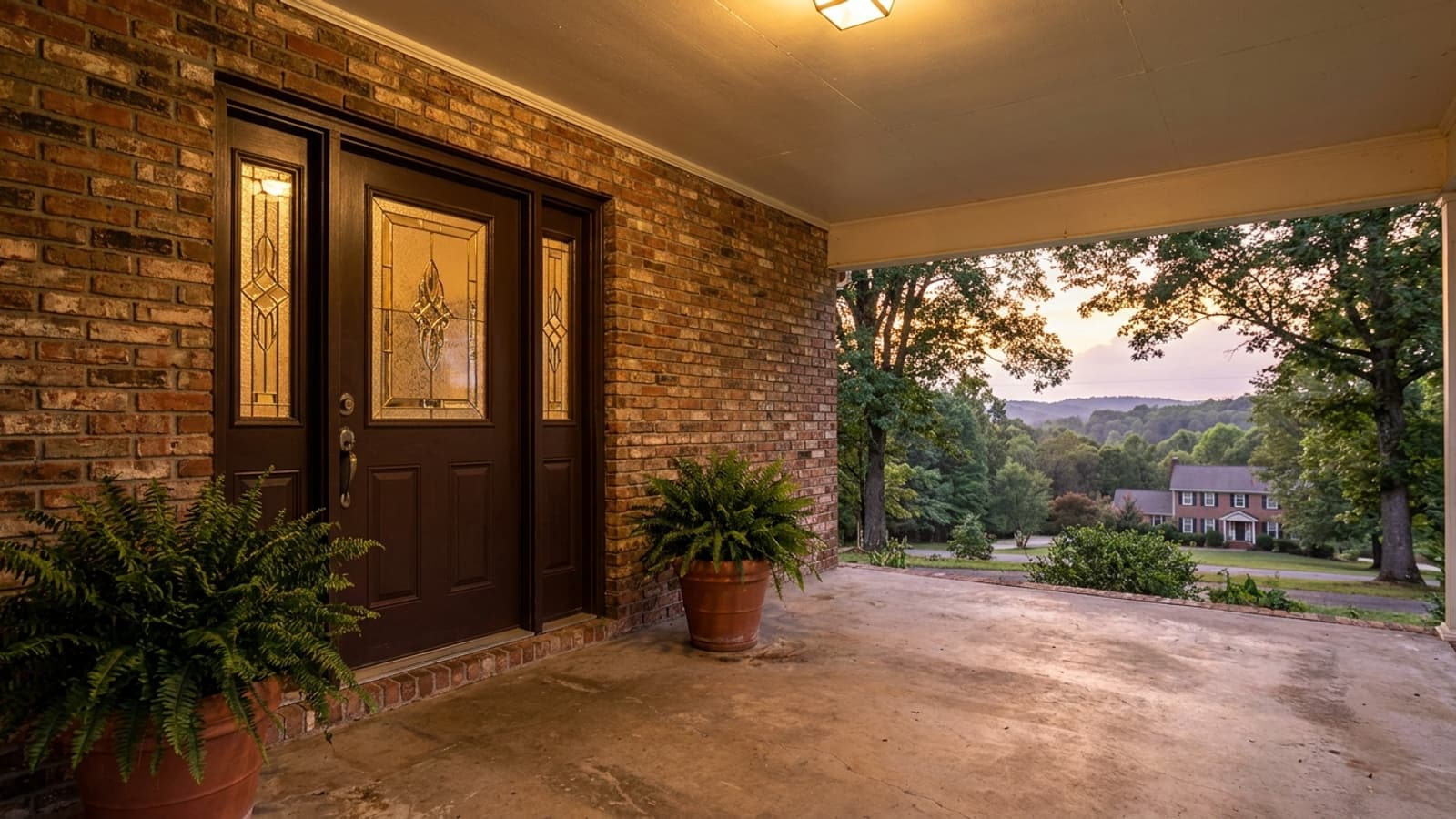
A single door with sidelights is one operating leaf in the center with fixed glass panels built into the frame on one or both sides. Nothing beside the door moves. The sidelights are part of the door unit — they share the same frame, the same sill and the same weather seals — which is why swapping one in is a door replacement rather than a trim project.
The overall width can land in the same place. A pair of 36-inch doors and a 36-inch door with two 14-inch sidelights occupy a similar run of wall. What differs is how much of that width opens, how many moving parts you own, and where the loads go.
Which one is better for daily use?
For most families, the single door with sidelights is the easier door to live with. One leaf, one lockset, one deadbolt, one threshold seal to maintain. You walk in and out of the same door a thousand times a year, and that door latches into a jamb that is anchored to framing.
Double doors earn their place when the opening gets used as an opening. If you move furniture in and out, host often, use a wheelchair or walker and want the full width available, or have an entry hall that was designed around a grand opening, two operating leaves do something sidelights cannot. The second leaf stands open and the whole thing becomes a passage instead of a doorway.
There is a maintenance difference too. Double doors have a meeting stile — the vertical line where the two leaves come together. That joint relies on the astragal and its weatherstripping to seal, and it is the one part of a double door that wants attention over the years. A single door seals against a continuous jamb on all four sides, which is a simpler detail.
How do they compare side by side?
| Double doors | Single door with sidelights | |
|---|---|---|
| Clear opening when fully open | Full width of both leaves | One leaf only |
| Moving parts | Two leaves, astragal, flush bolts | One leaf |
| Daily latching | Active leaf locks into inactive leaf | Door locks into solid jamb |
| Daylight into the entry | From glass in the door panels | From sidelight glass plus any door glass |
| Weather sealing points | Perimeter plus the meeting stile | Perimeter only |
| Best fit | Wide openings, formal or large-scale elevations | Most traditional and transitional homes here |
| Typical cost position | Higher — two finished slabs and hardware | Usually lower for the same overall width |
| Framing impact | Wider opening, resized header | Wider opening, resized header |
Both configurations fall inside our installed door range of $3,973 to $7,500, which covers the unit, the frame, the hardware, the labor and the finish work. Where a specific project lands depends on material, how much glass is in it, and what the crew finds under the threshold when the old unit comes out. If spreading that number out makes sense for you, the financing options through the GreenSky program include no-interest-if-paid-in-full plans and fixed-rate terms.
Is one more secure than the other?
Neither configuration is inherently weak. What matters is how the lock engages and what the strike is fastened into.
On a double door, the active leaf locks into the inactive leaf rather than into the building. That is fine when the inactive leaf is held by proper flush bolts that drop into a strike in the header and a strike in the threshold, and when those strikes are anchored into framing. Specify it that way and the pair behaves like a single unit once it is closed. Specify it cheaply and you get a door that rattles and can be forced at the meeting stile.
On a sidelight unit, the door locks into the jamb, which is the stronger arrangement by default. The thing to get right there is the glass. Glass next to a door can be a point of entry if someone can reach the thumbturn through a broken panel, so the answer is laminated glazing in the sidelights, a deadbolt placed out of easy reach of the glass, or both. Safety glazing is required in and around doors in any case, so tempered or laminated glass in these locations is a code matter rather than an upgrade.
What does the house itself tell you?
Stand across the street and look at the entry in proportion to everything around it.
When double doors look right
They look right on wide, symmetrical elevations — two-story brick colonials, houses with a tall entry element or a portico, homes where the foyer is already a two-story space. The scale of the opening has to match the scale of the wall. A pair of doors crammed into a modest ranch elevation reads as a mistake, not as an upgrade.
When sidelights look right
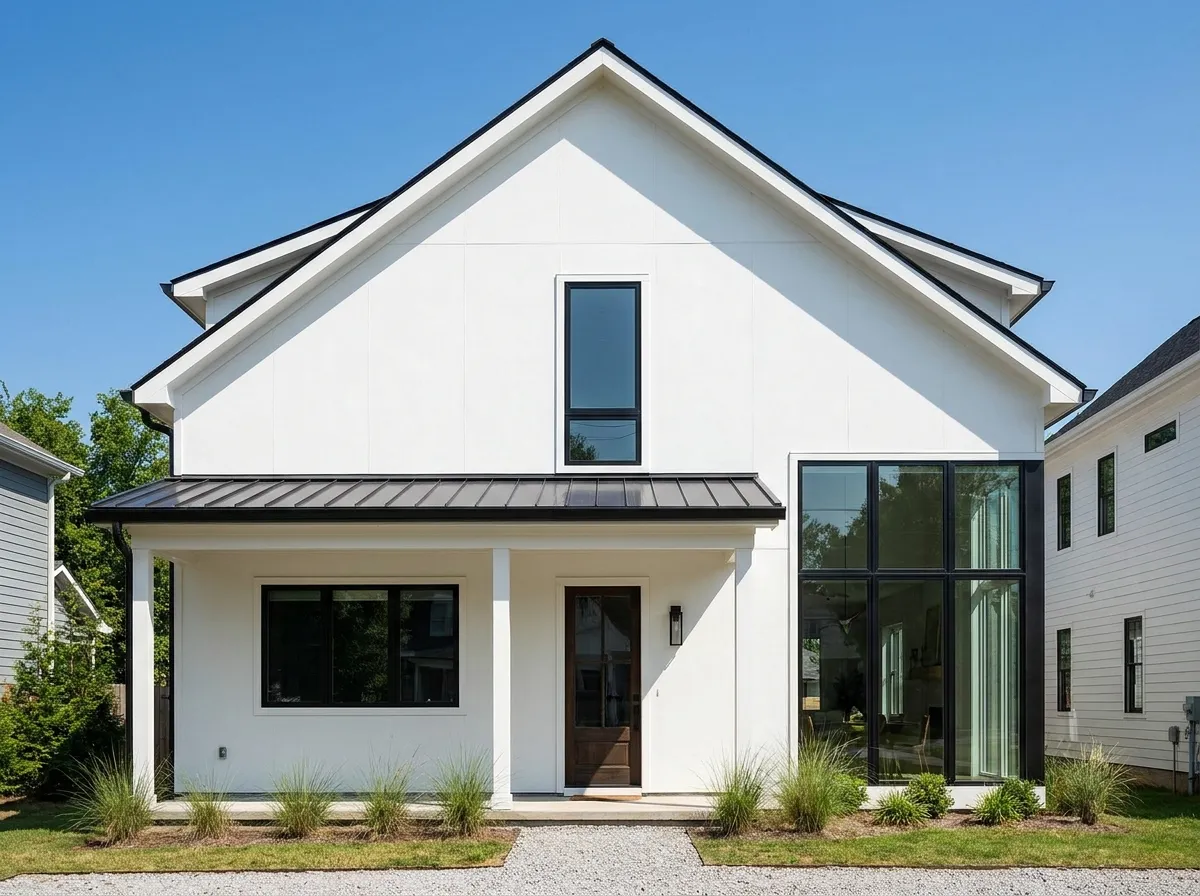
Sidelights fit almost everything else. They widen the entry visually without adding a second leaf, they pour daylight into a hallway that usually has no other window, and they work on craftsman, traditional, transitional and most subdivision elevations in this region. If the front door is the only source of light in your foyer, sidelights solve that problem more cheaply than a double door does.
When the porch decides for you
Swing clearance is the detail homeowners forget. Two out-swinging or in-swinging leaves need somewhere to go. A narrow stoop, a railing close to the door, a storm door, or a console table inside the foyer can each rule out a second leaf. Measure what is actually there before you fall in love with a configuration.
What happens to the framing when you widen an opening?
This is the part that decides the scope. A standard single-door opening carries a header sized for that width. Go wider — for a pair of doors or for a door plus sidelights — and the header above has to be resized to carry the load across the larger span. On a load-bearing front wall that means temporary support, a new header, and rebuilt king and jack studs, plus new interior and exterior trim details and new flashing at the sill.
None of that is exotic, and it is routine carpentry for a crew that does this work. But it is real labor, it affects the price, and it can affect the permit. When your project requires a permit, we pull it through your local building department as part of full service.
It also means that choosing between double doors and sidelights is best done at the estimate, with the wall in front of you. A configuration that is simple on one house is a structural rework on the next, and the only way to know which one you have is to look at it.
What should you ask before you sign?
- Is the quoted price for the unit alone, or does it include the framing work the wider opening requires?
- What is the glass package in the door panels and sidelights, and is it laminated?
- On a double door, how are the flush bolts strikes anchored, and into what?
- Who physically installs it, and what is the labor term on the warranty — not just the material term?
- What happens if the subsill or framing under the threshold is rotted once the old unit is out?
That last one matters more than people expect. Front door openings sit right where water runs off the porch, and a soft subsill is a common find. It should be priced as a known possibility, not sprung on you mid-install. Our written warranty, the Patriot's Promise, covers material and labor on the work, and the veteran-owned, owner-operated structure here means the people quoting it are the people answering for it later.
The next step
If you are deciding between double doors and a single door with sidelights, the fastest way forward is to have someone measure the opening, look at the header and the porch clearance, and price both configurations as itemized numbers. Request a free in-home estimate. It is a sales appointment — an estimator measures, shows you the actual door and glass options, and leaves you with one itemized price per configuration so you can compare them honestly.