Short answer
Yes, but usually less than the pitch suggests — and the size of the gain depends almost entirely on what you're replacing. Going from single-pane or aluminum-frame windows to modern insulated units is a large, noticeable change in both comfort and cost. Going from decent 15-year-old double-pane windows to new ones is a comfort upgrade with a slow financial payback. Be skeptical of anyone quoting you a specific percentage.
This is the claim window companies lean on hardest, so it's worth being straight about it.
The honest answer depends on what you have now
If you have single-pane or aluminum-frame windows
The improvement is real and significant. Single-pane glass has roughly the insulating value of nothing. Aluminum frames conduct heat straight through the wall — that's why they sweat in winter.
Replacing these is the one case where the energy argument stands on its own. You'll feel it in room comfort immediately, the rooms will stop having a hot side, and the bill change is noticeable.
If you have older double-pane windows with failed seals
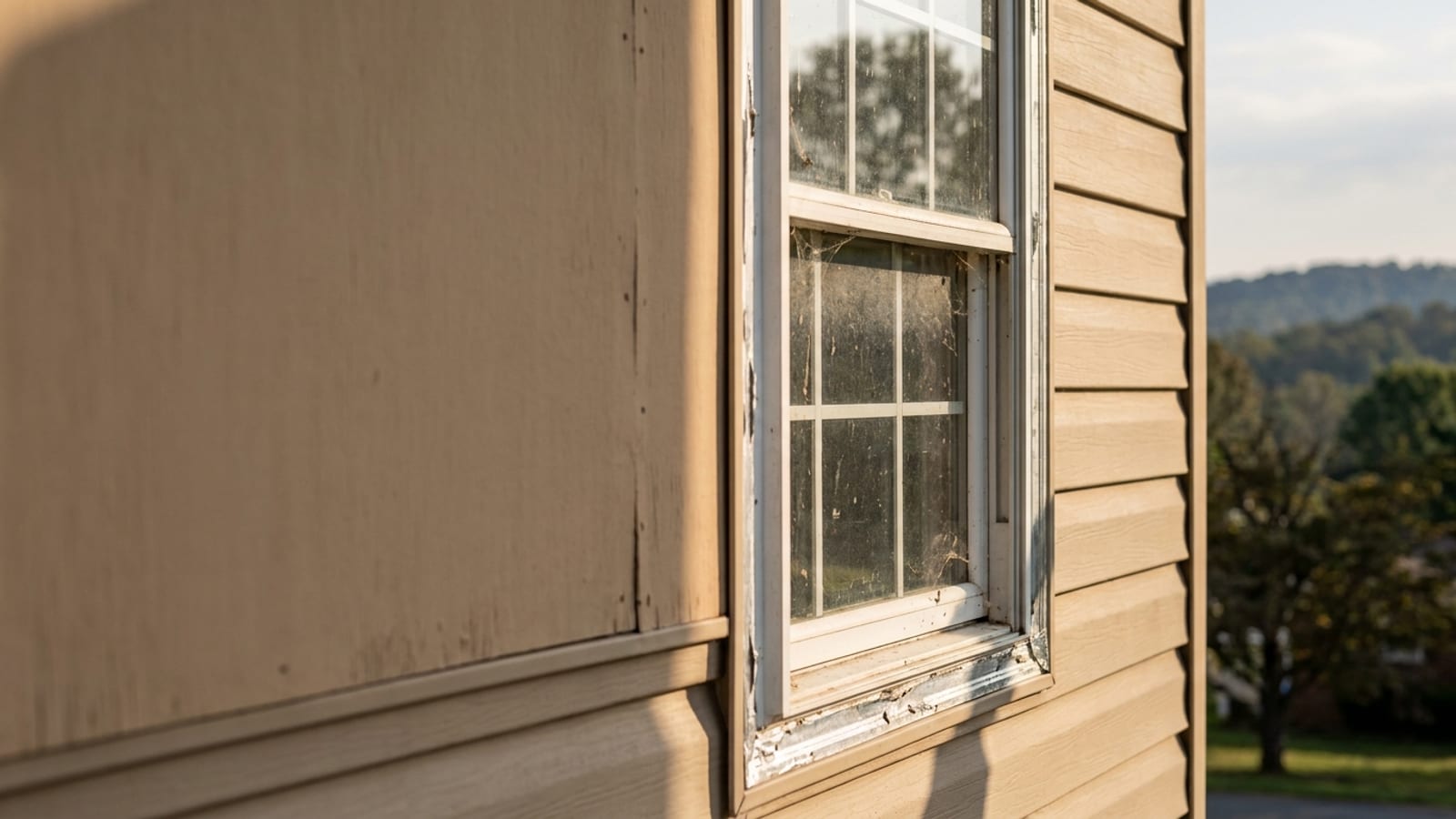
Also worth doing. Once the seal fails and the gas fill escapes, an insulated unit is doing much less than it was designed to. If you see fog between the panes, that window has already lost most of its value.
If you have sound double-pane windows from the last 15 years
Here's where we'll be honest against our own interest: the financial payback is slow. You may have excellent reasons to replace them — appearance, operation, noise, a failed balance, a bad original install — but "it'll pay for itself in energy savings" is not one we'd make.
Where the savings actually come from
It's not mostly the frame material, and it's not the number of panes.
Solar heat gain, in this climate
In Tennessee, Georgia and Alabama, cooling is the load that matters. The number to look at is SHGC — solar heat gain coefficient. It measures how much of the sun's heat comes through the glass. Lower blocks more.
On west- and south-facing elevations here, SHGC does more for your comfort and your summer bill than another fraction of a point of insulating value. We spec glass by elevation for this reason — the same window doesn't belong on every side of the house.
Air leakage
A surprising share of the "my windows are terrible" experience is air moving around and through the unit, not heat conducting through the glass. That comes from failed weatherstripping, sashes that don't pull tight, and — very often — a bad original installation where the gap between frame and rough opening was never properly insulated and sealed.
This is why installation quality matters as much as the window. A good window installed badly leaks.
The glass package details
- Low-E coating tuned for a cooling climate
- Argon fill between panes
- A warm-edge spacer rather than aluminum — this is where most insulated units eventually fail, and it's the cheapest meaningful upgrade available
What beats windows for payback
If lowering the bill is your actual goal, and you want the honest ranking:
- Attic insulation. Cheapest, fastest return, and most Southeast homes are under-insulated up there.
- Duct sealing. Leaky ducts in a hot attic throw away conditioned air. Often a few hundred dollars for a real gain.
- Air sealing at penetrations, top plates, and the attic hatch.
- Windows.
We install windows for a living and we're still telling you this, because a homeowner who buys windows expecting an insulation-sized bill change is going to be disappointed — and we'd rather not sell that.
The tax credit is gone
One more thing that changes the math: the federal Energy Efficient Home Improvement Credit (25C) was terminated for property placed in service after December 31, 2025. Work done in 2025 or earlier may still be claimable on that year's return — ask your tax advisor.
If anyone tells you a 30% federal credit will offset your 2026 window project, that's not accurate.
What we'll actually tell you
When we come out, we'll look at what you have and tell you which windows are genuinely costing you and which ones are fine. If your best move is attic insulation and four windows instead of twenty-two, we'll say so.
Get a free estimate and we'll give you the real assessment.