Short answer
Glass repair on a vinyl window costs far less than replacing the whole unit, but only some failures are actually repairable — a cracked pane in a single-glazed sash, a damaged screen, or a sealed glass unit still covered by a manufacturer warranty. Fogged glass means the insulated glass unit has failed, and on most vinyl windows the fix is a new sealed glass unit or a whole new sash rather than a single pane. Full window replacement in our market runs $700 to $2,200 per opening installed, and that is the number any repair quote should be measured against.
A cracked or fogged pane in a vinyl window is usually cheaper to address than a full window replacement — but only a few of the failures homeowners call "broken glass" are actually repairable with a pane of glass. The real question is which layer failed: the pane, the sealed insulated glass unit, the sash, or the window. Each answer carries a different price and a different lead time, and the cheapest path is not always the one that ends the problem.
Here is how to figure out which one you are looking at, what drives the cost of each, and at what point spending money on the old unit stops making sense.
What part of the window is actually broken?
Walk up to the window and look at it in raking light. There are four distinct failures and they get confused constantly.
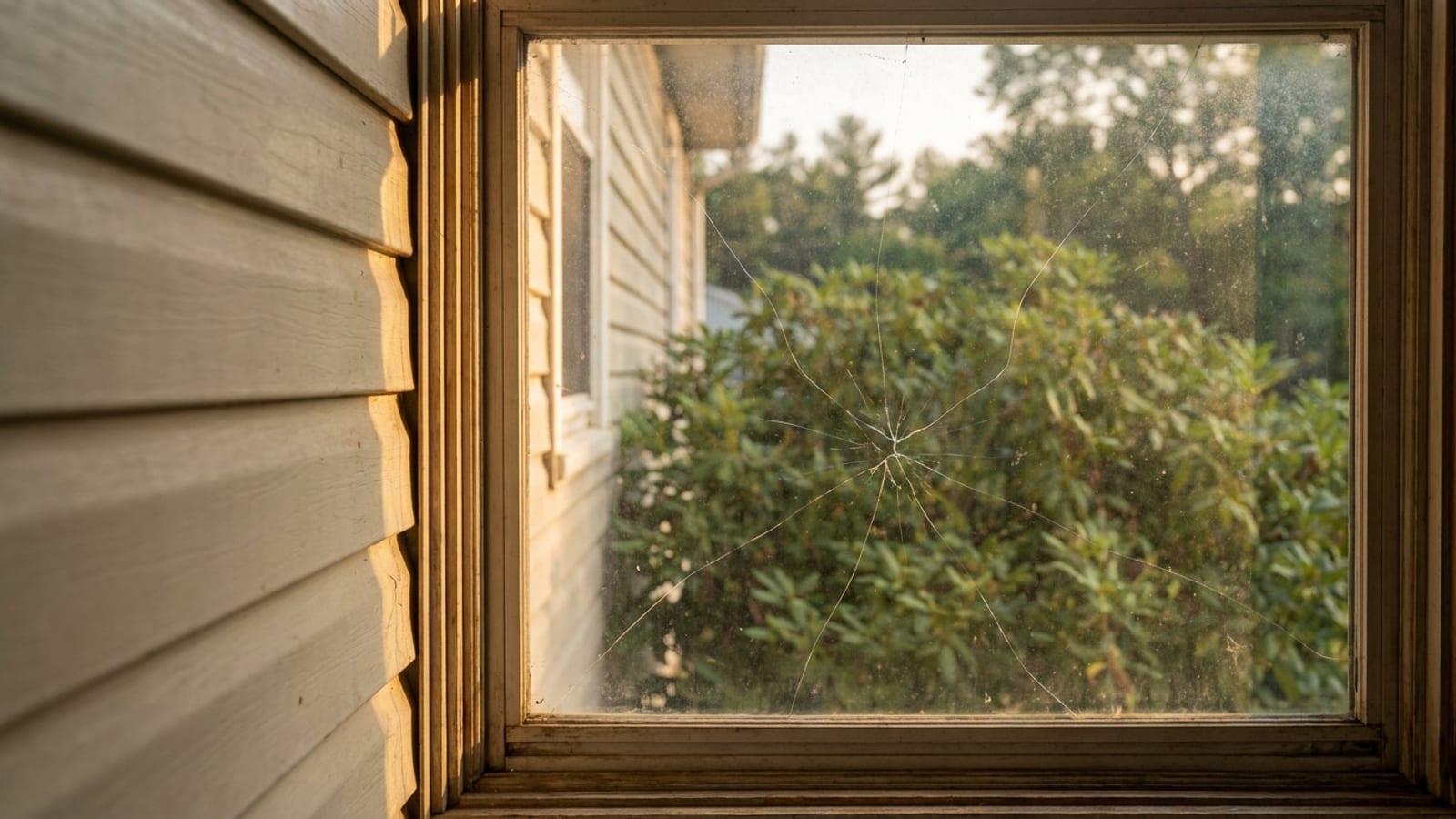
A cracked or shattered pane. Something hit it, or thermal stress ran a crack from an edge. On a single-pane window you are replacing one piece of glass. On a double-pane window you are not, because the two panes plus the spacer are manufactured as one sealed assembly. Break one side and the whole insulated glass unit is done.
A failed seal — the fog. Haze, streaks or a film between the panes that will not wipe off from either side means moist air got into the sealed cavity and the argon fill is gone. The glass is permanently clouded. Nothing you spray on it reaches the affected surfaces.
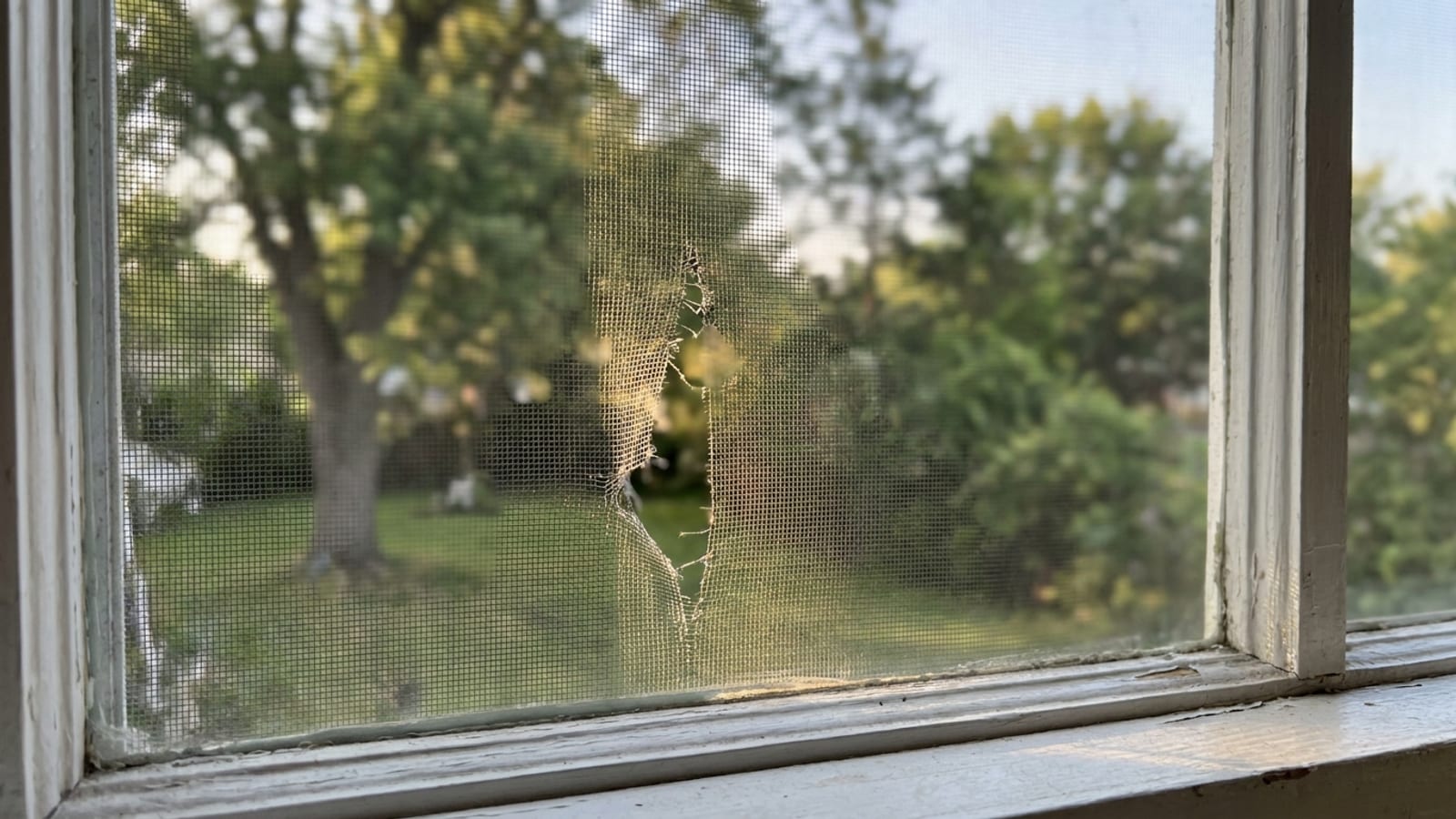
A damaged sash. The vinyl frame around the glass is cracked, the welded corner has split, the balance is broken, or the sash is bowed. The glass may be fine and the part that holds it is not.
A failed window. The main frame is out of square, the sill is soft, water has been getting into the wall, or the unit is an early vinyl window that has chalked and gone brittle. At that point glass is the least of it, and window replacement is the honest conversation.
The first two are glass problems. The second two are not, no matter what the symptom looks like from inside the room.
What does glass repair cost compared to replacing the window?
We give real numbers where we have them and ranges where the price depends on your opening, so here is the comparison as scope rather than as a flat rate.
| Path | What it covers | Typical lead time | Where the cost lands |
|---|---|---|---|
| Single pane in a single-glazed sash | One piece of annealed or tempered glass, glazed into the existing sash | Days | Lowest of the four |
| Replacement insulated glass unit | New sealed double-pane unit sized to the sash, with low-E and argon | Two to four weeks, built to order | A fraction of a new window, more with tempered or shaped glass |
| New sash, glass included | Factory sash matched to the frame, with hardware and balances | Two to six weeks, if the series is still made | Well under a new window, well over a pane |
| Full window replacement | New unit, labor, sealing, trim and cleanup | A few weeks from final measure | $700 to $2,200 per window installed |
The things that move a glass price the most are size, thickness, and whether the location requires safety glazing. Large units, tempered or laminated glass, obscure or patterned glass, tinted glass, and anything arched or shaped are all meaningfully more than a rectangular pane of clear insulated glass. Second-story openings add access cost on top.
The deciding math is simple. One fogged or cracked unit in a house full of sound windows is a repair. Four fogged units in a ten-year-old house is the leading edge of a pattern, and paying for them one at a time over three years usually costs more than the replacement would have.
Can the sealed glass unit be swapped without a new window?
Sometimes, and it depends on how your vinyl sash was built.
Many vinyl windows hold the insulated glass unit in the sash with a glazing bead — a removable strip that snaps or screws in around the perimeter. Pop the bead, pull the failed unit, set the new one in a fresh bed of sealant, reinstall the bead. That is the good case.
Other vinyl sashes are welded and glazed in a way that does not come apart cleanly. On those, the manufacturer's answer is a replacement sash rather than a replacement glass unit, and the practical question becomes whether that series is still in production. Vinyl window lines change. On a window more than fifteen or twenty years old, the matching sash may simply not exist anymore, which is one of the most common reasons an otherwise fine-looking window ends up being replaced.
A replacement glass unit also has to match more than the outside dimensions. The overall thickness, the glass thickness, the low-E coating and which surface it sits on, the spacer type and the gas fill all have to be specified. A unit that fits but carries a different coating will read as a slightly different color from the street and will perform differently on a west wall than the ones beside it.
Does a warranty cover broken or fogged glass?
This is the first call to make before you pay anyone, because a covered unit changes the price to zero or close to it.
Most quality window manufacturers warrant the insulated glass seal for a defined term, and seal failure inside that term is a warranty claim rather than a purchase. What manufacturers do not cover is impact — a rock from a mower, a hailstone, a ball. That is damage, not a defect.
The second warranty is the installer's. A window job carries two of them, not one: the manufacturer stands behind the product and the installing company stands behind the workmanship. Patriots' Pride windows carry a lifetime material and labor warranty under The Patriot's Promise, transferable one time and prorated after that. The labor term is the line worth reading on any quote you hold, because a lifetime material warranty paired with a one-year labor warranty means someone still bills you to come out and do the work.
If your windows were installed by someone else and you still have the paperwork, find the glass term and the claim process before you shop the repair. If you have no paperwork, the manufacturer's name and a series number are often stamped into the spacer between the panes or on a label in the sash channel.
What should you do with a broken pane right now?
Until the glass is dealt with, the goal is to keep water and people out of it without making the repair harder.
- Keep the room clear of the opening, especially where kids or pets can reach the glass.
- If the pane is shattered, remove loose shards wearing cut-resistant gloves and eye protection, and do not push on the remaining glass to free it.
- Tape across a crack to hold it together temporarily. Clear packing tape on the interior surface holds well and comes off later.
- Cover a missing pane from the outside with rigid material — a sheet of plywood or foam board sealed at the edges — rather than plastic sheeting alone, which flaps and lets driven rain past.
- Photograph everything before you cover it, in case the damage is going to an insurance claim.
Do not run a heat gun or a torch near a cracked pane to remove old glazing, and do not try to pry a welded vinyl sash apart. Cracked glass under stress breaks in directions you cannot predict.
When does repair stop making sense?
Stop repairing and start pricing replacement when any of these are true:
- The sash series is discontinued and no matching glass unit or sash can be ordered.
- The frame is out of square, the sill is soft, or there is any history of water in the wall below the window.
- Multiple units in the same house have already fogged. Seal failures in one production run tend to arrive together.
- The window is single-pane or an early vinyl unit, and the room is uncomfortable in July regardless of the glass.
- The repair quote is approaching half the cost of a new installed window with a current warranty behind it.
That last one is the honest threshold. A repair buys you the old window back. A replacement buys you a new low-E, argon-filled unit specified for this climate — and in the South-Central zone that means watching the solar heat gain coefficient, not just the U-factor, because keeping summer sun out is what drives cooling cost here.
If the total is the obstacle rather than the decision, financing through the GreenSky program includes no-interest-if-paid-in-full plans at 6, 15 or 18 months and fixed rates starting at 6.99% APR, with zero down for most approved homeowners, subject to credit approval.
What is the next step?
If you have one cracked pane in an otherwise healthy window, check the warranty first and price the glass unit second. If you have fog in more than one window, soft wood anywhere near a sill, or a window series nobody makes parts for anymore, get the openings measured and priced so you are comparing real numbers instead of guesses.
Schedule a free in-home estimate at /get-estimate/ or call (423) 830-7138. An estimator measures every opening you want quoted, checks the condition of the frames and sills, and leaves you one itemized price per opening with the install method spelled out. It is a sales appointment, and it is also the only way anyone can tell you what your house actually needs.