Short answer
In the Southeast, windows can be installed year-round — crews work one opening at a time, so your house is never open to the weather. The practical differences are scheduling and lead time, not installation quality. Late fall through winter is usually the easiest time to get on a schedule quickly. Spring and early summer are the busiest, with the longest waits from signing to install.
Homeowners ask this constantly, and the honest answer is less dramatic than most articles make it.
Installation quality doesn't depend on the season
The worry behind the question is usually "will my house be freezing" or "will the sealant cure right." In our climate, neither is a real problem.
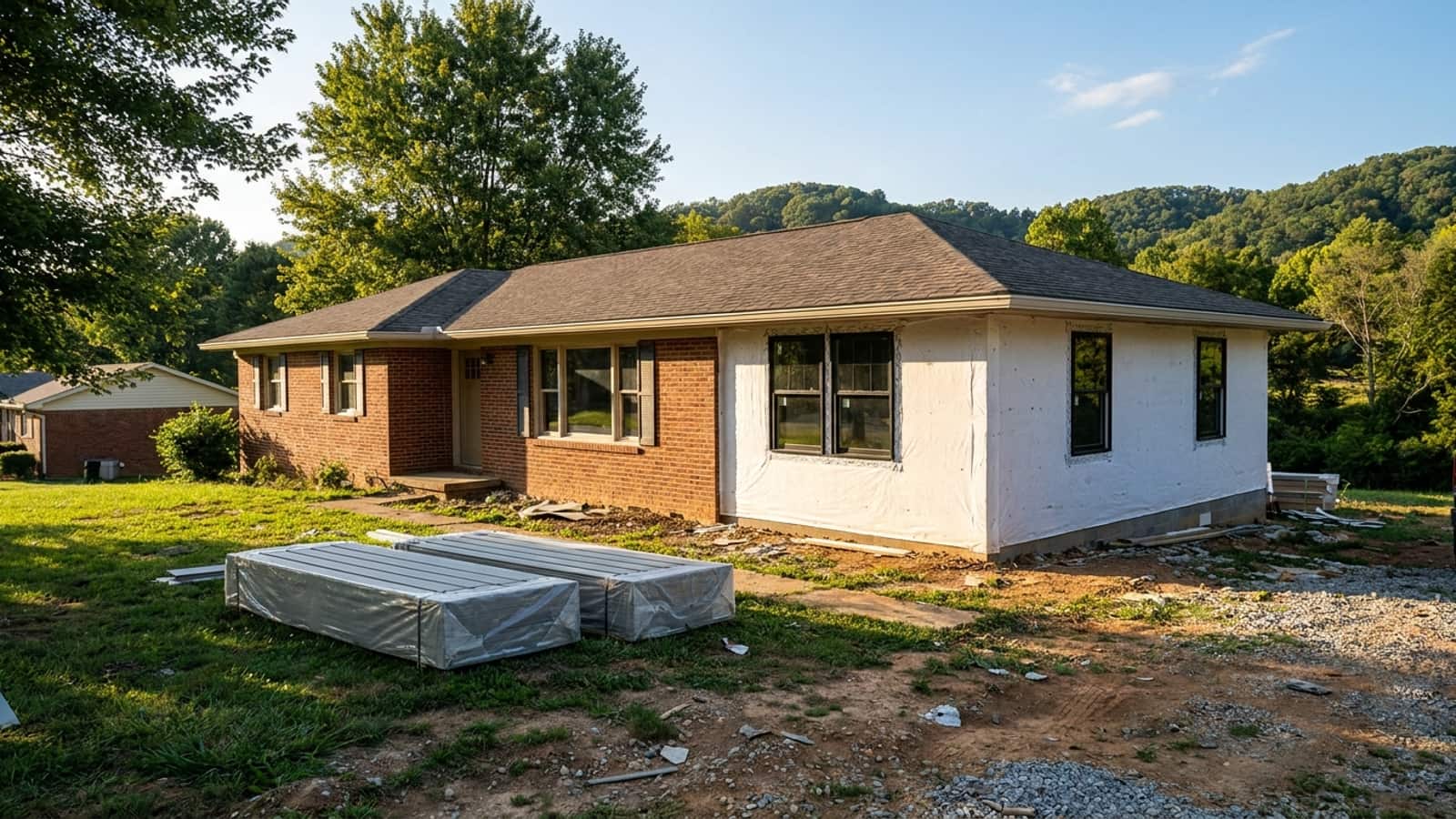
Crews work one opening at a time. The old unit comes out, the new one goes in, and the wall is closed again within minutes. Your house is never standing open. Heat or air conditioning stays on. Modern sealants have a working range that covers essentially every day of a Tennessee or Georgia year.
What genuinely stops work is sustained rain or high wind — and that reschedules a day, it doesn't damage anything.
What actually differs by season
Spring and early summer: busiest
This is when most people decide to do it. Demand peaks, manufacturer lead times stretch, and the gap between signing and installation is at its longest. If you want windows in by May, you're generally signing in late winter.
Late summer and early fall: steady
A good middle. Reasonable lead times, comfortable working conditions, and if you're motivated by cooling bills, you'll feel the difference immediately.
Late fall and winter: easiest to schedule
The quiet stretch. Shorter lead times, more flexibility on install dates, and crews aren't stacked. If you're replacing windows because they're drafty, this is also when the improvement is most obvious the day it's done.
The exception: emergencies
If a window is broken, leaking, or has visible rot, the season is irrelevant. Water damage compounds, and what's a sill repair in October can be framing repair by March.
The lead time nobody accounts for
Here's the part that actually determines when your windows go in, and it has nothing to do with weather.
Replacement windows are built to your openings. The sequence is:
- You sign
- Final measurements are taken — a separate appointment from the estimate
- The order goes to the manufacturer
- The units are built
- They ship
- Installation is scheduled
That's typically a few weeks and can be longer during peak season or on custom lines. So "when should I replace my windows" is really "when should I sign," and the answer is roughly a month or more before you want them in.
What we'd tell you to do
- If something is failing now — fog between the panes, rot, water, a window that won't lock — don't wait for a season. Waiting costs more than it saves.
- If it's a planned upgrade, the off-season gets you a faster schedule and more date flexibility.
- If you're chasing a specific promotion, ask what's running now rather than assuming a seasonal sale is coming. Manufacturer promotions don't follow the calendar as neatly as people expect.
- If budget is the constraint, financing is generally a better lever than timing. Zero down for most approved homeowners, with no-interest options if paid within 6 to 18 months.
One thing that is seasonal
If your house was built before 1978 and needs full-frame work, lead-safe containment is required, and it involves sealed plastic work zones. That's noticeably more pleasant for everyone in mild weather than in August.
It doesn't change whether the job can be done — just how comfortable the house is while it's happening.
Ready when you are
We schedule year-round across Tennessee, Georgia and Alabama. Tell us the date you'd like them in and we'll work backward and tell you honestly whether it's achievable.
Get a free estimate, or call and we'll check the current lead times for you.