Short answer
For most Tennessee homes, vinyl is the right call — it performs well in this climate, and the money saved buys a better glass package. Fiberglass is worth the upgrade in three specific cases: very wide or tall openings, dark exterior frame colors that absorb heat, and homes where you want the narrowest possible frame for maximum glass. Expect fiberglass to cost roughly 40-60% more per window.
Every window salesperson has a favorite material and a reason it's the only sensible choice. Here's the version without the pitch.
The short comparison
| Vinyl | Fiberglass | |
|---|---|---|
| Cost per window, installed | $700 – $1,400 | $1,200 – $2,000 |
| Expansion with heat | Higher | Very low |
| Frame width | Thicker | Narrower, more glass |
| Dark exterior colors | Limited, risk of heat absorption | Handles dark colors well |
| Paintable later | No | Yes |
| Best fit | Most homes | Wide spans, dark colors, big glass |
What each material actually does
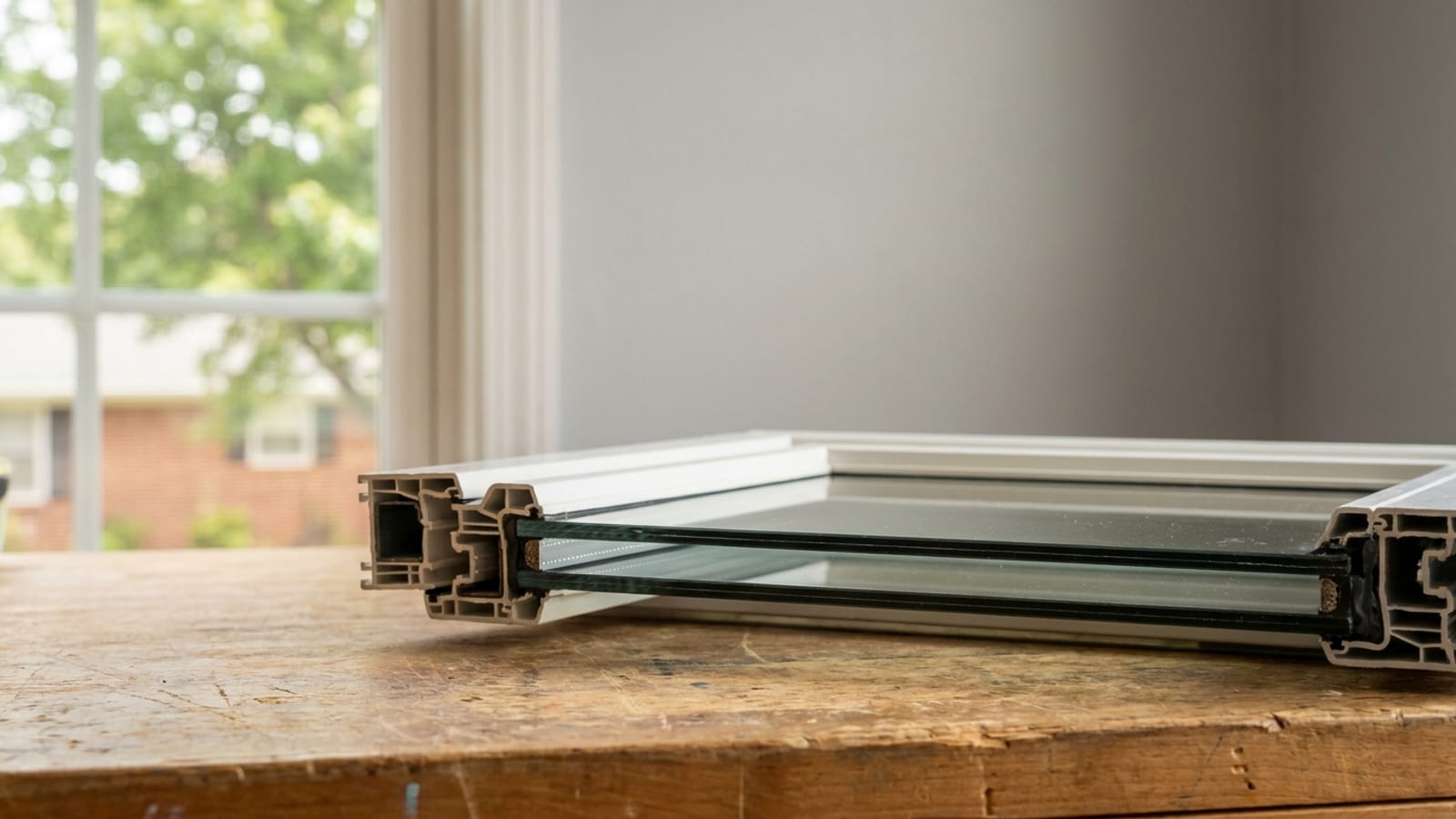
Vinyl is PVC extruded into a hollow, chambered frame. Those internal chambers are what make it insulate — and they're also where quality varies enormously. A well-built vinyl window has multiple chambers, welded corners and reinforcement in the meeting rails. A cheap one has fewer chambers, thinner walls, and will eventually tell you about it.
Fiberglass is glass fiber in a resin matrix. It expands and contracts at close to the same rate as the glass it holds, which is the whole engineering argument for it: the seal between frame and glass is under less stress over thousands of hot-cold cycles.
Where fiberglass earns its price in Tennessee
Wide or tall openings
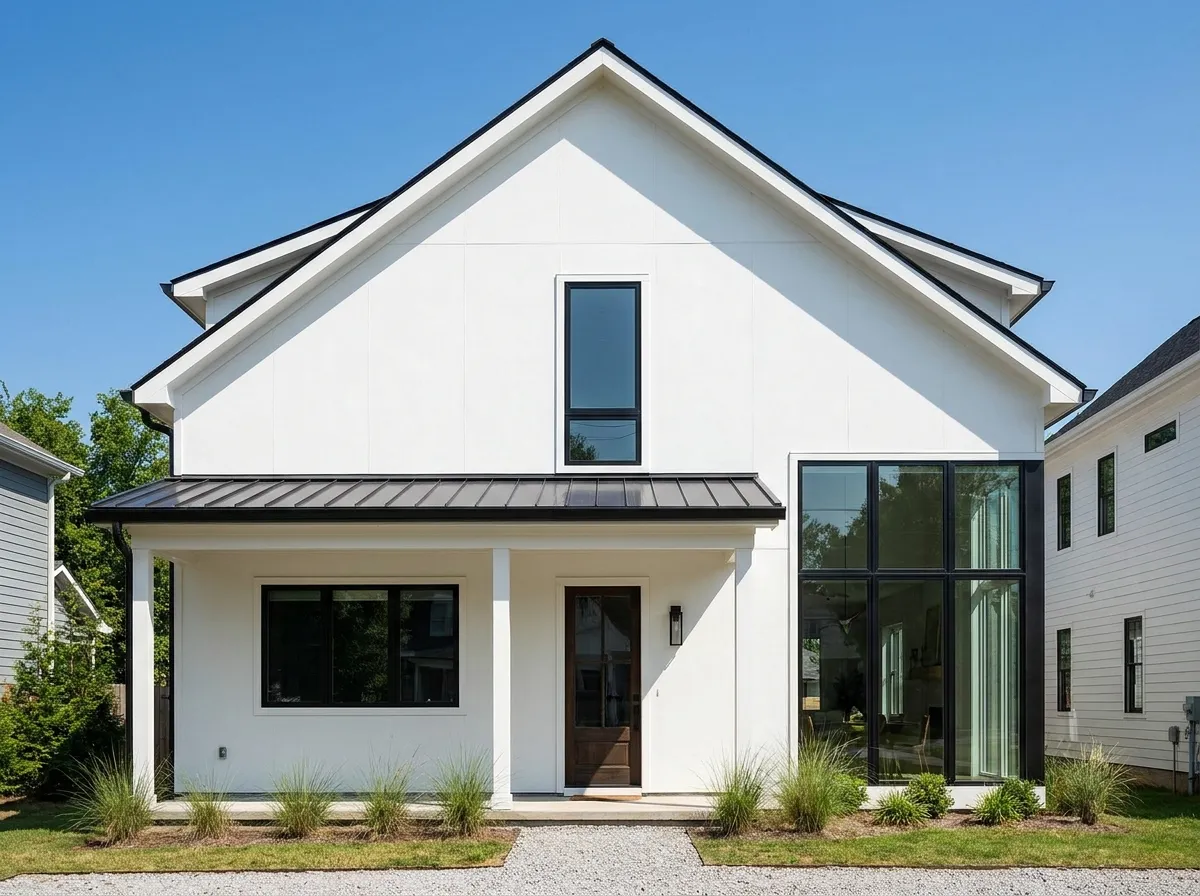
The bigger the unit, the more absolute movement you get from thermal expansion. On a picture window over six feet wide, or a tall unit in a two-story stairwell, fiberglass's stability is a real advantage and not a talking point.
Dark exterior colors
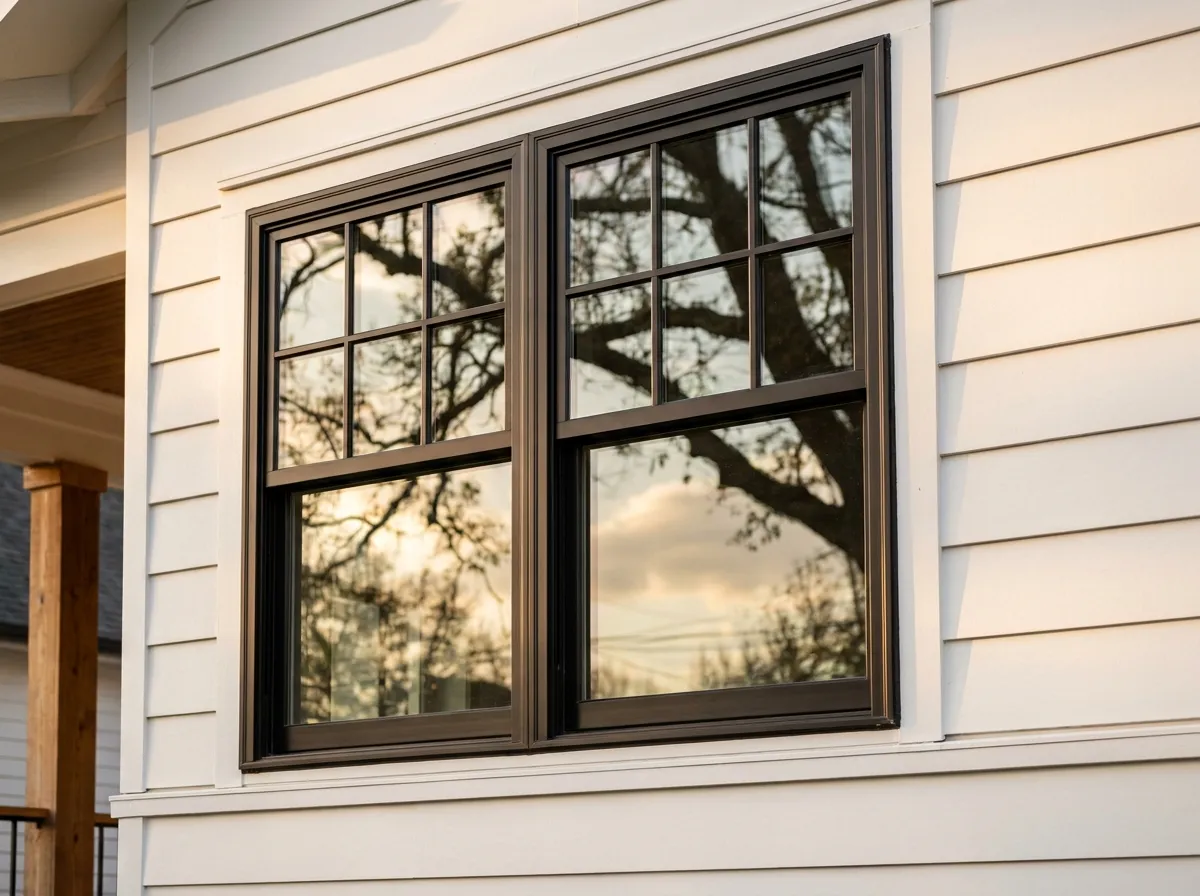
A dark frame on a south or west elevation gets genuinely hot in a Tennessee July. Vinyl in dark colors has improved a lot, but fiberglass simply doesn't care. If you want black or bronze exteriors, this is the strongest reason to upgrade.
Maximum glass
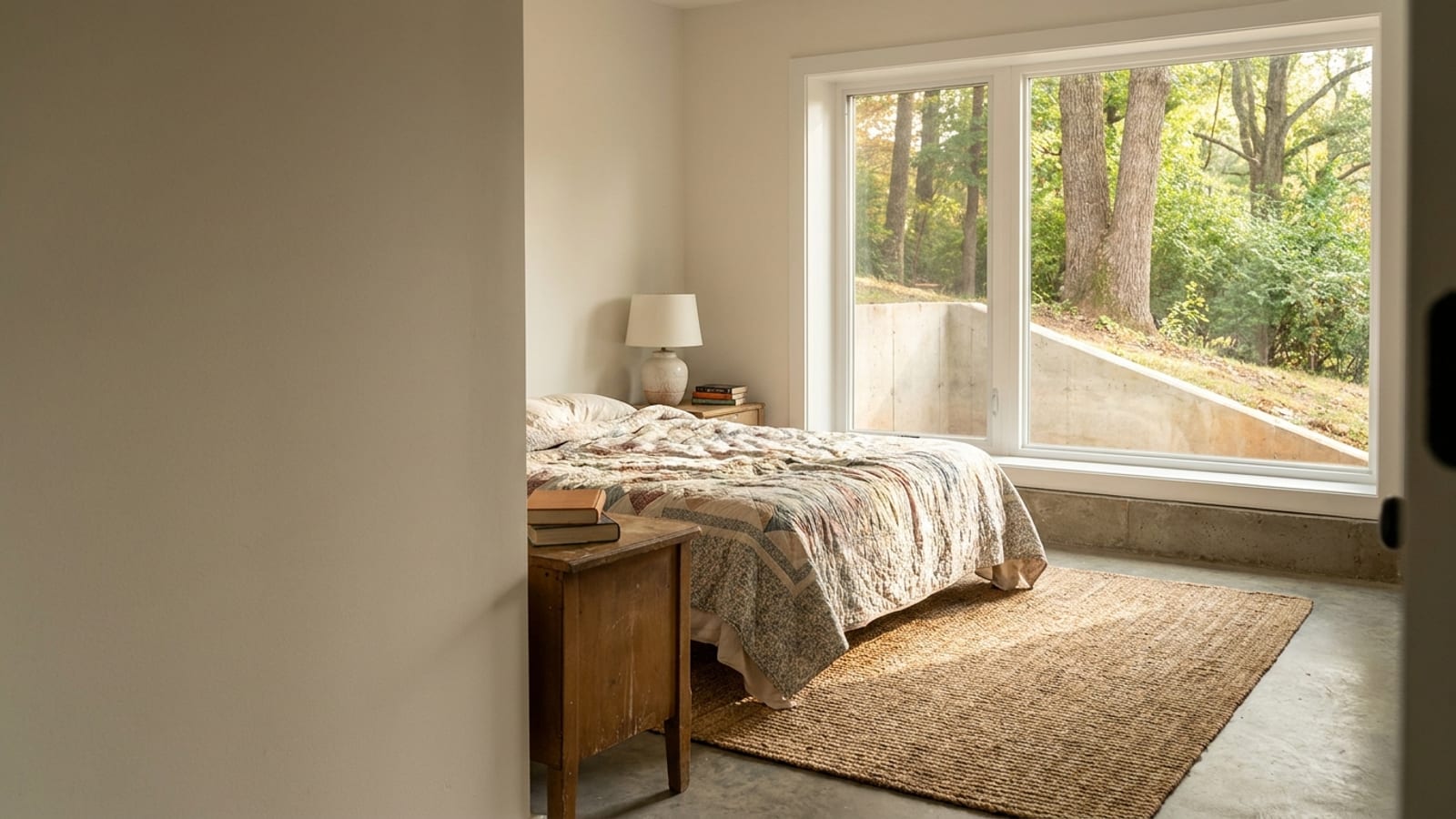
Fiberglass frames can be made narrower for the same structural strength. On a house where the view matters — anything looking at the ridge or the river — the extra glass area is visible.
Where vinyl wins
Everywhere else, honestly. For a standard double-hung in a standard opening in a standard Tennessee house, quality vinyl does the job, and the $400-600 per window you didn't spend on fiberglass buys something that matters more.
Spend the difference on glass instead
If you have a fixed budget, this is the trade we'd recommend nine times out of ten:
- Low-E coating tuned to our climate. In Tennessee, cooling load beats heating load. A coating with a lower SHGC on the sun-facing elevations does more for comfort than any frame material.
- Argon fill between the panes.
- A warm-edge spacer instead of aluminum. The spacer is where most insulated glass units eventually fail, and it's the cheapest meaningful upgrade on the list.
A vinyl window with all three beats a fiberglass window with none of them, at a lower price.
What we carry
We're manufacturer-direct on every line we sell, which means we're not steering you toward whatever we're overstocked on. For windows that's Andersen, MI, Polaris, Vinyl Max, Windsor, Sunrise and HGI — vinyl and fiberglass options across all of them.
We're also an Andersen Certified Contractor, and we'll install owner-supplied windows to manufacturer specification if you'd rather buy your own. Most companies won't do that.
How to decide for your house
Walk your house and ask three questions:
- Are any openings unusually wide or tall? If yes, price those specific openings in fiberglass and leave the rest vinyl. Mixing is fine and normal.
- Do you want dark exterior frames? If yes, lean fiberglass, or accept a lighter color.
- What's the budget per opening? If it's under about $1,100, vinyl with good glass is the better use of the money. Full stop.
There's no prize for buying the more expensive material if your house doesn't need it.
Get it priced both ways
When we come out, ask us to quote both. It costs nothing to see the two numbers side by side for your actual openings, and it's a lot more useful than any article — including this one.
Book a free estimate and we'll measure and price both options.