Short answer
A full siding replacement in the Chattanooga area typically runs $12,000 to $25,000 installed, including trim, soffit, fascia and house wrap. Where a house lands in that range depends on square footage, number of stories, how much trim detail the elevations carry, and what the sheathing looks like once the old siding comes off. The itemized number comes from a free in-home estimate, because no two walls are found in the same condition.
A full siding replacement in the Chattanooga area typically runs $12,000 to $25,000 installed for an average home, and that number includes the trim, soffit, fascia and house wrap — not just the panels on the wall. Where your house lands inside that spread comes down to four things: how much wall there is, how many stories, how much detail the elevations carry, and what the crew finds under the old siding once it comes off.
That last one is the item most homeowners have never thought about, and it is the one most likely to move the number. Everything else can be measured from the driveway.
What is actually included in a siding price?
When we quote siding replacement, we are quoting the full exterior envelope, not a panel count. A complete job includes:
- Tear-off and disposal of the existing siding
- Inspection and repair of the sheathing underneath
- House wrap and flashing at windows, doors and penetrations
- The siding itself, installed to manufacturer specification
- Trim, corners, soffit and fascia
- Caulking, sealing and finish detail
- Site cleanup, including the nails and cutoffs that end up in the grass
We do full replacement only. We do not side over rot and we do not patch a failing system, because the water management under the panels is the part that determines whether the wall lasts thirty years or five.
What do the different materials cost in this market?
Material is the single biggest lever on the total. Here is how the options we install compare on cost and lifespan.
| Material | Relative installed cost | Typical lifespan | Best fit |
|---|---|---|---|
| Royal / Mastic vinyl | Lowest | 20–40 years | Budget-conscious jobs, homes you will not keep forever |
| Everlast composite | Mid | Long-term | Homeowners who want a heavier product without full fiber cement cost |
| James Hardie fiber cement | Highest of the lap products | 30–50 years | Forever homes, detailed elevations, sun-beaten walls |
| Stone veneer accents | Priced separately | Very long | Front elevations, water tables, column bases |
Quality vinyl is a legitimate product and it is roughly 40–70% cheaper installed than fiber cement. James Hardie costs more and buys you a board that will not melt, crack or feed a fire, with a ColorPlus finish that holds up against Southeast sun and humidity. We are a James Hardie Alliance Select contractor, which means we install it to the spec the warranty requires — fastening, clearances, flashing and all.
A common and completely reasonable compromise in Chattanooga neighborhoods is fiber cement on the street-facing elevations and vinyl on the sides and back. You get the look and the durability where it is seen and the value where it is not.
How much does home size change the number?
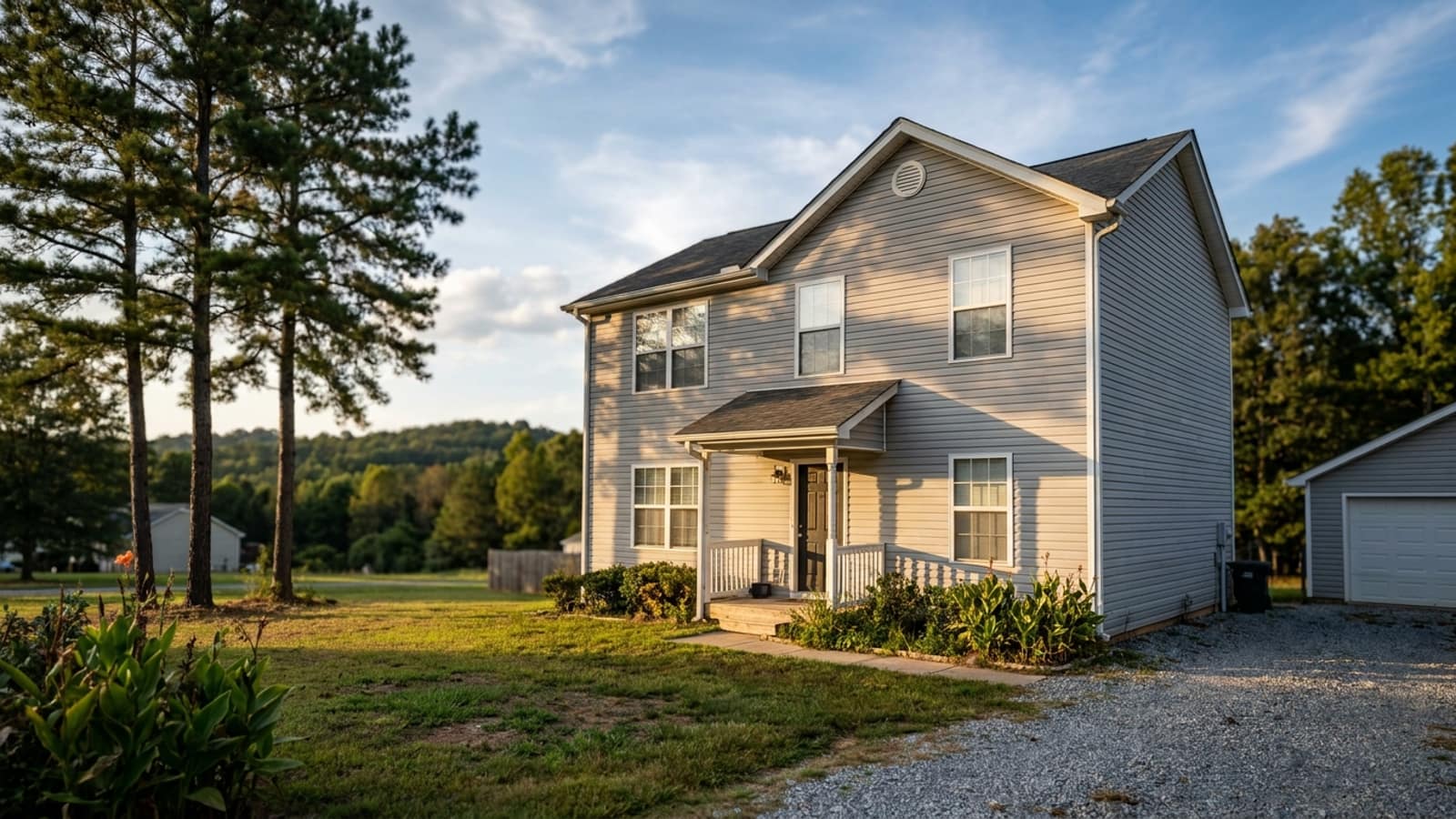
Siding is priced by wall area, not by floor plan, and the two do not track as neatly as people expect. A sprawling one-story ranch can have less exterior wall than a compact two-story. Gables, dormers, bump-outs and steep elevations all add area and labor.
| Home profile | What drives the price | Where it usually lands |
|---|---|---|
| Single-story ranch, simple rectangle | Least wall area, no staging | Lower half of the range |
| Split-level with a walkout | Mixed elevations, retaining details | Middle |
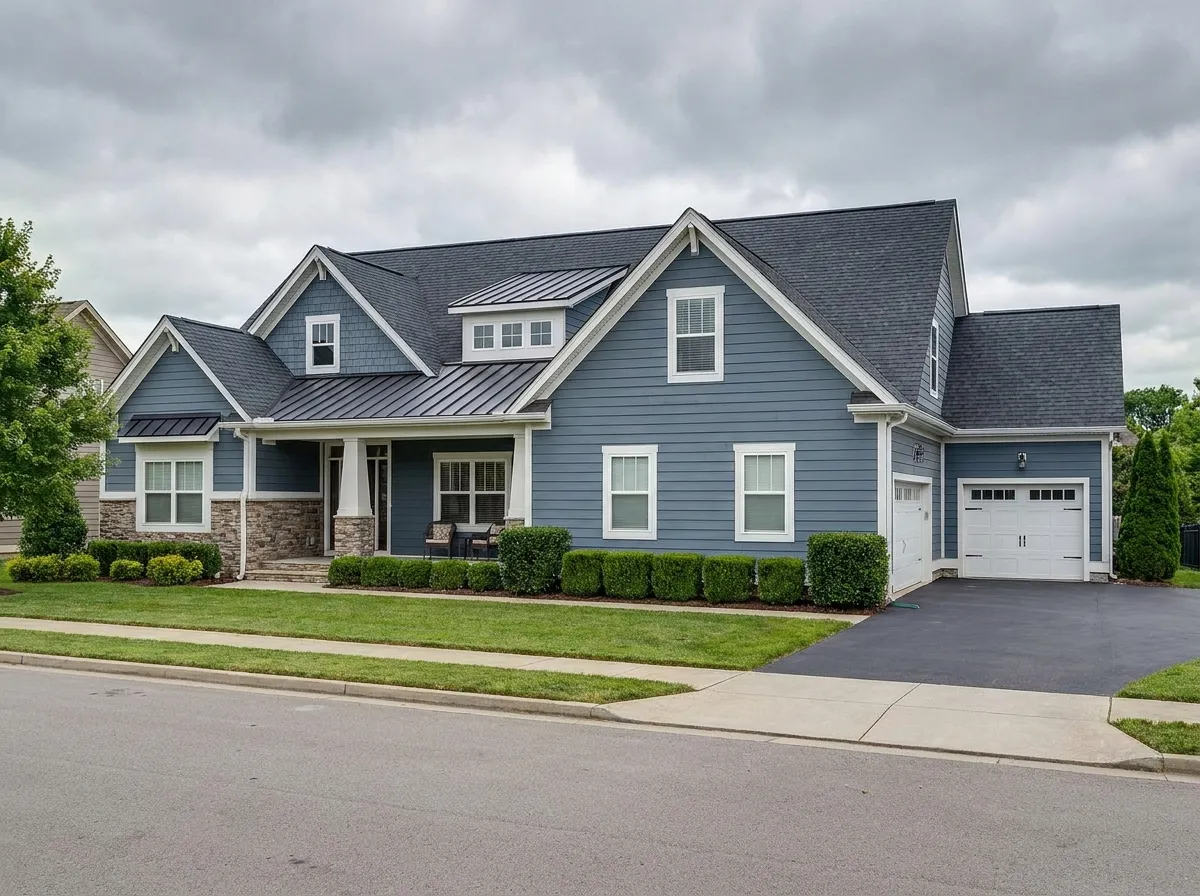
| Two-story with gables and dormers | More area, more staging, more cut detail | Upper half |
| Homes with heavy trim, shutters, columns | Trim labor, not panel count | Pushes toward the top |
Trim is the quiet cost driver. Two houses with identical square footage can be thousands apart because one has plain corners and the other has wide window casings, a water table, decorative gable vents and wrapped columns. Every one of those is a hand-cut detail.
What do crews find once the old siding comes off?
This is where a siding estimate differs from a window estimate. Until the old cladding is down, nobody can see the sheathing. In older Chattanooga housing stock — and across Hixson, Red Bank, East Ridge and Soddy-Daisy — the recurring finds are consistent:
- Rotted sheathing below windows. Old windows with tired flashing dump water into the wall right below the sill. It shows up as soft OSB or plywood in a neat rectangle.
- No house wrap at all. Plenty of homes built before wrap became standard have felt paper, or nothing, behind the siding.
- Failed flashing at the roof-to-wall junction. Where a porch or garage roof dies into a wall is a classic leak point, and it usually stains the sheathing long before anyone sees it inside.
- Rotted trim, soffit and fascia. Fascia takes the gutter overflow and soffit takes the wind-driven rain. They rot before the field siding does.
- Insect and moisture damage at the bottom course. Siding installed too close to grade wicks moisture up.
- Old repairs someone buried. Patch jobs covered rather than corrected.
Repair scope gets priced as a line item when it is found, not buried in the total. That is the honest way to handle work no one can see from outside, and it is why the estimate explains what happens if there is rot instead of pretending there will not be. You can see how we handle the Chattanooga market specifically, including the housing types that come up most often here.
Does Chattanooga's climate change what you should install?
It should. Our summers are hot, humid and long, we get real thunderstorm wind, and we get hail often enough to matter. That combination is harder on cladding than the temperature alone suggests.
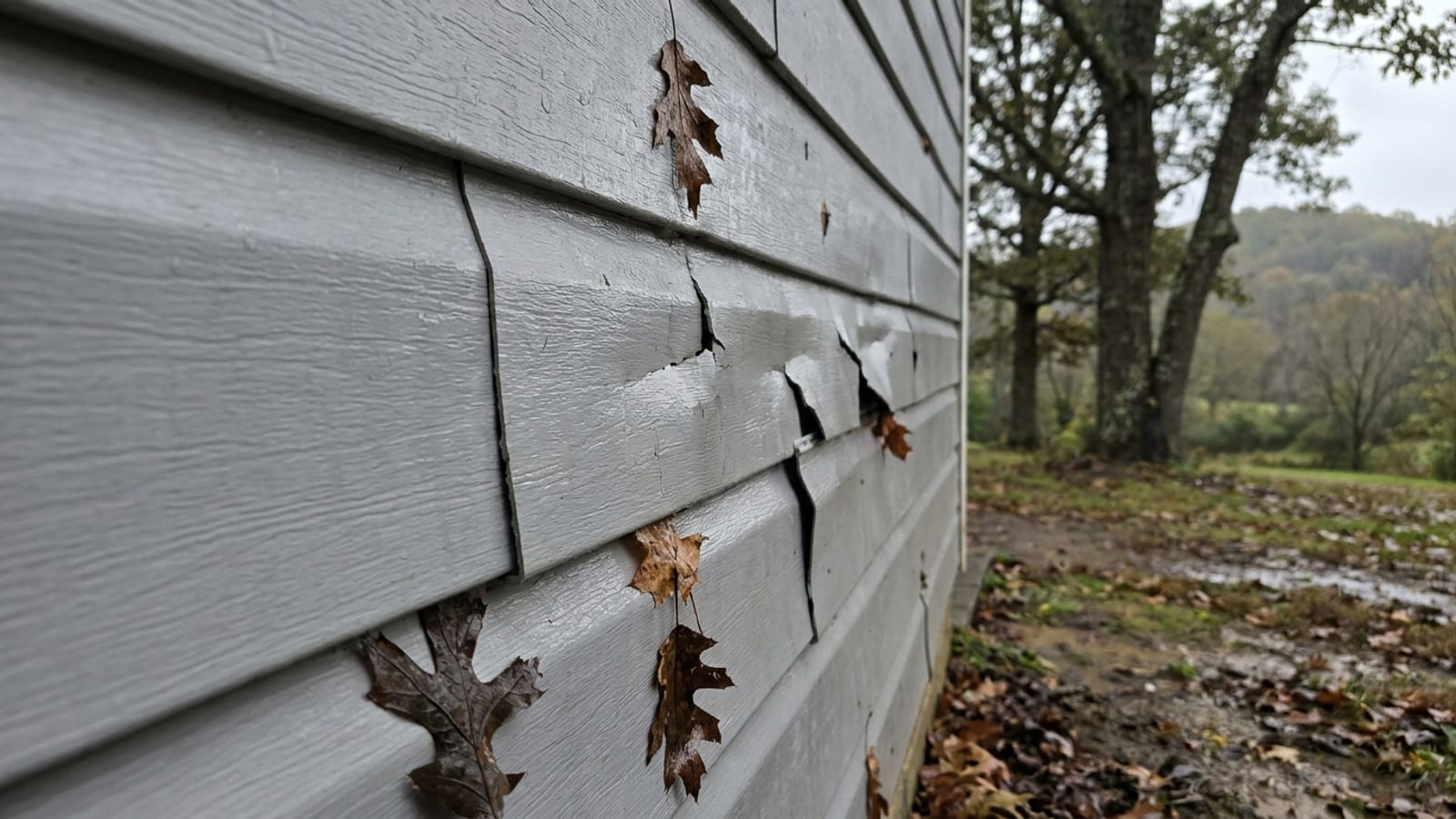
Heat and UV fade color. Humidity punishes anything that absorbs water. Impact from hail and blown debris finds anything brittle. Fiber cement handles all three well, which is a large part of why it has taken over so many street-facing elevations in this region. Vinyl handles moisture perfectly well and is not bothered by humidity at all; its weak points are heat distortion near reflective glass and impact resistance in a bad storm.
The deciding question is usually not climate but time horizon. Staying under five years? Vinyl. Staying ten or more, or this is the forever house? Fiber cement generally wins on total cost of ownership because you buy it once.
How long does the job take and what is warrantied?
Most siding projects are installed in four to seven days, depending on size and how much repair turns up. Your dates go into a signed timeline agreement between both parties before work begins, so the schedule is a commitment rather than a hope.
Siding installed by Patriots' Pride carries a 30-year material and labor warranty under the Patriot's Promise. The labor half matters more than most homeowners realize. A lifetime material warranty paired with a one-year labor warranty is a much thinner promise than it sounds, because on a siding failure the labor is most of the cost. When you compare quotes, ask every company for the labor term in writing.
How do homeowners in Chattanooga pay for a siding job?
Siding is a bigger single line than a door and usually bigger than a partial window job, so financing comes up on most estimates. We run financing through the GreenSky® program, with options including no interest if paid in full within 6, 15 or 18 months, a fixed 6.99% APR for 60 months, and terms out to 144 months. Zero down for most approved homeowners, subject to credit approval.
One budgeting note worth stating plainly: there is no federal tax credit to plan around for a 2026 siding project. The Energy Efficient Home Improvement Credit was terminated for property placed in service after December 31, 2025. Build your budget without it, and confirm anything from a prior tax year with your tax advisor.
What is the next step?
The only way to turn a $12,000 to $25,000 range into your number is to have someone measure the walls, look at the trim detail, check the grade line and the roof-to-wall junctions, and tell you what they see. That is a free in-home estimate — the estimator measures, shows the material options side by side, and gives you one itemized price. No two-hour sit-down, no price that expires that night.
Request your free estimate and we will walk the house with you.