Short answer
A full James Hardie fiber cement siding job in our market typically runs $12,000 to $25,000 installed for an average home. The spread comes down to square footage, how many stories, how much trim and detail work the elevation has, and whether the sheathing underneath needs repair once the old siding comes off.
Fiber cement is the most-requested siding upgrade we quote, and also the one where estimates vary the most between companies. Here's what actually drives the number.
The installed range
| Project | Typical installed cost |
|---|---|
| Single-story ranch, simple elevations | $12,000 – $16,000 |
| Two-story, average detail | $16,000 – $21,000 |
| Two-story with significant trim, gables, dormers | $20,000 – $25,000+ |
| Partial job — one or two elevations | $5,000 – $10,000 |
Those are complete numbers: tear-off, disposal, house wrap, the siding, the trim, the fasteners, caulking and labor.
What moves the price
Square footage — but not the way you'd think
It's not just how much wall you have, it's how complicated the wall is. A big, plain two-story back elevation is cheap per square foot. A front elevation with three gables, two dormers, a bay and a wrapped porch column is slow, detailed work.
When you compare quotes, check that everyone measured the same way. Some companies quote by simple footprint, which understates a detailed house.
What's under the old siding
This is where change orders come from. Once the old material is off, the sheathing gets inspected. If there's rot — common around windows, at the bottom course, and anywhere the flashing failed — it has to be replaced before new siding goes on.
Nobody can price that accurately in advance. What a good company can do is tell you it's a possibility, give you a per-sheet repair price up front, and show you photos before doing the work.
Trim package
Hardie trim costs more than the siding per linear foot, and a detailed house has a lot of it. Corners, window and door surrounds, frieze boards, rake and fascia. This is often the single biggest difference between two quotes on the same house.
Stories and access
Second-story work needs staging. Steep lots, tight side yards and landscaping that has to be protected all add labor.
Fiber cement vs. vinyl, honestly
| Vinyl | Fiber cement | |
|---|---|---|
| Installed cost | Lower | Roughly 40-70% more |
| Impact resistance | Cracks in cold, dents | Very high |
| Heat | Can warp near grills, reflected sun | Unaffected |
| Fire | Combustible | Noncombustible |
| Repaintable | No | Yes, any color |
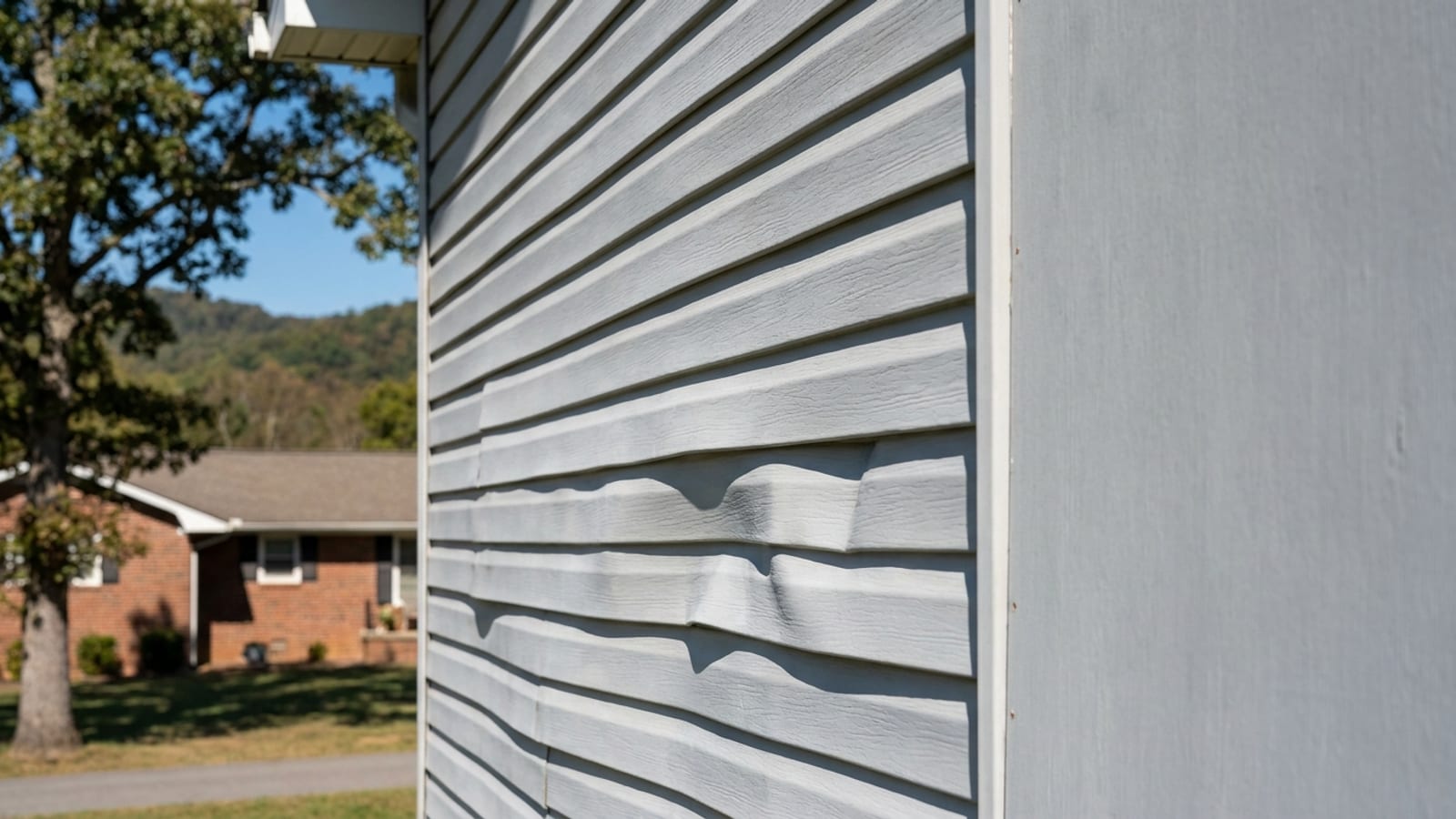
| Weight | Light | Heavy — installation matters more |
| Warranty | Varies widely | Long, if installed to spec |
Vinyl isn't a bad product, and we install it — Everlast, Royal and Mastic are all quality lines. The honest split is this: vinyl is the value answer, fiber cement is the durability-and-appearance answer. Both are legitimate depending on your plans for the house.
The part that decides whether it lasts
Fiber cement is unforgiving of bad installation. It has specific requirements for:
- Clearance at the ground, at roof lines, and at horizontal surfaces
- Fastener type, spacing and depth — overdriven nails are a classic failure
- Joint treatment and flashing behind butt joints
- Cut-edge sealing
Get those wrong and you get water behind the siding, and a manufacturer's warranty that no longer applies. This is the reason the certification matters — we're James Hardie Alliance Select, and the crews doing your house are trained on the spec.
Ways to manage the cost
- Do the visible elevations in Hardie, and the back in a quality vinyl. It's a common, sensible compromise and nobody sees the difference from the street.
- Simplify the trim package where the detail isn't load-bearing to the look.
- Bundle it with window work. If windows are coming out anyway, doing both at once saves a second mobilization and gets the flashing detail done right once — window flashing and siding are the same water-management system, and doing them separately is where leaks come from.
- Use the financing. Zero down for most approved homeowners, no interest if paid within 6 to 18 months, or fixed rates from 6.99%.
Get a real number for your elevations
Siding quotes without a site visit are guesses. We'll measure your actual walls, count the trim, look at the condition of what's under there, and give you one itemized price with a start date and a duration.
Request a free siding estimate and we'll come take a look.