Short answer
A working crew installs roughly 8 to 15 windows in a day, which is why most whole-house projects of 12 to 18 openings are finished in one to two days. The install method drives the number more than anything else, because an insert replacement runs 30 to 60 minutes per opening while a full-frame replacement runs 2 to 4 hours. Access, opening size, and what gets found when the old unit comes out move that count in either direction.
A crew installs roughly 8 to 15 windows in a day on a typical replacement job. That is why a whole house of 12 to 18 openings is usually done in one to two days. The number is not a fixed quota, though, and the single biggest factor is not how fast anybody works. It is whether the openings are getting an insert replacement or a full-frame replacement.
An insert takes 30 to 60 minutes per opening. A full-frame takes 2 to 4 hours. Run those two numbers against an eight-hour day and you can see the whole range of answers without anybody picking up a tool.
What does the per-opening math actually look like?
Here is the honest arithmetic. A day of install time is not eight uninterrupted hours of setting windows. Some of it is setup, floor protection, staging units, cleaning up, hauling off the old sashes and walking the job at the end. Figure six to seven productive hours of actual opening work in a normal day.
| Scenario | Time per opening | Openings per crew day |
|---|---|---|
| Insert replacement, standard double-hung, ground floor | 30 to 45 minutes | 12 to 15 |
| Insert replacement, large or second-story openings | 45 to 60 minutes | 8 to 12 |
| Full-frame replacement, standard opening | 2 to 3 hours | 3 to 4 |
| Full-frame with rot repair or trim rebuild | 3 to 4 hours | 2 to 3 |
| Bay or bow unit | Most of a day | 1 |
Most houses are not all one row of that table. A real project is frequently a mix, which is normal and correct: openings with sound, square frames take an insert, and the two or three openings with a soft sill or a failed frame get full-frame treatment. When you ask us how many replacement windows will go in on day one, that mix is the thing we are counting in our heads.
Why inserts move so much faster
An insert drops a new window into the existing frame. The old sashes and the balance hardware come out, the frame gets checked and cleaned, the new unit is set, shimmed, squared, fastened, insulated and sealed, and the interior stop and exterior trim go back. Nothing structural is disturbed and nothing on the outside of the house has to be taken apart.
Why full-frame takes three to four times as long
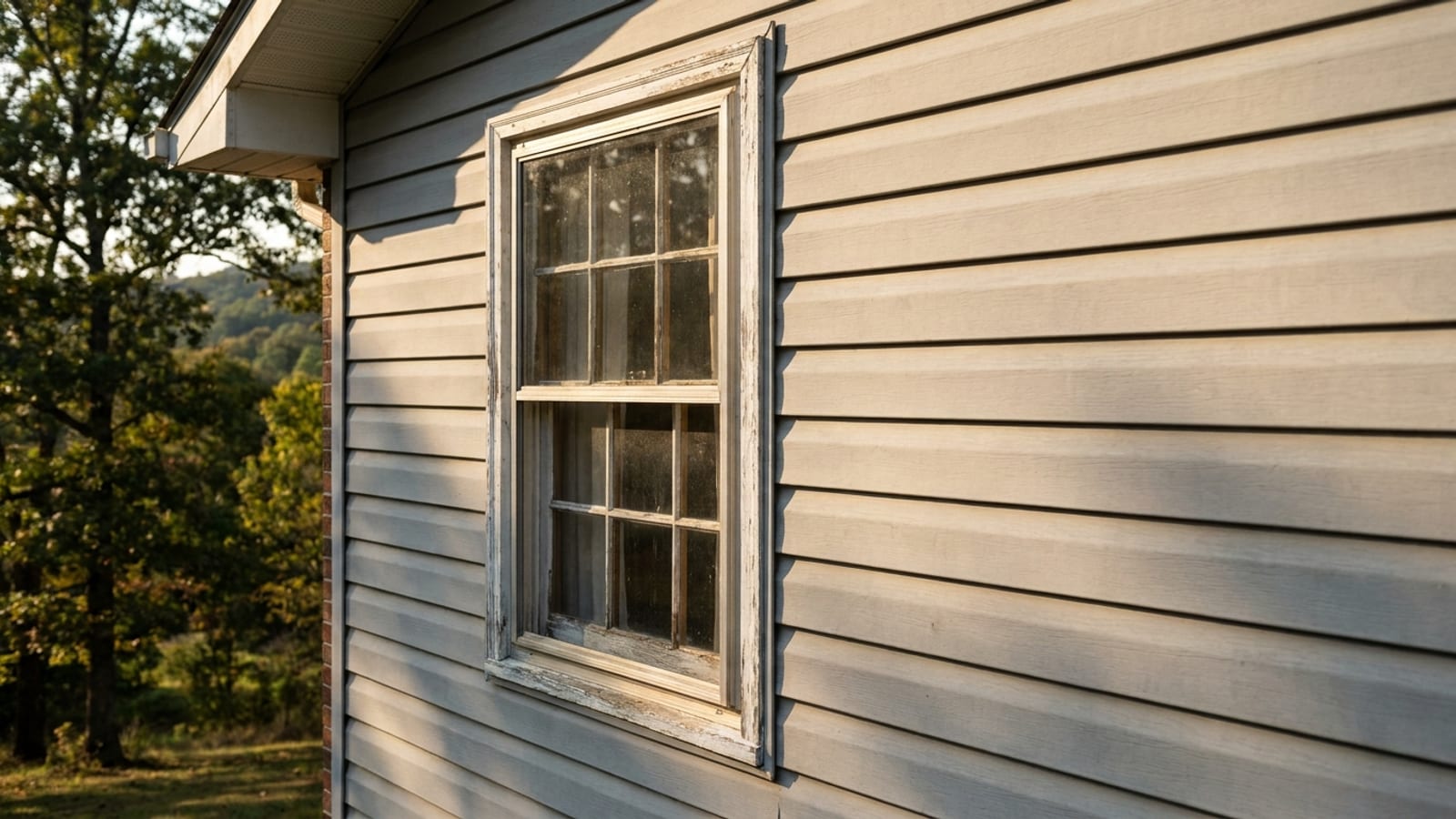
Full-frame removes everything down to the rough opening, including the frame and often the exterior trim. The crew inspects the sheathing and framing, repairs what needs repairing, flashes the sill, sets the new unit, air-seals the perimeter, and then rebuilds the exterior trim and the interior casing. That is a carpentry job wrapped around a window install, and there is no honest way to do it in 40 minutes.
What else changes how many windows go in per day?
Beyond the method, these are the practical things that speed a day up or slow it down.
- Floor level. Ground-floor openings are faster than second-story openings that need ladders or staging on the exterior side.
- Opening size and weight. A large picture unit may need three sets of hands and careful maneuvering through a room.
- Access inside and out. Three feet of clear space inside and outside each window is what keeps the pace steady. Furniture, bookshelves, blinds, shrubs tight to the wall and fenced side yards all cost minutes per opening.
- What the old window is made of. Original wood sashes with weight pockets, and old aluminum frames in masonry, both take longer to remove cleanly than a 1990s vinyl unit.
- Surprises behind the trim. Rot at the sill, an improperly flashed header or a previous repair done badly all add time, and all of them are better found and fixed than covered up.
- Weather. Ordinary rain rarely stops the work because only one opening is open at a time. Lightning, ice and high wind do stop it.
Does a larger crew just mean more windows per day?
Up to a point. Two installers working as a pair are considerably faster than one, because one can be prepping the next opening while the other finishes setting and sealing the last. Past that, the gain flattens out. There is only so much room inside a single opening, and a job site crowded with people is slower, not faster.
The more useful question is who is on the crew. A 4th-generation install company sends its own trained crews rather than a different subcontracted group each week, and the reason that matters on a day like this is consistency: the same sequence, the same flashing detail and the same standard at window number 14 as at window number one. You can read more about how the company is set up on our about page.
What does a realistic two-day schedule look like?
Day one
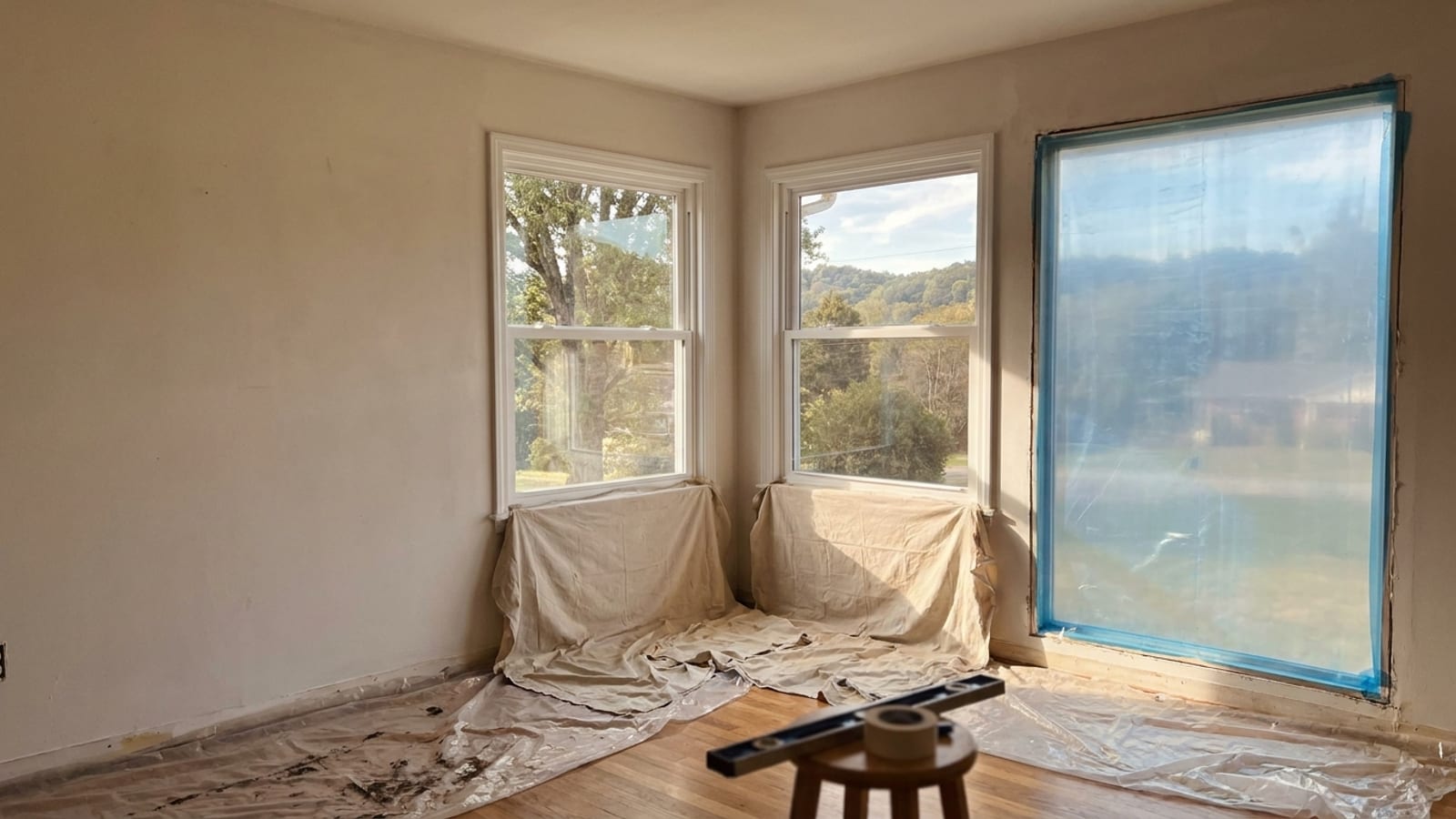
The crew arrives, walks the house with you, confirms the opening list and the method for each one, and lays down floor protection and drop cloths. Then they start, usually on one elevation and working around. Every opening is removed and replaced as a complete sequence, so the house is never standing open. At the end of the day the site gets cleaned, debris is loaded out and any window not yet started is simply still your old window.
Day two
The remaining openings go in, followed by trim work, caulking, hardware checks, screen fitting and operation testing on every unit. Then the final walk-through, where you open and close each window yourself and raise anything that needs an adjustment while the crew is still in the driveway. That walk-through is the moment to be picky. It is far easier to adjust a lock keeper or re-tune a sash on the spot.
Is a faster install a worse install?
Speed by itself is not the warning sign. A trained crew doing insert replacements in 40 minutes an opening is working at a normal professional pace, not cutting corners. What matters is whether the steps that are invisible after the trim goes on actually happened: level and square shimming, fastening to spec, insulation in the perimeter gap without overpacking it, a continuous air seal, and the correct sealant joint on the exterior.
Those are the details that show up five winters later as a draft or a stain, which is why the labor side of the warranty is worth reading as carefully as the material side. Ours is spelled out in The Patriot's Promise, and it covers labor as well as material rather than material alone.
How many days should you plan around?
Plan for the crew to be at the house one to two days for most whole-house projects, longer if a large share of your openings are full-frame or you are adding a bay or bow unit. Plan on being home at the start and at the end of each day. Plan on the rooms being worked in losing their window coverings and furniture access for part of that day.
And keep the two clocks separate in your head. The install is one to two days. The project, from signing through final measure, manufacturing and scheduling, usually runs a few weeks, because the windows are built to your openings. Homeowners who only hear the install number are the ones who end up surprised.
The next step
The only way to know how many of your windows go in on day one is to have someone count and measure your actual openings and tell you which ones need an insert and which need full-frame. Schedule a free in-home estimate and you will get that opening-by-opening breakdown along with one itemized price, plus the dates written into a signed timeline agreement so the schedule is not a guess.