
Short answer
Most siding installations take 4 to 7 days of crew time on site, depending on square footage, number of stories and how much trim detail the elevations carry. The full project — estimate, signed timeline agreement, material ordering and install — usually runs several weeks, because the trim, soffit and fascia package is ordered for your house rather than pulled off a shelf. Those are two different clocks, and the one homeowners plan their lives around is the 4 to 7 days.
Most siding replacements take 4 to 7 days of crew time at the house. The full project, measured from the day you sign to the day the last piece of trim goes up, usually runs several weeks — the material for your walls, corners, soffit and fascia is ordered for your house, and that lead time sits between the estimate and the first day of work.
Homeowners who only hear one of those numbers end up frustrated. Someone tells them "about a week" and they assume the whole thing starts Monday. Someone else tells them "about a month" and they picture a month of ladders in the yard. Both numbers are correct. They just measure different things.
What are the two clocks on a siding project?
The first clock is the install window: the days a crew is physically at your house, pulling the old cladding, inspecting sheathing, wrapping, flashing and installing new material. For a full siding replacement that clock runs 4 to 7 days on most homes.
The second clock is the project clock. It starts at the in-home estimate and covers the measure, the signed timeline agreement, the permit if your jurisdiction requires one, and the manufacturing and delivery of the siding, trim, soffit and fascia in your chosen color and profile. Fiber cement in a factory-applied color, composite, or a specific vinyl profile all have to come through a distribution chain, and a full envelope is a large order.
We put dates in a signed timeline agreement between both parties, so you are not guessing at either clock once the job is scheduled.
What does the full timeline look like from signing to finish?
| Phase | What happens | Typical duration |
|---|---|---|
| In-home estimate | Walk the elevations, measure, review materials and colors, one itemized price | 60–90 minutes |
| Signing and final measure | Contract, color selection, precise field measure of every wall and opening | A few days |
| Permit, if required | Application and review through your local building department | Varies by jurisdiction |
| Material order and delivery | Siding, trim, soffit, fascia, house wrap, flashing and fasteners staged | Several weeks |
| Installation | Tear-off, sheathing inspection, wrap, flashing, siding, trim, cleanup | 4–7 days |
| Final walk-through | Inspect every elevation together, warranty in hand | Same day as finish |
The long pole is almost always material lead time, not labor. That is worth knowing if you are trying to hit a date — a closing, a family event, a paint-and-landscape sequence. Signing earlier moves your install date more than anything else you can do.
What happens on each day of the install?
The order below is typical. Crews work elevation by elevation rather than doing one step around the whole house, so most of these stages happen more than once on a job.
Day one: setup and tear-off
The crew sets up staging and a cut station, protects what is close to the wall, and starts pulling the old cladding. Tear-off is loud and it looks dramatic. On a straightforward ranch, most of the old siding can be down in a day; on a two-story with multiple gables, tear-off runs into day two. Old material goes straight into a dumpster rather than piling up around the house.
Day one or two: sheathing inspection and repair
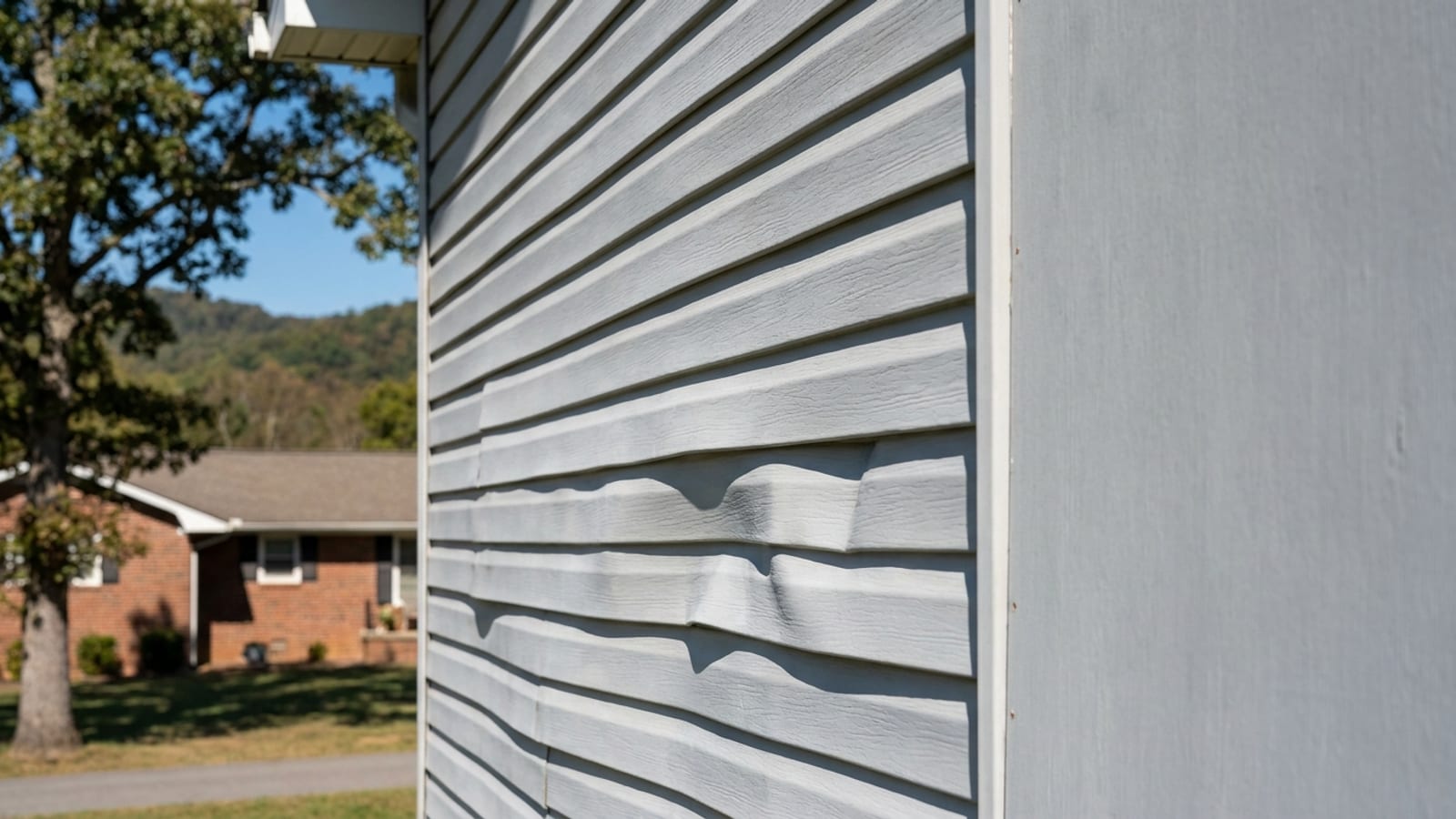
This is the part nobody can schedule precisely, because nobody knows what is behind the old siding until it comes off. Sound sheathing gets a quick check and the job keeps moving. Soft or rotted sheathing gets cut out and replaced before anything covers it. This is the single most common reason a job adds a day, and it is also the reason we do full replacement only and will not install over existing siding — water damage that gets sealed inside a wall does not stop.
Day two to four: house wrap, flashing and siding
Weather-resistive barrier goes on, then flashing at every window head, door head, penetration and transition. Then the siding itself, course by course, with the fastening pattern, clearances and joint treatment the manufacturer specifies. As a James Hardie Alliance Select contractor, installing to spec is not optional for us — it is what keeps the manufacturer's coverage intact.
This is the most visible progress stage. A wall goes from bare wrap to finished cladding in a few hours and homeowners tend to take their photos here.
Day four to six: trim, soffit and fascia
Corners, window and door surrounds, frieze, rake and eave detail, soffit panels and fascia. This stage is slower per square foot than the field of a wall because almost every piece is measured and cut individually. A plain box of a house moves fast. A house with dormers, bays, a wrapped porch and multiple roof pitches can spend two full days here.
Final day: caulk, touch-up, cleanup and walk-through
Sealant at the details that call for it, touch-up on any cut edges, a magnet pass for fasteners in the yard, dumpster out, and a walk of every elevation with you. That walk is where you point at anything you want looked at, and where the written warranty is handed over.
Does the material change how long it takes?
Yes, though less than most people expect. The bigger drivers are house size, story count and detail.
| Material | Relative install pace | Notes on schedule |
|---|---|---|
| Vinyl (Royal, Mastic) | Fastest | Lighter panels, longer courses, less cutting labor per wall |
| Composite (Everlast) | Moderate | Heavier than vinyl, straightforward cuts, precise fastening |
| Fiber cement (James Hardie) | Slowest of the three | Heavy boards, more cutting, spec-driven fastening and clearances |
| Stone veneer accents | Adds days | Masonry work on a separate pace from the lap siding around it |
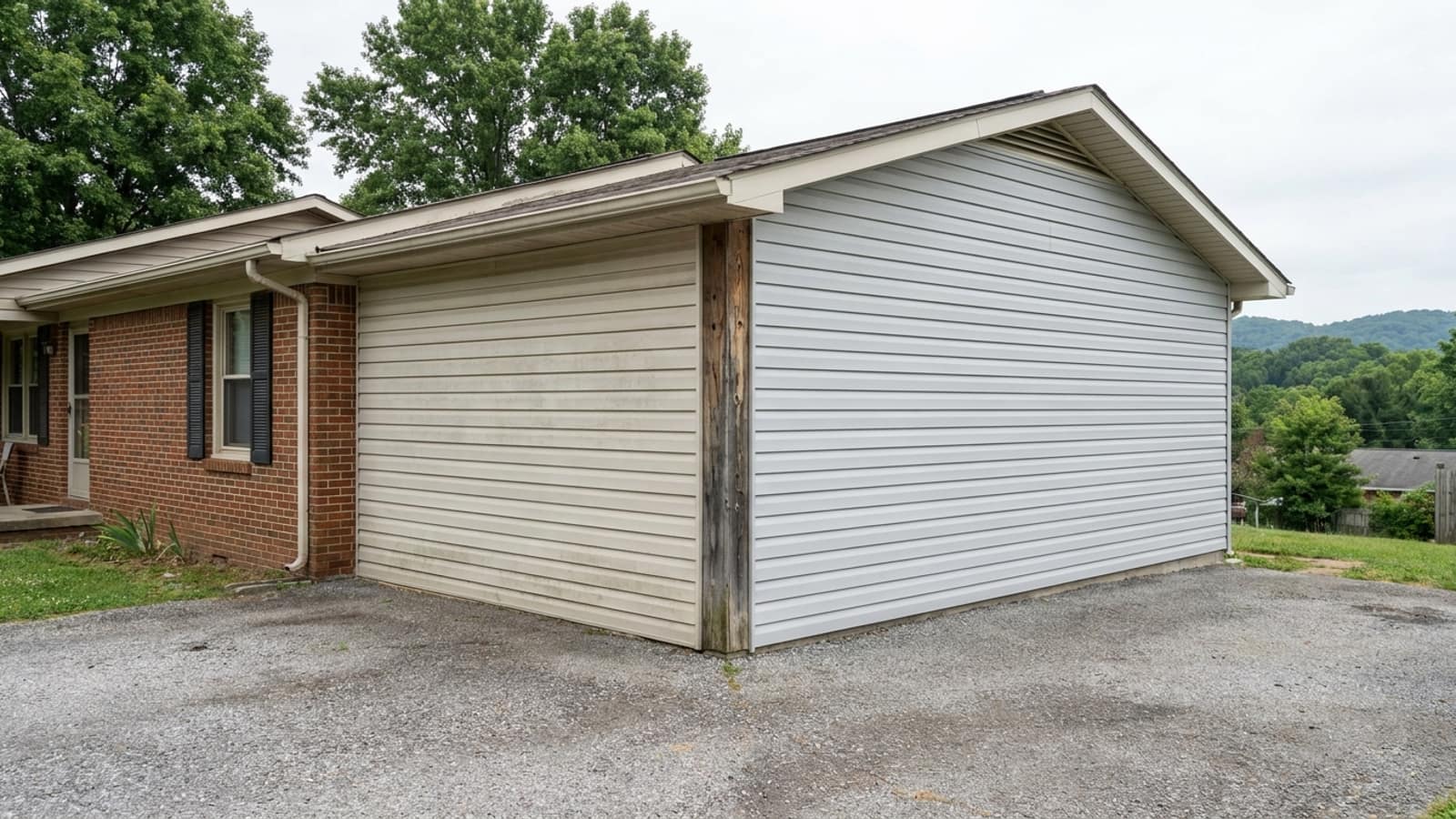
A fiber cement job on a large two-story with heavy trim sits at the top of the 4 to 7 day range and occasionally past it. A single-story vinyl re-side with simple elevations can finish in four. Both of those are normal.
What actually makes a siding job run long?
Six things, in roughly the order they show up:
- Sheathing repair. The wall tells you what it needs only after the old siding is off. Replacing sheathing is the right call every time, and it takes the time it takes.
- Story count and access. Second-story and gable work means staging, ladders and slower movement. Steep grades and tight side yards do the same thing.
- Trim detail. Bays, dormers, wrapped columns, multiple rooflines and shaped window surrounds all add hours that do not show up in a square-footage estimate.
- Weather. Sustained rain or high wind stops installation. A lost day shifts the end date; it does not get made up by rushing the remaining work.
- Stone veneer or mixed materials. Two trades on one envelope means two paces.
- Change orders mid-job. Switching a trim color or adding a wall after the material is delivered means another order and another wait.
What can you do to keep the schedule tight?
Clear about six feet of working space around the perimeter. Move grills, furniture, planters and anything stored against the wall. Tie back or trim shrubs planted tight to the house. Unlock gates. Take fragile items off interior walls that share the elevation being worked, because fastening does transmit some vibration. Park out of the driveway on tear-off day so the dumpster and material trailer have room.
Decide colors early. Color and profile selection is what releases the order, and an undecided trim color is the most common reason a start date slides before anyone has picked up a tool.
If budget timing is the thing holding up a decision, look at the financing options before the estimate rather than after. Siding is hard to phase — the whole envelope comes off and goes back on as one system — so the decision is usually about how to spread one number, not how to split the work.
What happens after the last day?
You get a written warranty. Our siding carries 30-year material and labor coverage under The Patriot's Promise, which means the workmanship term is spelled out alongside the product term rather than left vague. Ask about the labor term on any siding quote you compare — a long material warranty paired with a one-year labor warranty is a much weaker promise than it reads like.
You should also expect the site to look like nobody was there. Dumpster gone, offcuts gone, fasteners picked up out of the beds and lawn.
Your next step
If you want a real date rather than a range, the way to get one is a free in-home estimate. We walk every elevation, measure, look at what the existing cladding is telling us, and give you one itemized number plus a timeline for your house specifically. Request an estimate and we will get you on the schedule with dates both sides sign.